






-SEE THE MASTER CHRONOLOGY BELOW-
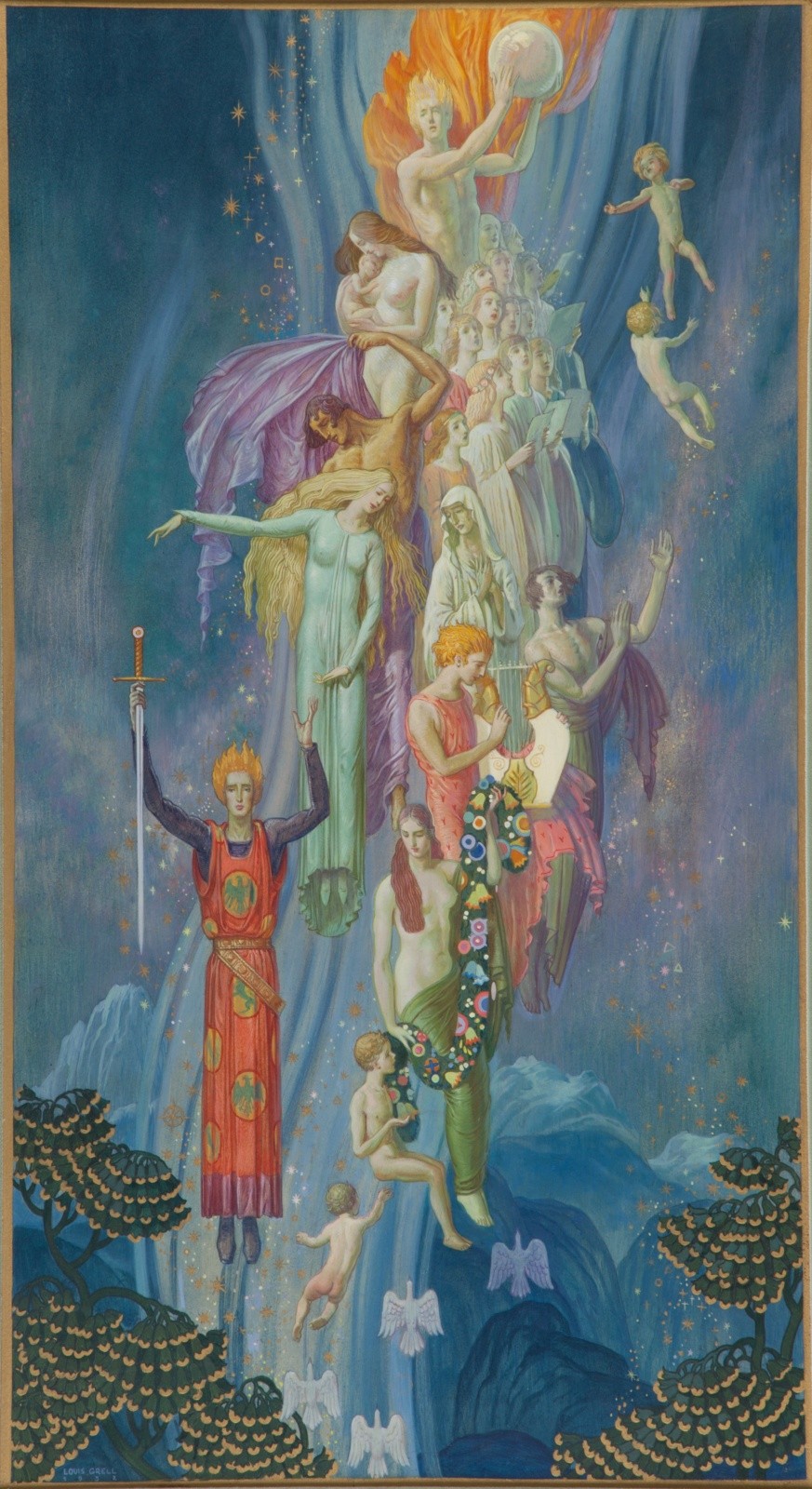
Louis Frederick Grell (1887–1960) was a prominent Chicago-based portrait artist and muralist. He earned numerous high-profile commissions for National Historic Landmark structures across major American cities, including New York, Chicago, Detroit, Pittsburgh, and St. Louis. While his grand murals adorned banks, hotels, schools, and churches nationwide, his definitive masterwork lay in theater design.
The Theater Masterpieces
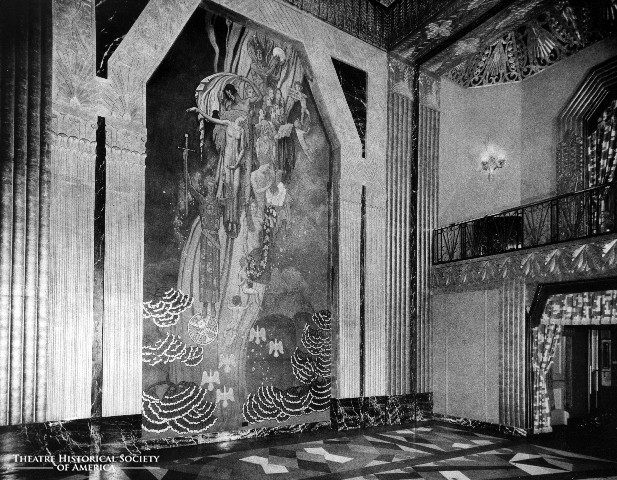
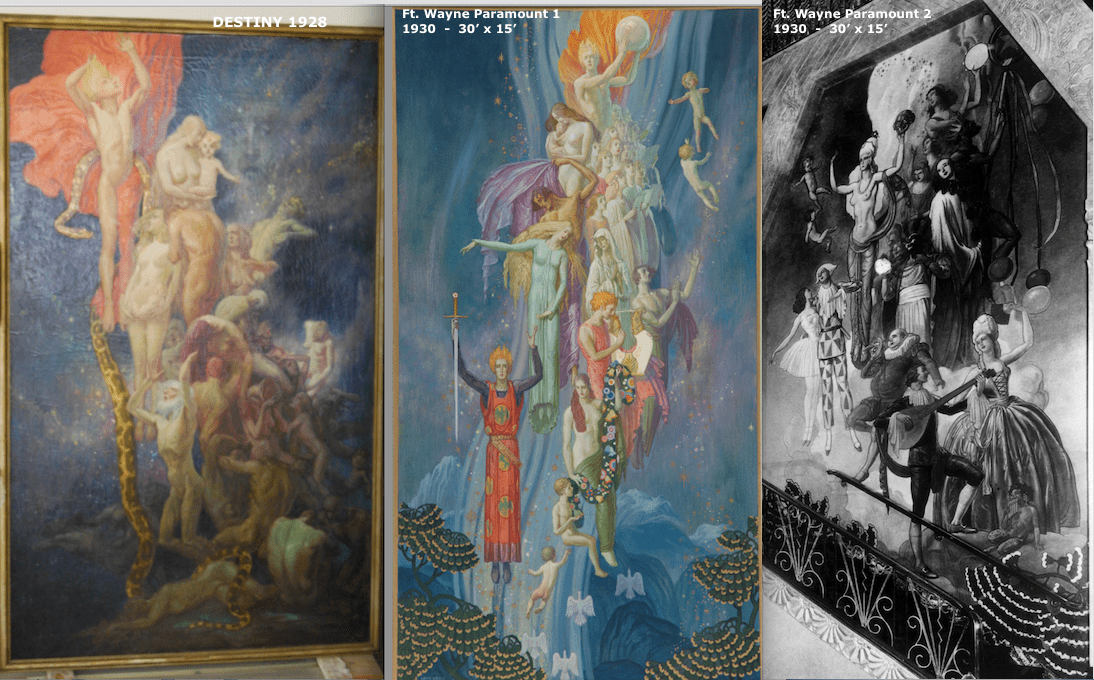
Throughout the 1920s and 1930s, Grell designed massive theater murals, some stretching over 100 feet in length. His prestigious clientele included Paramount Theaters, Rapp & Rapp Architects, and Balaban & Katz (B&K) theater operators. Notable highlights of his theater career include:
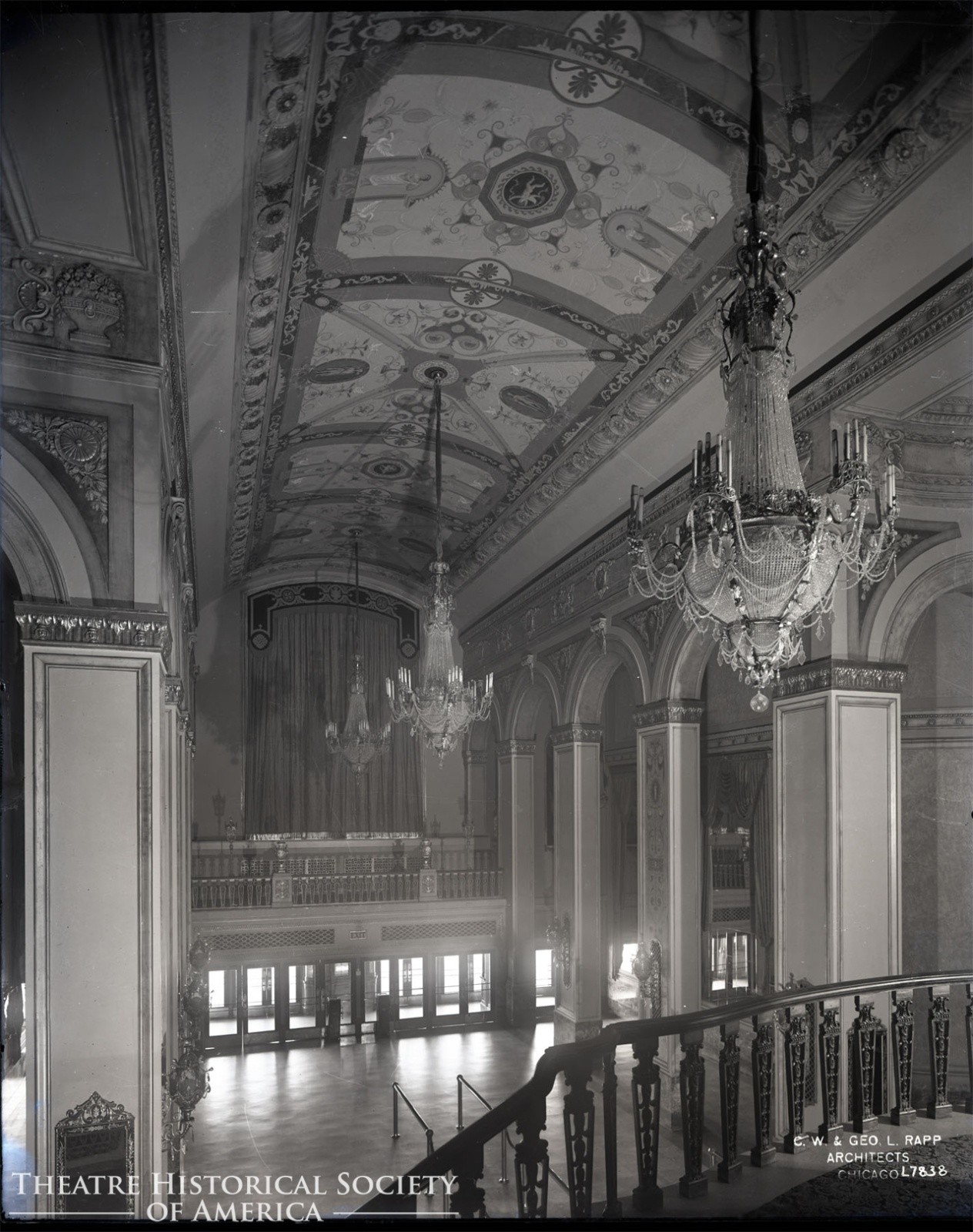
- The Spirit of Light (1926): A massive mural painted for the grand lobby of Paramount’s flagship Times Square theater.
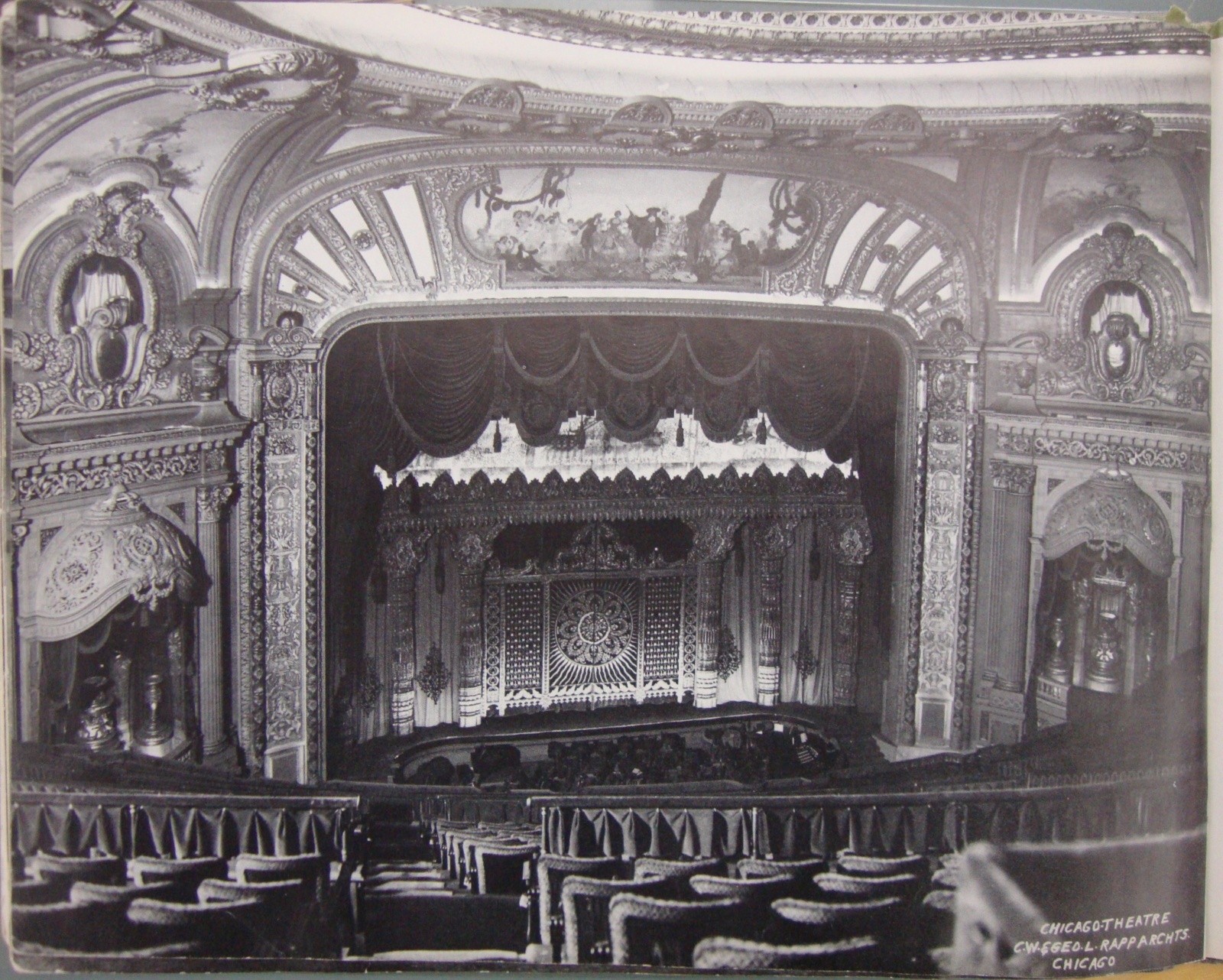
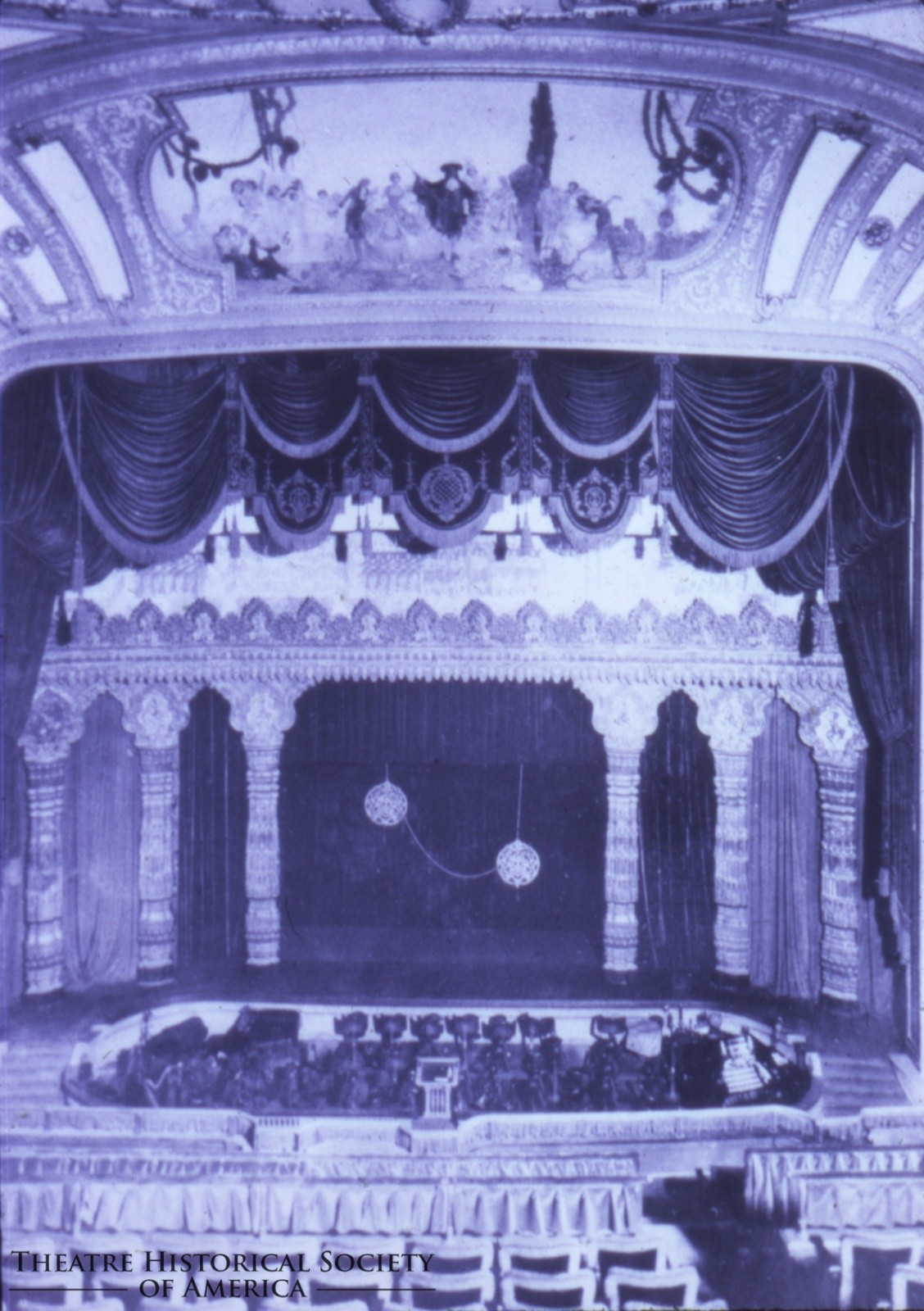
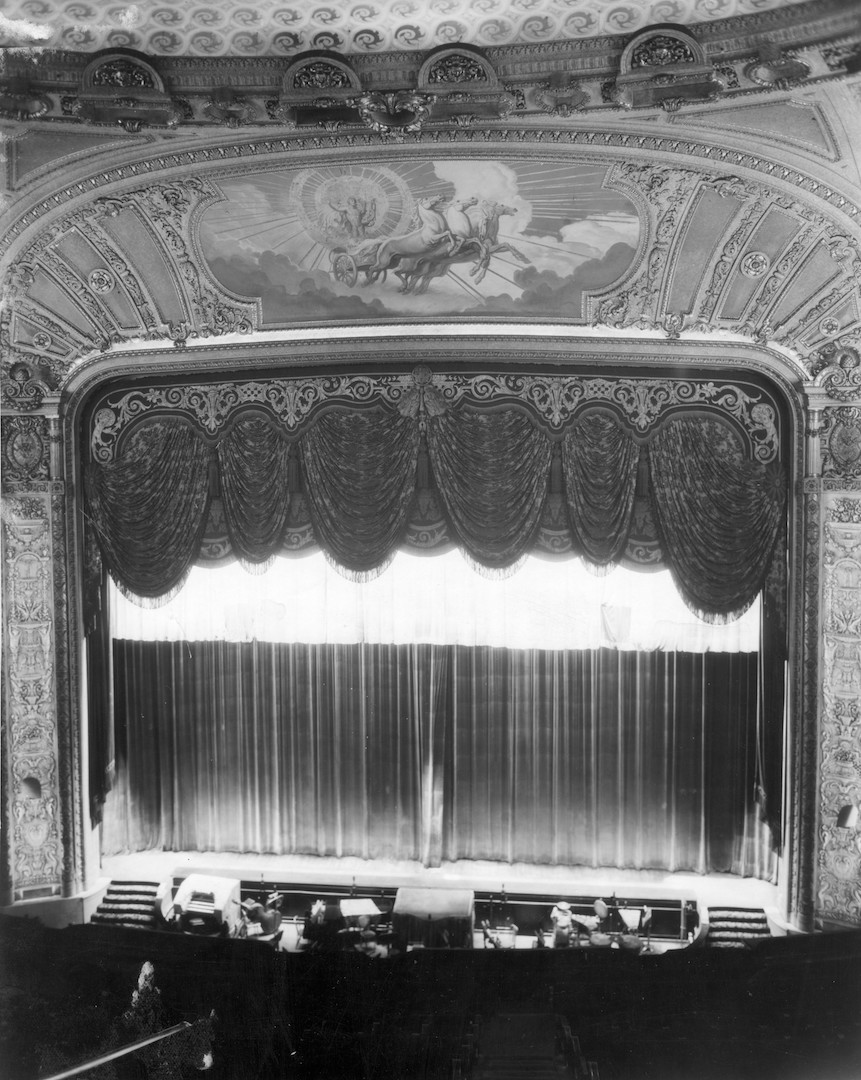
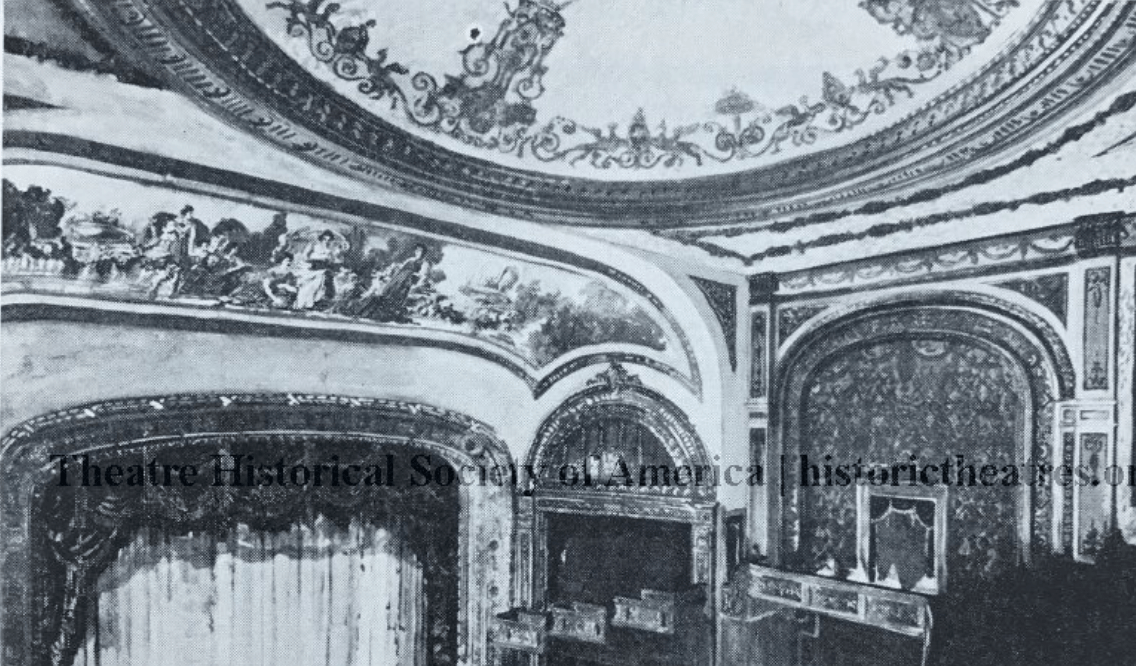
- The Chicago Theatre (1921 & 1933): Grell originally painted 14 auditorium murals for B&K’s Chicago “Wonder Theatre” in 1921. He was hired again for the 1933 World’s Fair, ultimately creating more than 35 murals inside the building.
Myth, Imagination, and “Purple Cows”
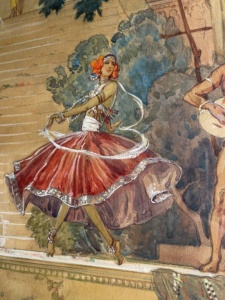
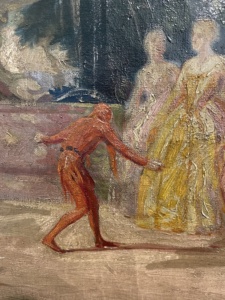
Beyond commercial spaces, Grell specialized in painting vivid, imaginary landscapes. While many of his scenes drew from folklore and Greek mythology, his most unique projects came entirely from his own mind. Most notably, he painted an estimated 70 “Purple Cow” murals for the Pick Hotels Corporation in the 1940s—inspired by a whimsical 1895 poem—yet he curiously only referenced this massive undertaking once in his records. One of these cows was a Ferdinand the Bull black anthropomorphic homage to his former student, Walt Disney.
Teaching Legacy and Artistic Rebellion
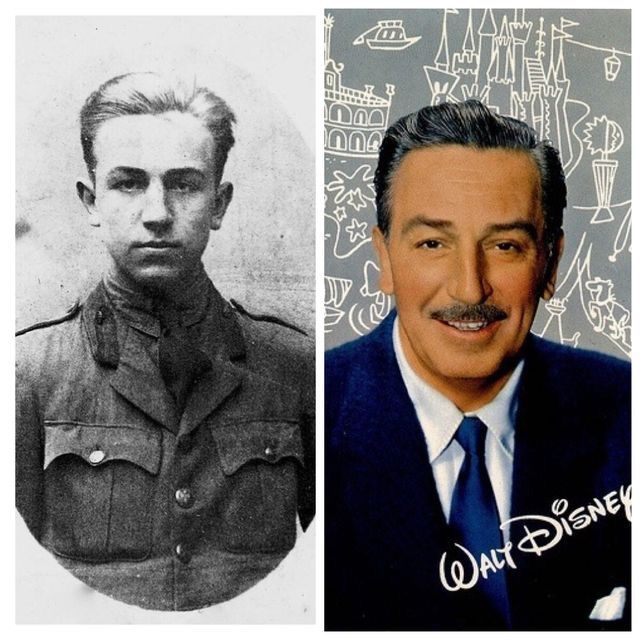
From 1916 to 1922, Grell shared his expertise as an instructor at the Chicago Academy of Fine Arts. According to his sister Helen and convincing family records, a young Walt Disney was among his students between 1917 and 1918. In 2012, Walt’s daughter, Diane Disney Miller authorized the only release of Disney’s night art school transcripts to Richard Grell confirming the teacher / student connection.
As modernism swept through the art world and rejected classical aesthetics, Grell actively bucked the system. He continuously won major commissions by remaining fiercely loyal to traditional figurative styles, rebelling against modern trends until his death in 1960.
“What other artists worked with George Hamilton Thomas Studios in Chicago besides Grell?
While Louis Grell was the primary muralist for the studio’s high-profile Detroit commissions, George Hamilton Thomas Studios functioned as a collaborative commercial art firm. Records indicate that several other prominent artists from the Chicago art scene worked under or alongside Thomas and Grell:

Ernest Martin Hennings : A close associate of Grell (best man at Grell’s 1922 wedding) and a future member of the famous Taos Society of Artists. Hennings and Grell frequently collaborated on studio commissions in the 1920s.

Victor Higgins : Another member of the Taos Society who was part of the same Chicago artistic circle (The Palette and Chisel Club) that supplied talent for the Thomas Studios.

Walter Ufer : Like Hennings and Higgins, Ufer was a peer of Grell who worked in the same professional network of “studio-for-hire” muralists before achieving independent fame.
Anthony Spalthoff: A German-born sculptor who often handled the three-dimensional ornamentation for the studio’s projects, including architectural sculpture for theaters and banks.
The “Studio” Attribution
It is common for individual names to be missing from architectural records of this era. Because the George Hamilton Thomas Studios operated as a business, contracts were typically signed in the company name. Murals were often painted on canvas in the Chicago studio and then shipped to Detroit and other locations to be installed by local artisans, leading many historical sources to simply credit “The George Hamilton Thomas Studios” for the entire project. “Walter Ufer (1876-1936) and Hennings were neighbors in Chicago before Hennings went to Europe to study. Their address is the same indicating they may have lived under the same roof in 1910 (U.S. Census report).”
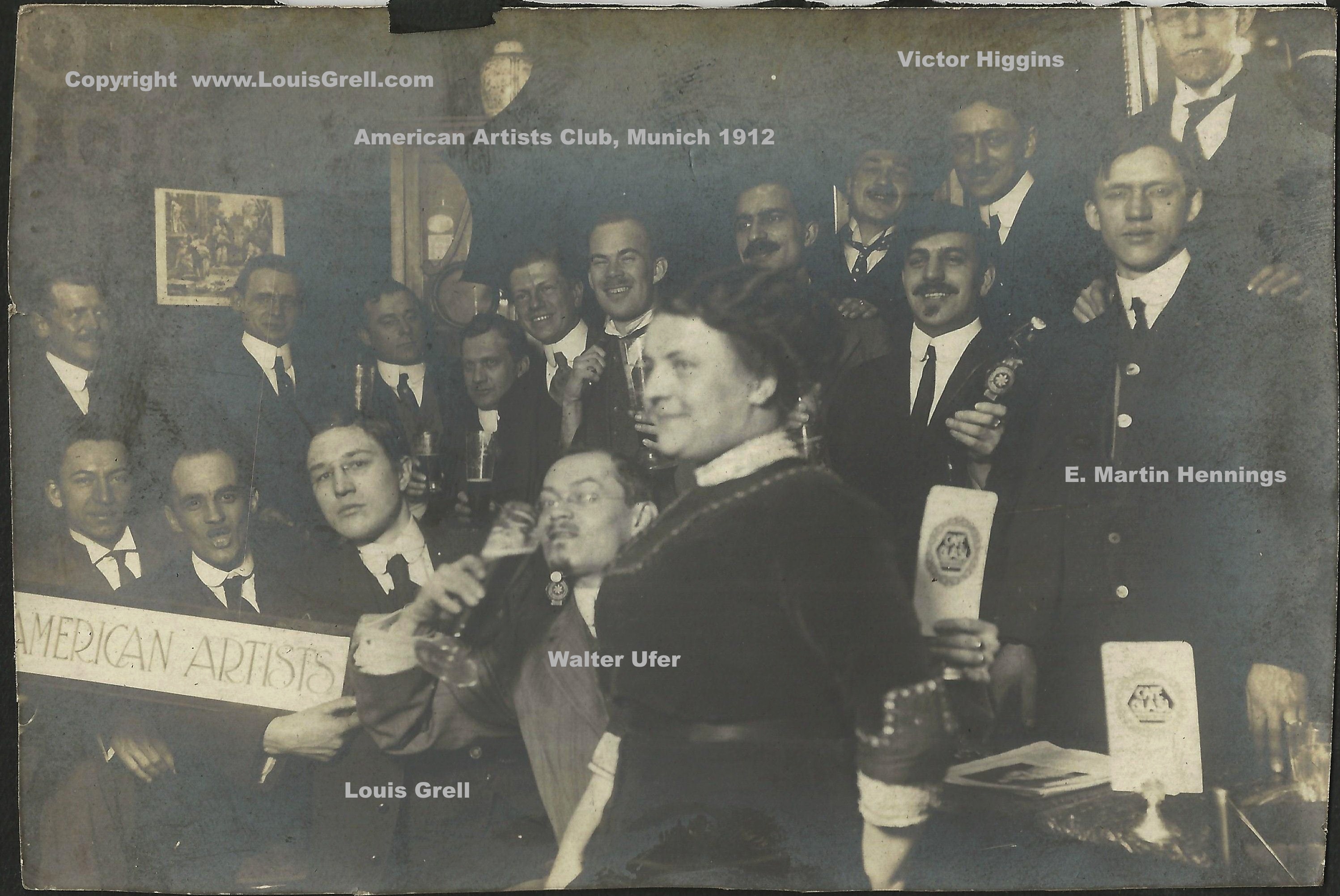
Above: the American Artists club, Munich 1912 with affixed signatures en verso including Walter Ufer, E. Martin Hennings and Grell. Donated by Richard Grell to the Hoff Pottawattamie Arts, Culture & Entertainment (PACE) center, Council Bluffs, IA (2023).
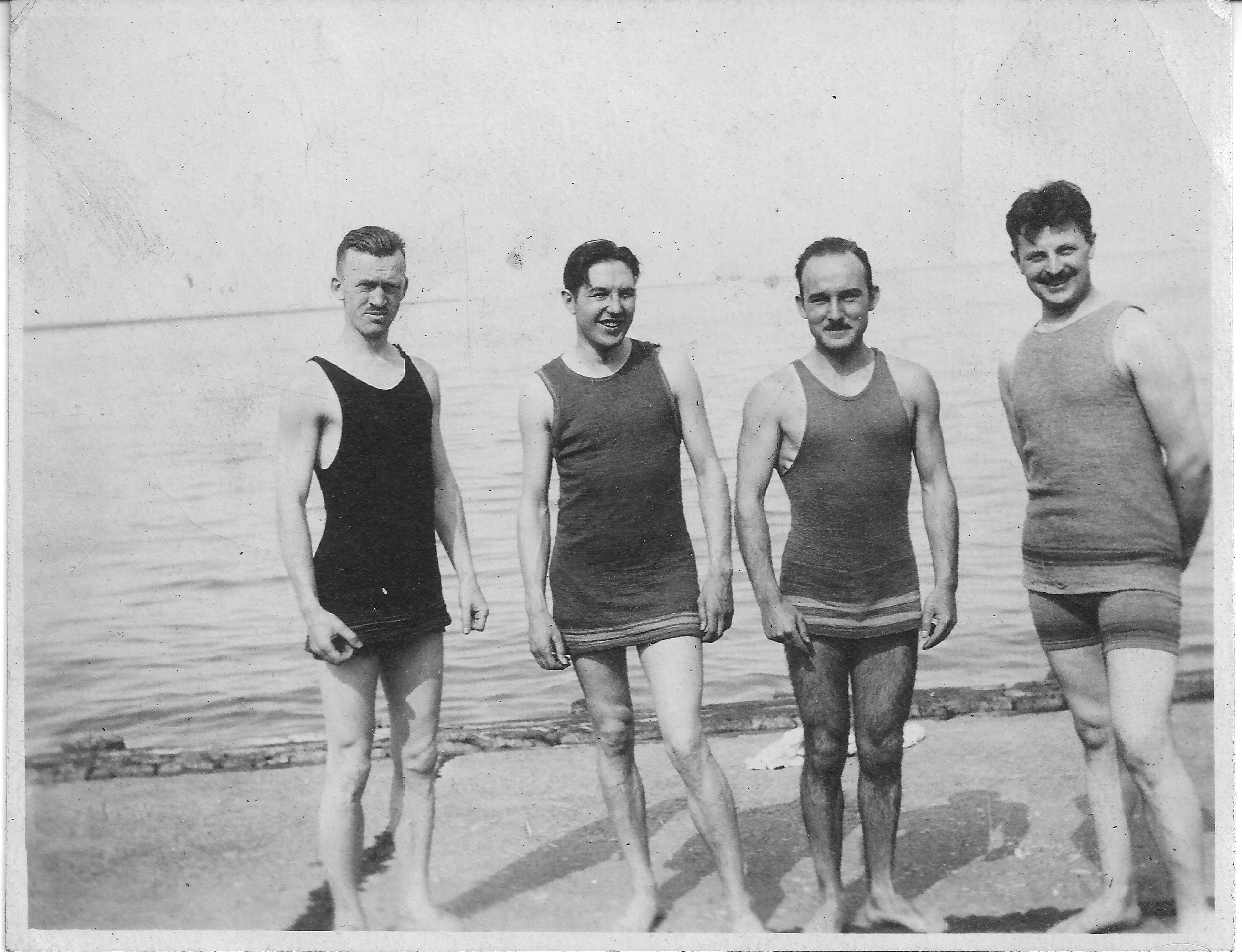
(left to right) E. Martin Hennings, Louis Grell, George Hamilton Thomas and Carl Hoeckner. Likely at Oak Street Beach, Chicago, ILL 1917.
(photo credit Helen Grell).
MASTER CHRONOLOGICAL ARCHIVE TIMELINE (1912 – 2025)
- The Munich American Artists Club, Tree Studios & The Disney Lineage (1912 – 1918)
- January 1912 (The European Vanguard): While attending the Royal Academy of Fine Arts in Munich, Louis Grell co-founds the elite American Artists Club alongside Walter Ufer, Victor Higgins, and E. Martin Hennings. The private circle of sixteen founding members meets every Friday evening at the Künstler Café Glasl on the corners of Theresien and Amalien Streets.
- Late 1912 (The Autograph Matrix): A family album photograph captures Grell, Ufer, Hennings, and other members together in Munich. The verso of this historic print is hand-signed by Walter Ufer, E. Martin Hennings, and Louis Grell, documenting their collaborative exhibition work before their wartime relocation to Chicago. (The original print was donated to the permanent collection of the PACE Hoff Center in Council Bluffs, IA; a high-resolution double-sided replica is secured in this archive).
- Fall 1916 (The Chicago North Side Colony): Escaping WWI via Norway, Grell arrives in Chicago and immediately resumes his alliance with the Munich circle. He establishes a live-work residency at the historic Tree Studios, rooming in Studio 14 directly with E. Martin Hennings. Grell, Hennings, Ufer, and Higgins exhibit extensively together across Chicago, including high-profile group features at the Art Institute of Chicago and the Oak Park galleries.
- September 1916 (The Pedagogical Appointment): Louis Grell is appointed as a “main” professor at the Chicago Academy of Fine Arts (CAFA). His arrival is documented via a signed and stamped postcard home to Iowa (held in the Richard Grell Archives) explicitly confirming his status as a primary instructor with a “number of scholars” under him. School registries confirm his contracted status during this exact window.
- 1917 – 1918 (The Transmission): A young, aspiring animator named Walt Disney attends night classes at CAFA, studying drawing, composition, and fine art directly under the instruction of Professor Grell.
- The Classical Roots & The Disney Lineage (1916 – 1918)
- September 1916: Louis Grell is appointed as a “main” professor at the Chicago Academy of Fine Arts (CAFA). His arrival is documented via a signed and stamped postcard home to Iowa (held in the Richard Grell Archives).
- 1917 – 1918: A young, aspiring animator named Walt Disney attends night classes at CAFA, studying directly under the instruction of Professor Grell.
- 1917-1926: Grell partners with George Hamilton Thomas studios along with Walter Ufer, Victor Higgins and E. Martin Hennings in a corporate mural installation campaign across the middle and eastern parts of the U. S. permanently anchoring Grell to the Taos Society of Artists documenting Grell as an active, integrated member of a highly capitalized corporate studio. Grell executed some of his major 1920s murals—such as the Hotel LaFontaine Egyptian Pool, City of Detroit water department lobby murals—through a direct collaboration with the Thomas Studios provides the ultimate link to the Taos Society of Artists. These masters would often collaborate on massive mural projects. Thomas Studios was the premier high-end architectural art syndicate in the American Midwest during the 1920s. Thomas deliberately staffed his high-prestige hotel, theater, and civic commissions with the absolute elite of the pre-war Munich avant-garde: Walter Ufer, Victor Higgins, E. Martin Hennings, Carl Hoeckner, and Louis Grell (see group photos).
- The Great Classical Commissions (1921 – 1935)
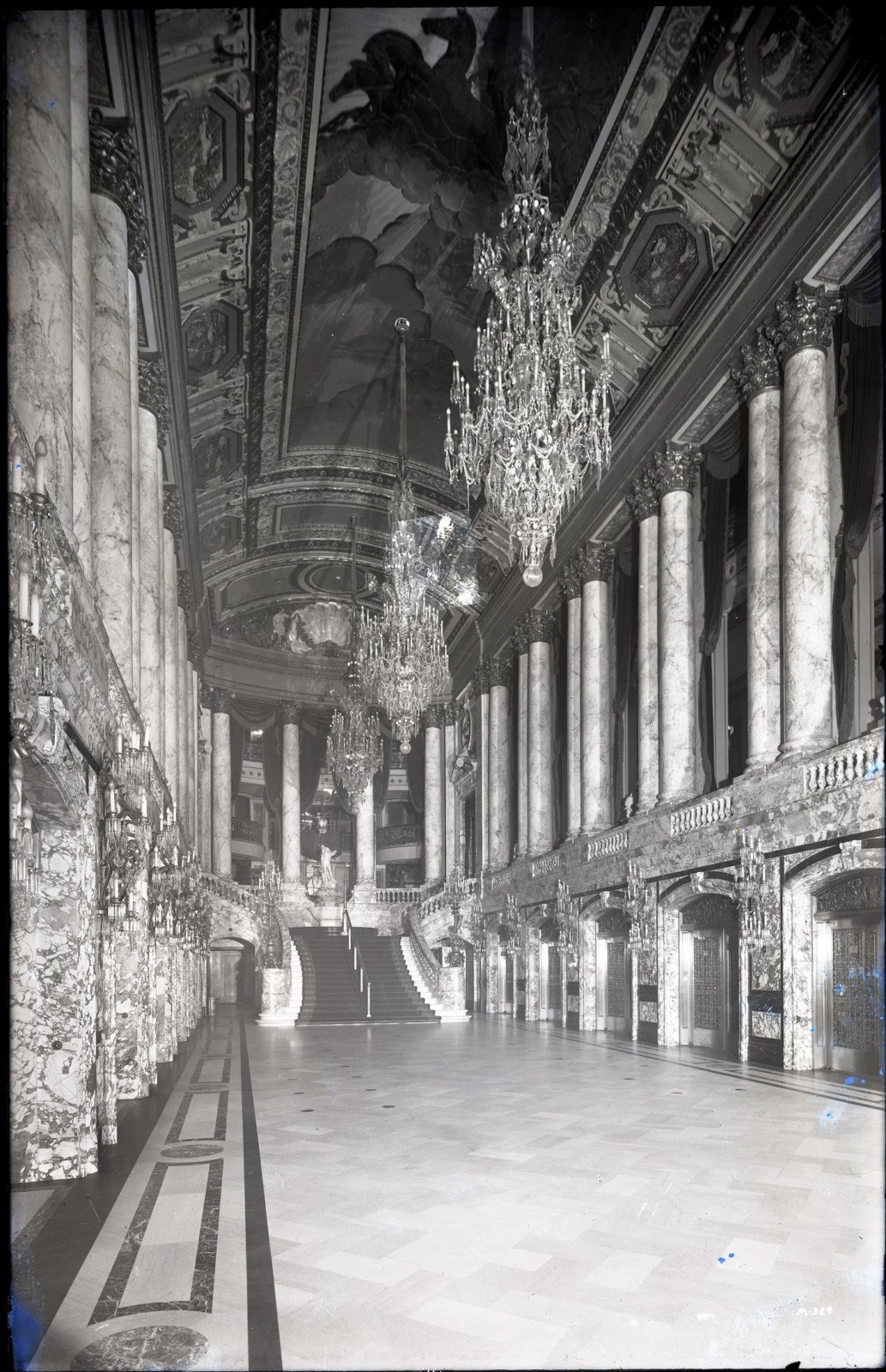
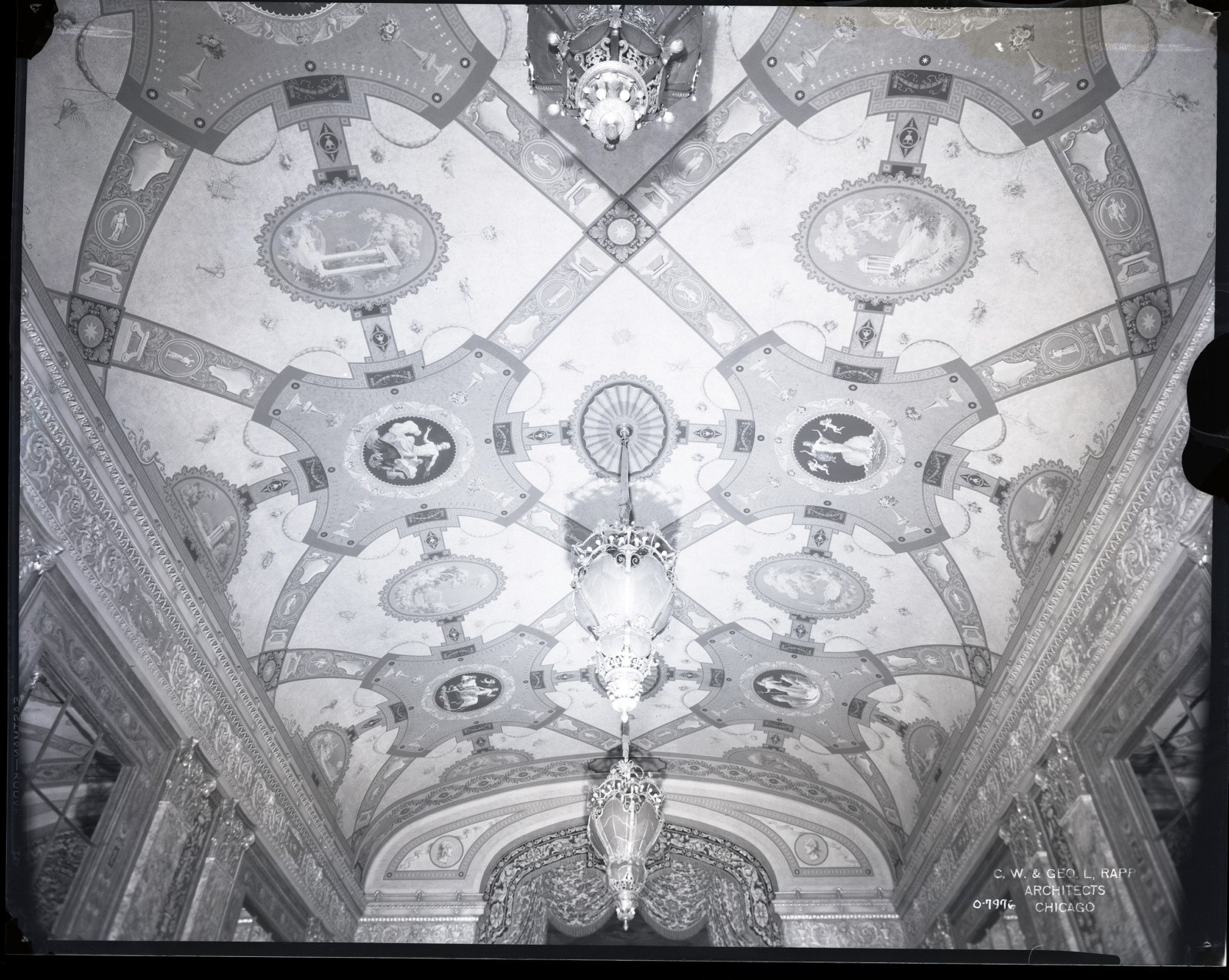
- 1921: Chicago Theatre grand opening decoration and mural installation surrounding the interior proscenium featured French themed massive murals.
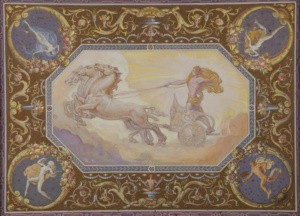
- 1926: Times Square Paramount Theatre large Apollo mural inside the Grande marble-lined lobby spanning 100 feet.
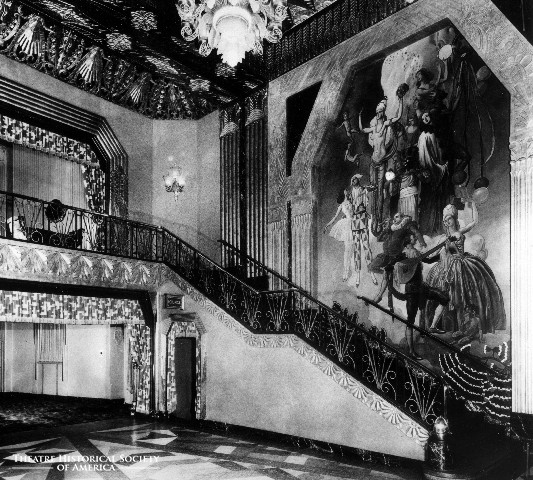
- 1929: Toledo Paramount Theatre grande lobby and foyers complete designed and hand drawn by Grell and his team of assistants.
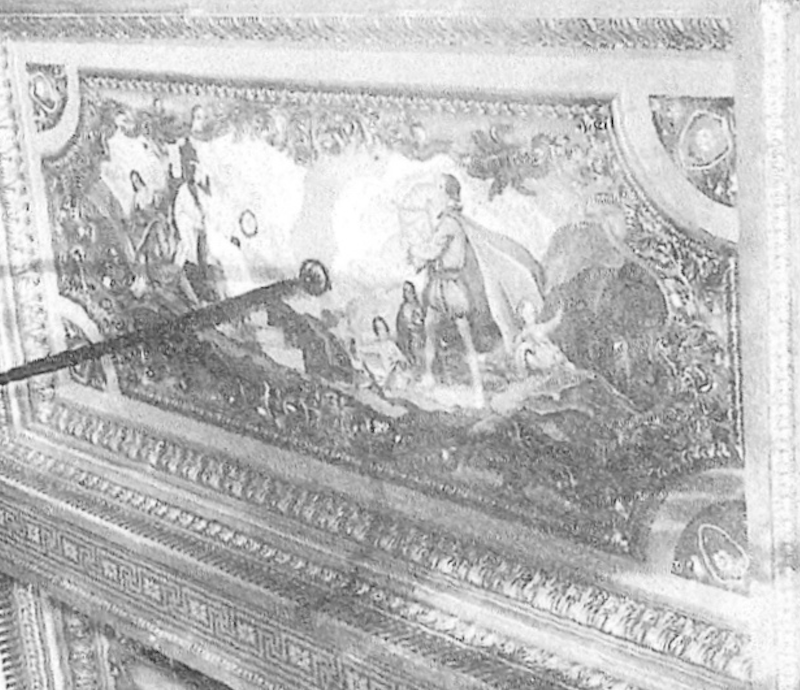
- 1933: Grell executes the large-scale Bacchus “Spirit of Light” proscenium and eight massive mythological murals for the historic Chicago Theatre redecoration.
- August 31, 1935: The Fountain Square Hotel (Cincinnati, OH) officially unveils Grell’s epic mural, The Feast of Bacchus on Mt. Olympus, inside the famous Fountain Bar (The Cincinnati Enquirer, August 31, 1935 p. 2). This marks Grell’s first major corporate commission for Albert Pick Hotels, occurring four years before the launch of the Purple Cow campaign.
- Launching the Purple Cow Campaign & poet Joseph Langland Crossover (1939 – 1941, 1946)
- Late 1939: Albert Pick Jr. and Executive Director Mr. Moss persuade a hesitant Grell to “imagineer” a whimsical restaurant campaign based on Gelett Burgess’s 1895 Purple Cow poem. Grell begins painting the master canvases by hand inside his Tree Studios apartment.
- Early 1940: The inaugural Purple Cow shop featuring Grell’s custom murals opens at the Pick-Ohio Hotel in Youngstown, Ohio.
- 1941: (Young Thing) is completed and installed inside the newly opened Purple Cow shop at the Pick Durant Hotel in Flint, Michigan. Mural fragment 41” x 54”
- Late 1941: The Pick-Ohio Hotel launches an interactive marketing jingle competition. Future celebrated American poet Joseph Langland wins the $25 grand prize for his Red Skelton-inspired, Tend a Furnace “SHE DOOD IT” mural poem. This marks Langland’s first paid writing contract ($1 per word) prior to his deployment in WWII. In 1946 Langland returns for the famous photo with his wife Judy sitting at a booth under the purple cow mural with his wining jingle.
- The Critic’s Canonization & The Post-War Disney Homage (1942 – 1948)
- December 21, 1942: The Chicago Daily News publishes a feature on Grell working inside his freezing studio on his landmark Mark Twain mural series for the Albert Pick hotel chain in St. Louis.
- September 17, 1944: Famed Chicago Tribune art critic Eleanor Jewett praises Grell’s exhibition at the Chicago Galleries, declaring his “Legendary American Characters” series to be “one of the most fascinating groups of paintings being painted today.” Article discovered in April 2026.
- 1945: (Ferdinand the Bull) is installed in the Purple Cow at the Hotel Jermyn (Scranton, PA). Grell intentionally breaks his standard purple-heifer motif to paint a rare black steer with parted hair—a deliberate, anthropomorphic homage to his former student Walt Disney’s 1938 Oscar-winning animated short. Grell’s first Ferdinand is installed in early 1940 inside the Purple Cow shop, Hotel Miami, Dayton, OH. This is the only known surviving Ferdinand Grell mural fragment, (48” x 60”).
- May 1948: Pick Topicks magazine releases a cover feature officially canonizing Grell as the “Artist-Creator of Our Public Room and Purple Cow Murals.” Grell’s wife, Friedl, hand-writes on the family archive copy that Louis personally executed the Hotel Jermyn mural, solidifying the corporate history detailed by the Pick Hotels Corporation.
- The Studio Record & The Doris Day Media Event (1951 – 1953)
- 1951: Back at Tree Studios, Grell paints (Bacchus and Ariadne)—a 46″ x 60″ master studio canvas recording the central figures of his compromised 1935 Cincinnati mural. Four silver gelatin photographs physically capture him working on this canvas with his brush and mahlstick. These exact negatives, scans onto a CD and prints are held by Richard Grell Archives.
- September–October 1952: The Tree Studios easel photograph (#2 of 4) showing Grell painting Bacchus is published on page 6 of Pick Topicks magazine.
- August 6, 1953: Hollywood icon Doris Day stages her famous “EVEN TRADE” media event inside the Pick Durant Hotel’s Purple Cow shop, surrounded by Grell’s murals. She exchanges her hit Columbia Records single “Purple Cow” for a Grell-designed menu with Albert Pick Jr. (The Flint Journal, p. 25). The Journal proclaims that Ms. Day’s hit single was directly inspired by the Pick Hotels Purple Cow venues. Article discovered in January 2026.
- Elvis Presley’s Pajama Recording Session: Elvis Presley was a frequent guest at the Albert Pick Motel in Nashville, Tennessee during the 1960s. Located on Murfreesboro Road, it was his preferred place to stay when recording historic tracks down the street at RCA Studio B. The Studio B Escape: Colonel Tom Parker intentionally booked Elvis at the Albert Pick rather than downtown luxury venues to avoid the massive crowds of fans. The Pajama Session: On June 10, 1966, Elvis famously stayed in his room at the Albert Pick Motel and laid down the initial vocal tracking for his song “Indescribably Blue” while wearing his pajamas, singing along to a battery-powered tape player. The Nashville property featured two on-site restaurants, allowing Elvis and his entourage to dine safely away from the public. It is reported that Elvis Presley spent the night at the Hotel Kansan while on tour and visited the Purple Cow restaurant at that hotel on May 21, 1956 after performing at the Topeka Performing Arts Center.
- The Estate Chain of Title & The Institutional Monopoly (1960 – 2019)
- 1960: Upon Louis Grell’s passing, Bacchus and Ariadne (1951) painting is inherited by his widow, Fredricka.
- 1970: Fredricka Grell transfers the painting directly to her primary estate attorney. It passes down to his daughter by direct descent, staying securely out of the public eye for decades.
- 1990’s University Acquisition: Kettering University (Flint, MI) acquires nine Grell purple cow murals formerly hanging on the walls of the Hotel Durant. Two of the more locally themed murals (GM TECH & HOW SHE CAN COOK) were conserved and placed on permanent exhibit inside Factory One. GM TECH hangs inside the GM Purple Cow café on the second floor. One mural is missing and YOUNG THING is held by a Grell family member. The other seven remain part of the universities permanent collection. GM, through Kettering University at Factory One recreates a Purple Cow shop and permanently exhibits its GM TECH mural prominently inside for public viewing.
- May – September 2012: Richard Grell provides the Walt Disney Family Museum with academic proof of the Disney-Grell connection. Following initial resistance, Walt’s direct heir, Diane Disney Miller, personally authorizes a historic breach of protocol.
- November 12, 2012: The Illinois Board of Higher Education (IBHE) issues an official letter signed by Interim Executive Director Dr. Harry J. Berman, attaching Walt Disney’s 1917–1918 transcripts and explicitly stating: “Your request is the first time the IBHE has received a request for Walt Disney’s transcripts.” A Disney heir must initiate the request.
- November 19, 2013: Diane Disney Miller passes away after a fall earlier in the year, leaving this the only authorized Disney transcript release in history through the IBHE.
- 2019: The current owner officially acquires Bacchus and Ariadne from the attorney’s daughter, successfully uniting the four physical masterpieces and their respective archives under a single, market-fresh collection.
- Contemporary Museum Exhibitions & Civic Canonization (2012 – 2025)
- 2012 – 2017 (The Courthouse Exhibition): Grell’s works are featured in a high-profile, two-man public exhibition alongside legendary American Regionalist Grant Wood at the Pottawattamie County Courthouse (Iowa). Titled Lobby Art, the public exhibition is curated by a local selection committee and formally approved via an official vote by the County Board of Supervisors. The historic exhibition physically pairs eight major Grell works directly opposite mural fragments of Grant Wood’s landmark 1927 Corn Room mural (originally painted for the Hotel Chieftain). An additional five Grell works are installed on the walls of the County Recorder’s office for public viewing near the lobby display. The exhibition receives widespread media coverage in the Omaha World-Herald and The Nonpareil.
- Fall Semester 2013: The University of Nebraska at Omaha (UNO) launches a specialized, semester-long curatorial class focused exclusively on Grell’s career, technique, and life achievements. The academic coursework culminates in a UNO-produced documentary broadcasted on Nebraska Public TV.
- January – February 2014: The UNO academic project concludes with a major public exhibition at the on-campus UNO Art Gallery, drawing widespread critical coverage from the Omaha World-Herald and The Nonpareil newspapers.
- October 2014: Marquee magazine publishes a comprehensive cover feature on Grell, dedicating numerous internal articles to his career and reproducing a vast collection of his paintings and preparatory works.
- January 2015: PBS Chicago Tonight produces and airs “Chicago Theatre Mural Painter: Chicago-based painter Louis Grell was nearly forgotten until family members intervened.” A seven-minute documentary on Grell’s work inside the “Wonder Theatre of America.”
- October – December 2015: The prestigious Kodner Gallery (St. Louis, MO) hosts a major two-man exhibition featuring Grell alongside an elite regional restoration artist. The centerpiece of the exhibition is the grand public unveiling of Grell’s fully restored, landmark 1942 Union Station mural, Commerce on the Landing (permanently installed in the Grand Hall hotel lobby). The exhibition spans a massive venue adjacent to the main lobby, displaying twenty curated masterpieces by Grell alongside restoration works by Irek Szelag. In 2015, John Kodner conservatively valued Commerce on the Landing at $150,000.
- November 2015: PBS Living St. Louis produces and airs “Louis Grell Exhibit” An eleven-minute video features the Grell / Szelag exhibit at Union Station and the unveiling ceremony for Commerce on the Landing now hanging inside the Grande Hall at Union Station.
- Fall 2024: Pennsylvania Heritage magazine cover and inside article spread of Grell’s masterpiece Johnny Appleseed (1944) garners national attention.
- December 2025 (The Permanent Civic Legacy): Prominent businessman and local historian Richard “Dick” Miller coordinates and finances a new permanent exhibition inside the newly renovated Pottawattamie County Courthouse lobby. Following another formal approval vote by the County Commission, five major Grell works are permanently installed. This civic installation is heavily marketed as a city-wide cultural event alongside Grant Wood’s monumental Kanesville mural now on permanent exhibit at the PACE Hoff Center, permanently anchoring Louis Grell’s legacy alongside the top tier of American mid-century art. The City and County routinely advertise and announce the Grell exhibit at the courthouse along with the collection of Grant Wood mural fragments from the old Chieftain Hotel from 1927 and his large Kanesville signed mural now on permanent exhibit at the nearby Hoff Pottawattamie Arts, Culture and Entertainment (PACE) center right down the street from the courthouse. These two separated physically, but combined by the city and county as an ongoing public art exhibit of these two great American Iowa Regionalist artists.
