


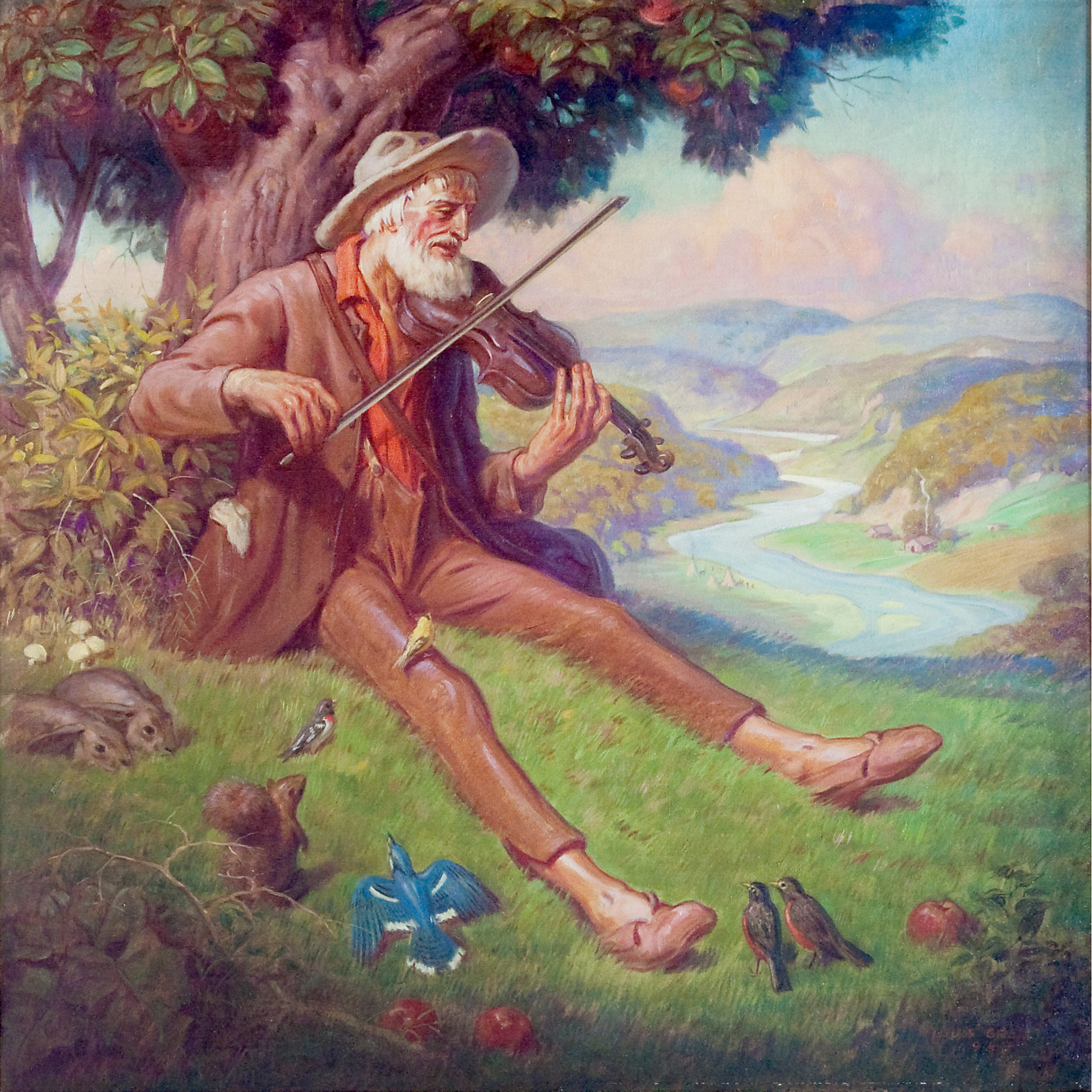
JOHNNY APPLESEED
LOUIS GRELL · 1944
Oil on canvas · 31 × 31 inches
Signed lower right: “LOUIS GRELL 1944”
A LEGENDARY AMERICAN CHARACTER
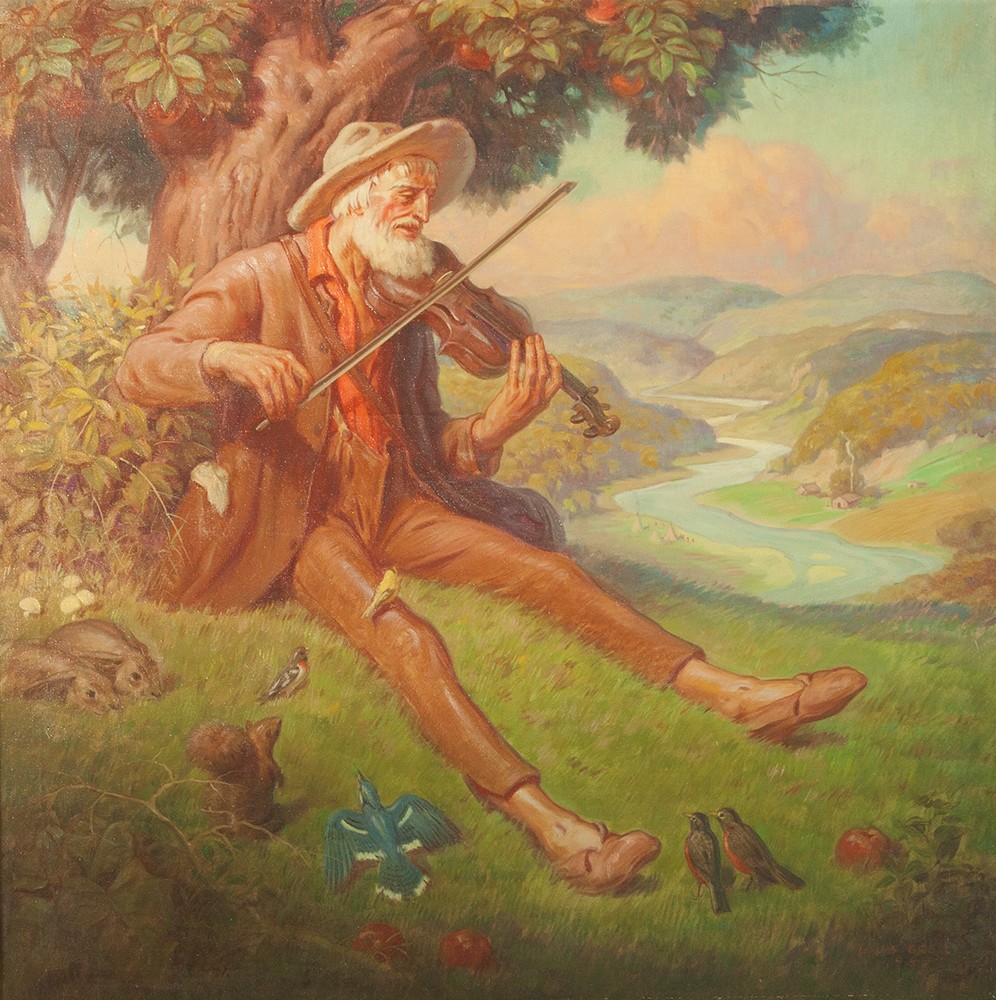
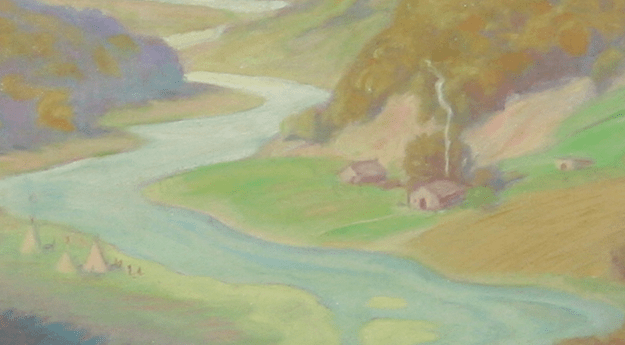
Look closely at the landscape as well as the figure. The fractured vegetation at lower left, violet passages in the clouds, distant camps, animals and expansive imagined terrain belong to a visual vocabulary that appears repeatedly throughout Grell’s work. Here those familiar elements are brought together in the service of an American legend.
In 1944, Louis Grell turned to one of America’s enduring folk figures: John Chapman, better known as Johnny Appleseed.
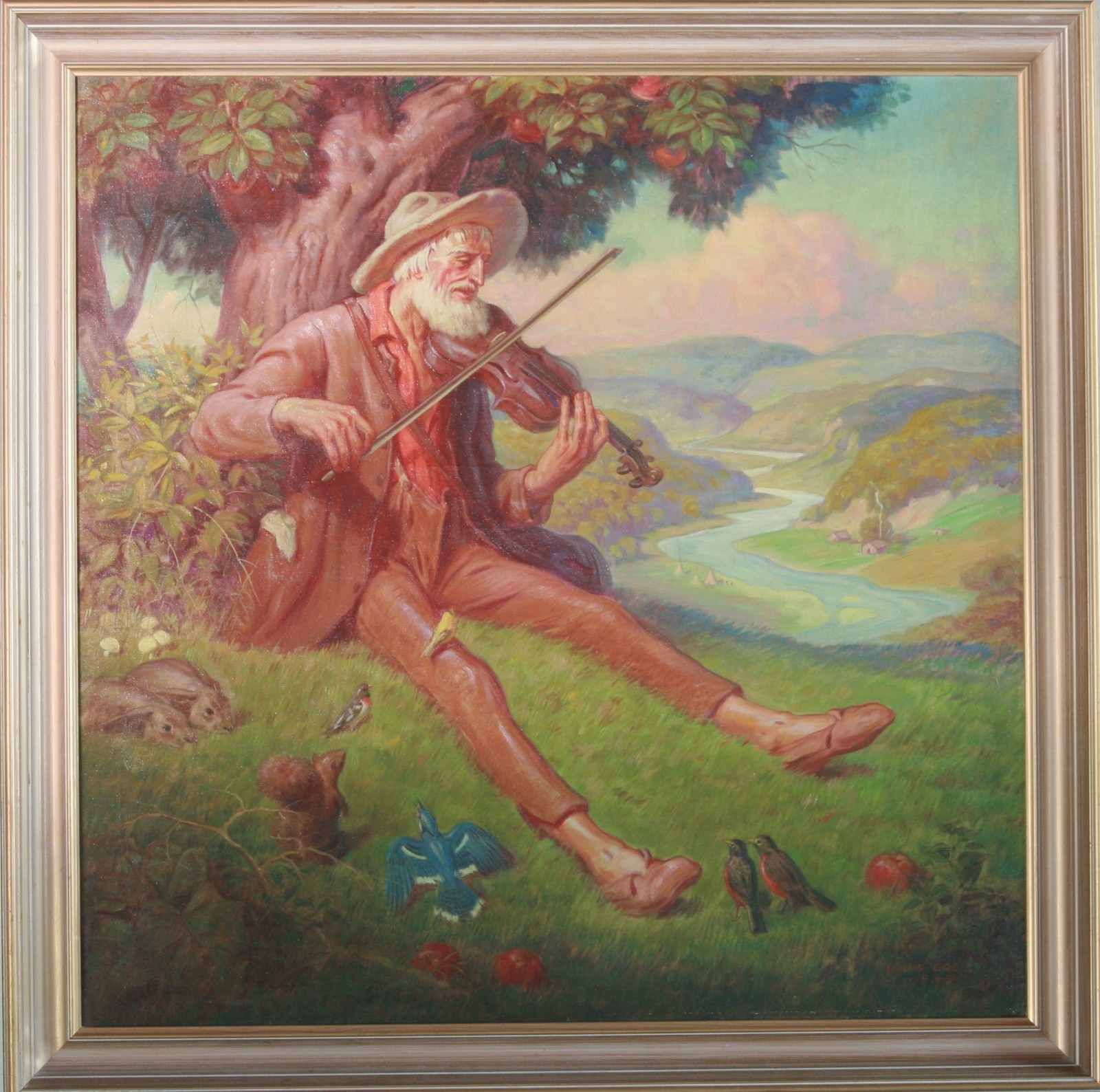
Grell depicts the legendary nurseryman not simply as a historical figure, but as an almost mythic guardian of the American landscape. Seated beneath an immense tree and playing his violin, Johnny is surrounded by birds and small animals while a river valley opens into the distance behind him.
The painting contains elements that recur throughout Grell’s work: theatrical landscape, dramatically fractured vegetation, violet and blue atmospheric passages, animals integrated into the narrative, and an expansive imagined world extending far beyond the principal figure.
For decades, however, an important part of the painting’s history had been missing.
THE 1944 DISCOVERY

In September 1944, Grell exhibited Johnny Appleseed at the 24th Exhibition by Artist Associates at the Chicago Galleries, 215 N. Michigan Avenue.
The exhibition was reviewed by longtime Chicago Tribune art critic Eleanor Jewett on September 17, 1944.
Her review provides something much more important than a favorable contemporary notice. It identifies Johnny Appleseed as the beginning of a larger artistic project.
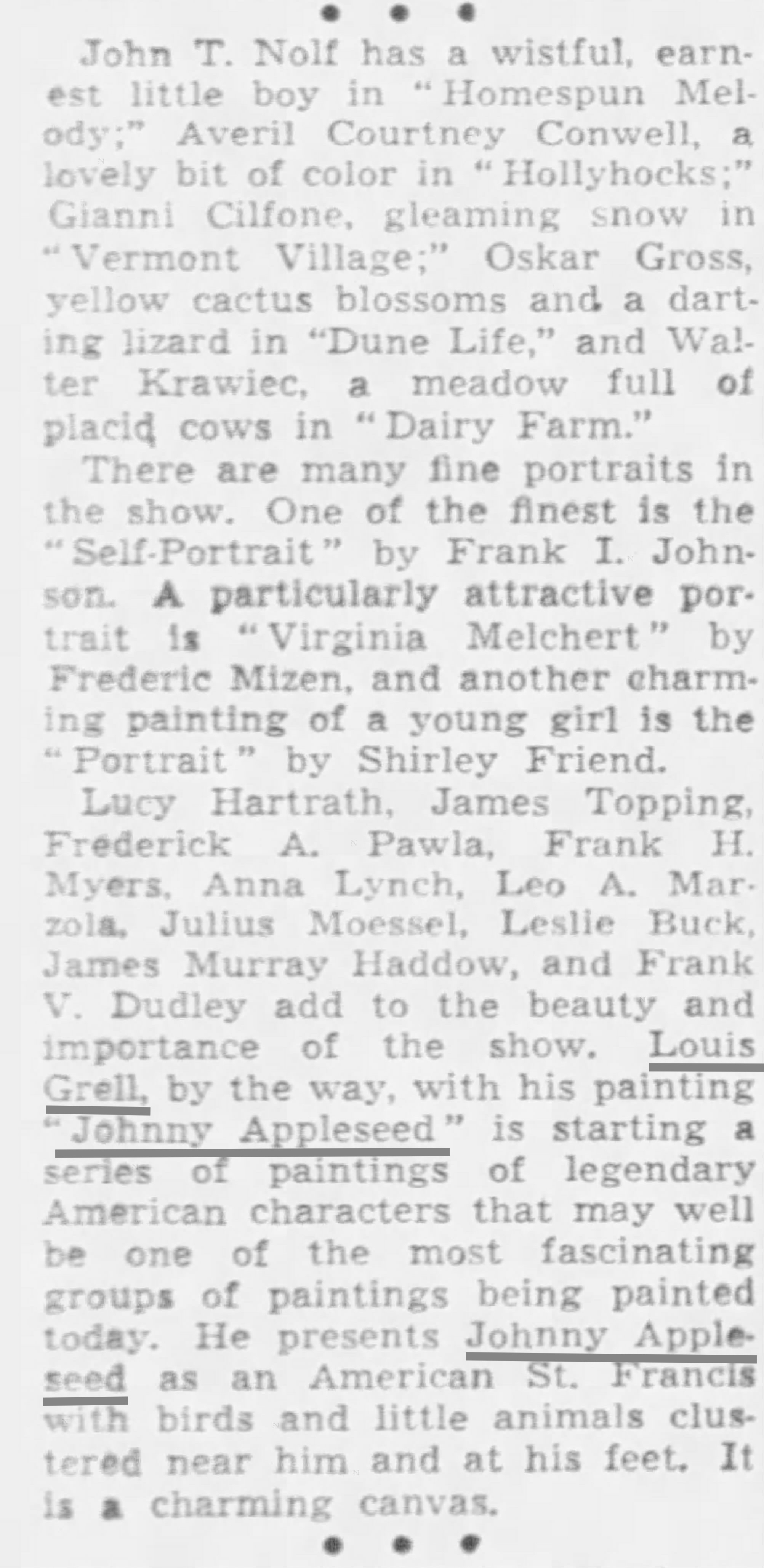
Jewett wrote that Grell, with Johnny Appleseed, was:
“starting a series of paintings of legendary American characters”
and described the proposed series as one that:
“may well be one of the most fascinating groups of paintings being painted today.”
She then described Grell’s conception of Johnny Appleseed as an “American St. Francis,” surrounded by birds and small animals, concluding:
“It is a charming canvas.”
The discovery transforms our understanding of the painting.
Johnny Appleseed was not conceived merely as an isolated treatment of an American folk hero. By September 1944, Grell was publicly identified as developing a series devoted to legendary American characters.
The extent to which that series was ultimately completed remains an open research question.
“AN AMERICAN ST. FRANCIS”
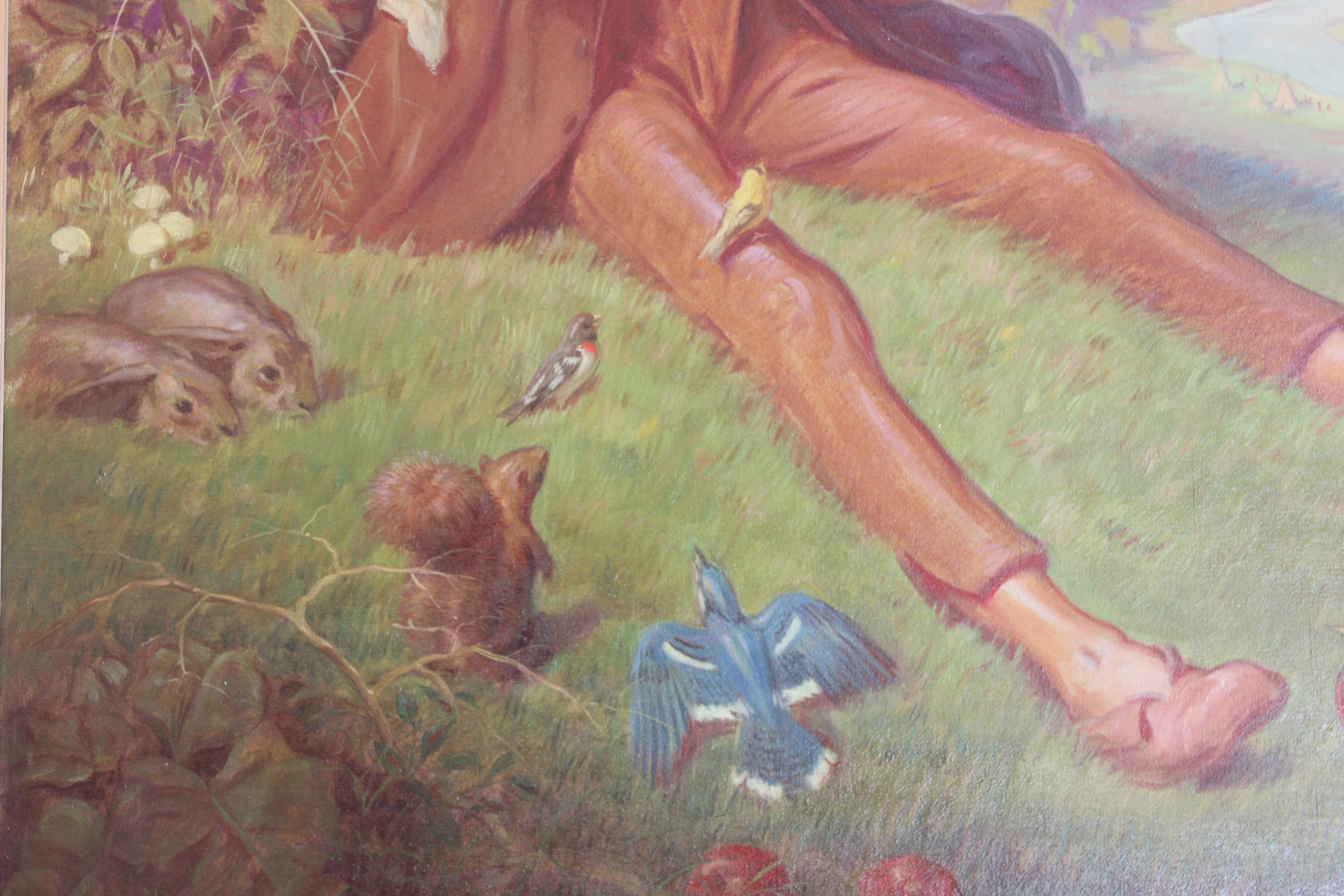
Jewett’s description reveals how a contemporary critic understood Grell’s imagery.
Rather than concentrating upon Chapman planting trees, Grell presents him at rest in nature. Birds gather around him and animals cluster near his feet as he plays his violin. The historical Johnny Appleseed has become something larger—a distinctly American folk figure interpreted through an older artistic tradition.
Grell’s Johnny Appleseed was both pioneer and legend: an “American St. Francis.”
FROM CHICAGO TO THE GRELL FAMILY
Five years after the Chicago exhibition, Johnny Appleseed appears again in the historical record.
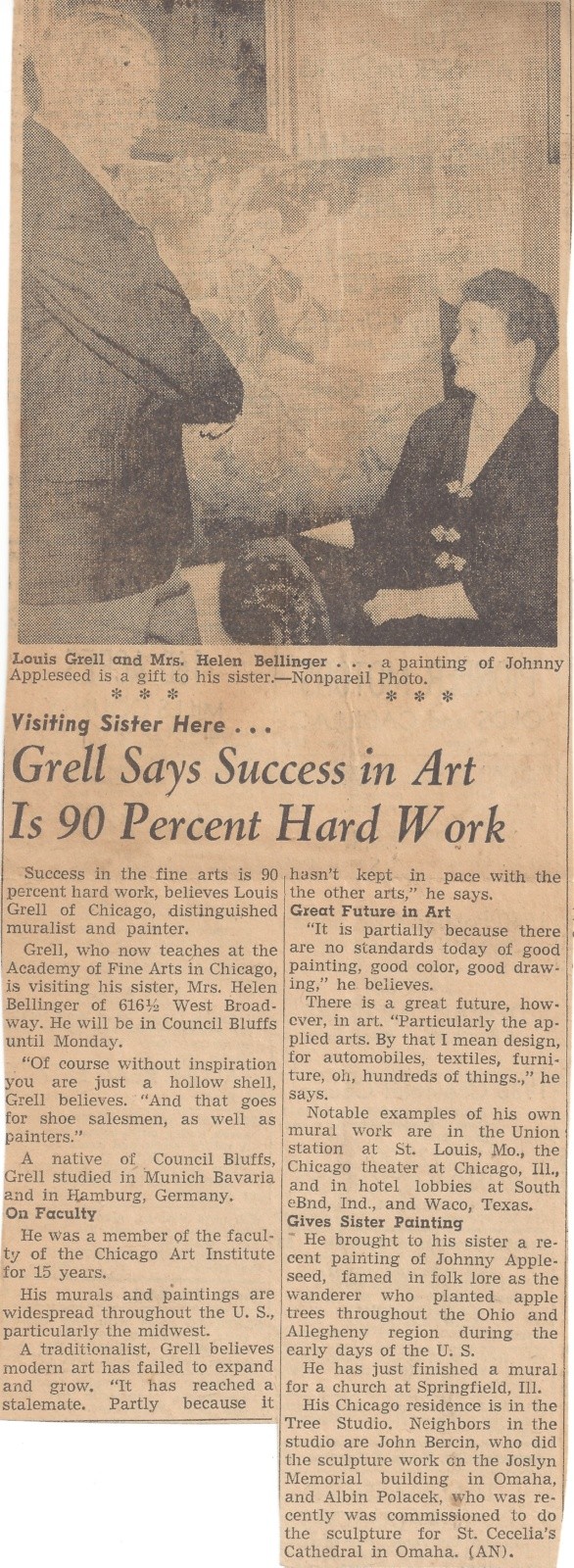
In November 1949, The Daily Nonpareil photographed Louis Grell with his sister, Helen Bellinger, and reported that Grell had brought her the painting as a gift.
The photograph is particularly valuable because it documents the painting with Grell himself only five years after its creation and establishes its passage directly into the Grell family.
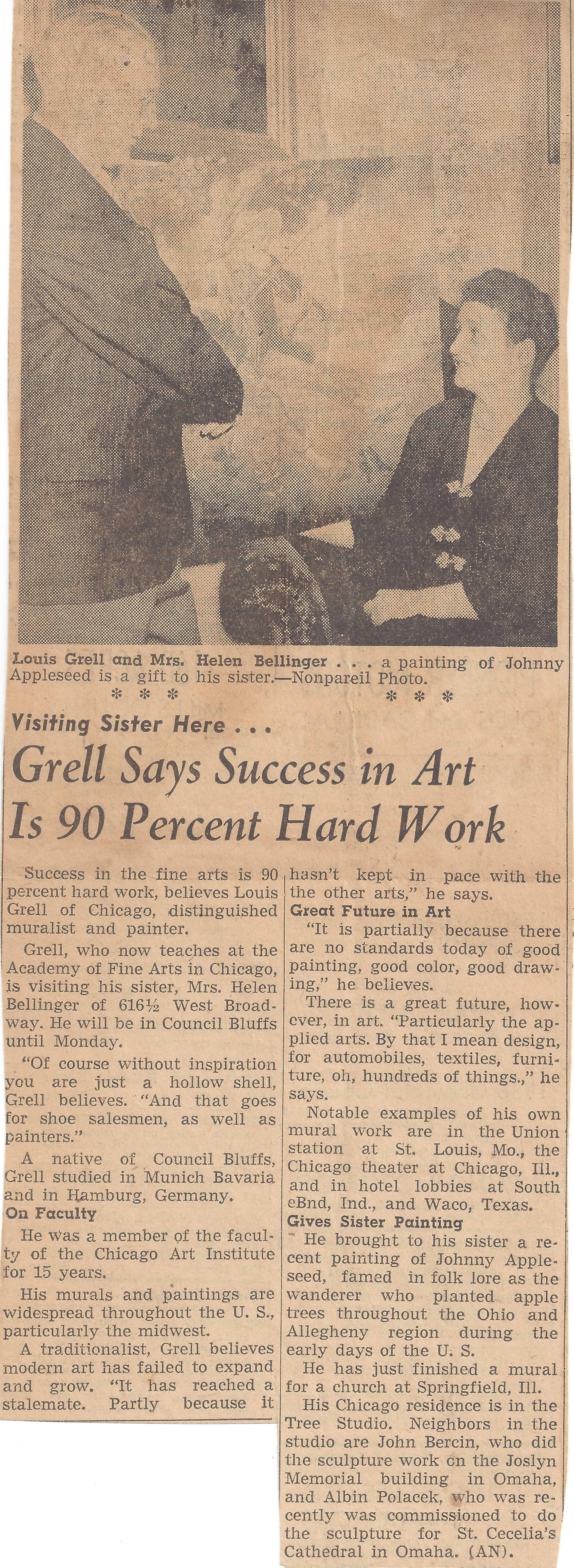
LOUIS GRELL, HELEN BELLINGER AND JOHNNY APPLESEED · 1949
The Daily Nonpareil, Council Bluffs, November 9, 1949. Grell is photographed presenting the painting to his sister Helen Bellinger five years after its 1944 Chicago exhibition.
THE PAINTING RETURNS TO THE RECORD
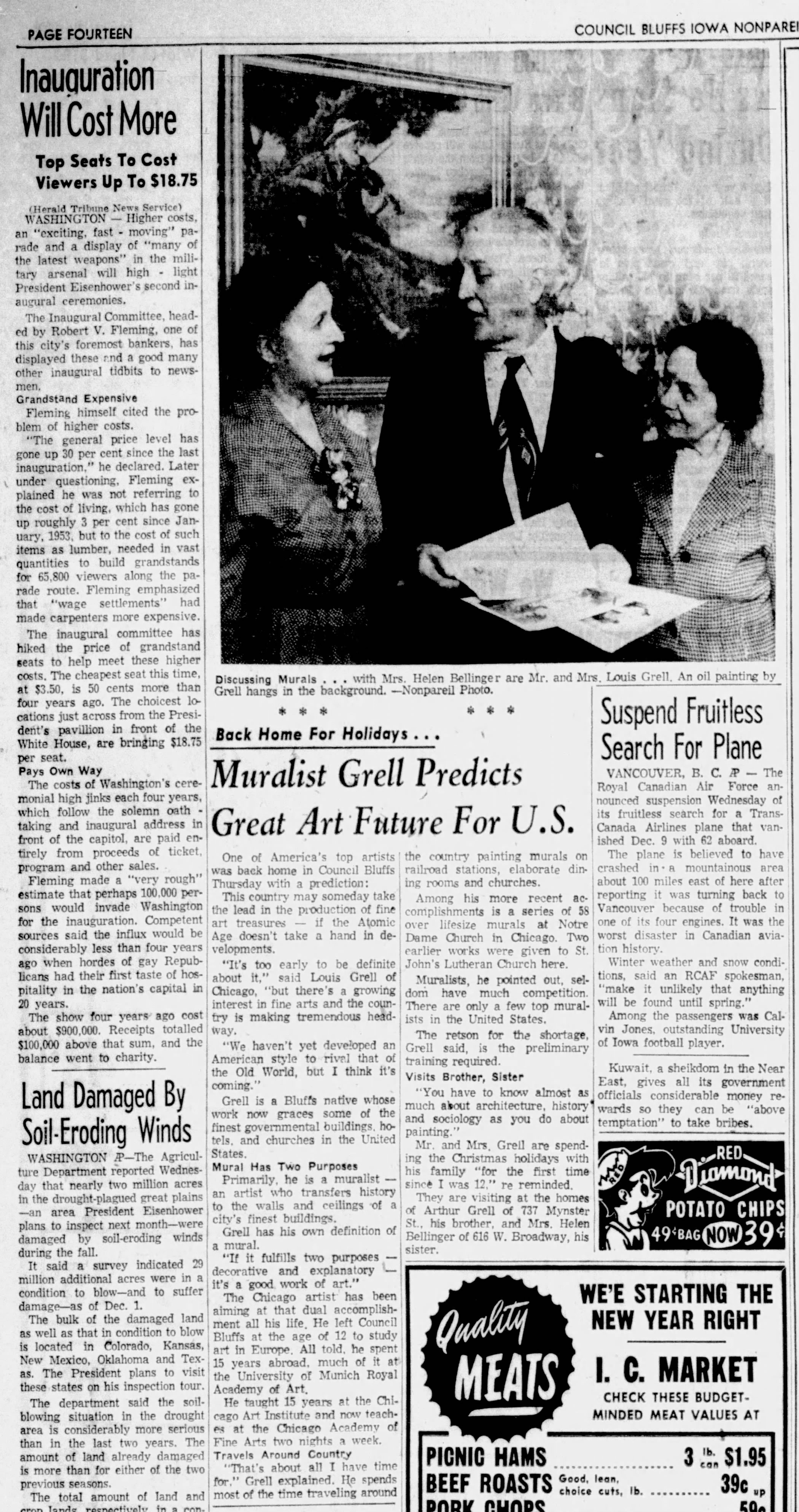
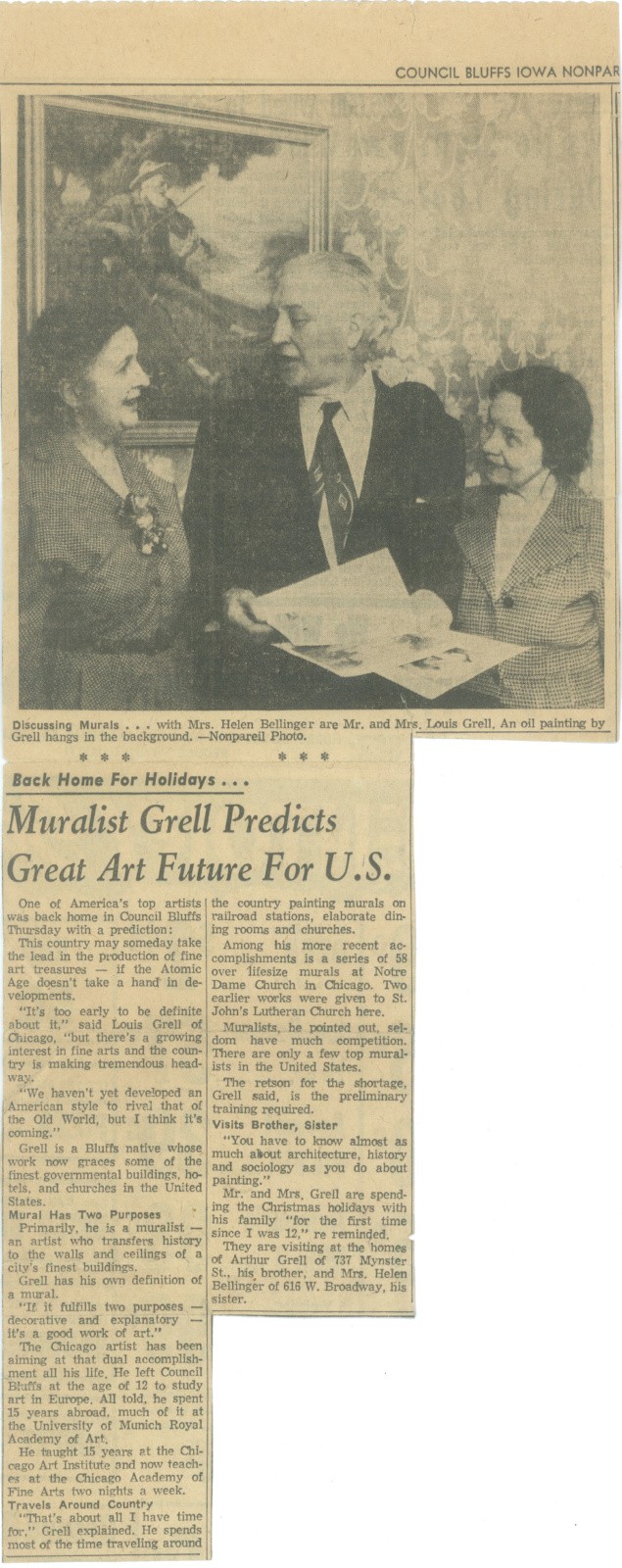
The painting was photographed again on December 27, 1956 when Grell returned to Council Bluffs.
In an interview titled “Muralist Grell Predicts Great Art Future For U.S.”, The Daily Nonpareil discussed Grell’s career as a muralist and painter while Johnny Appleseed hung visibly in the background.
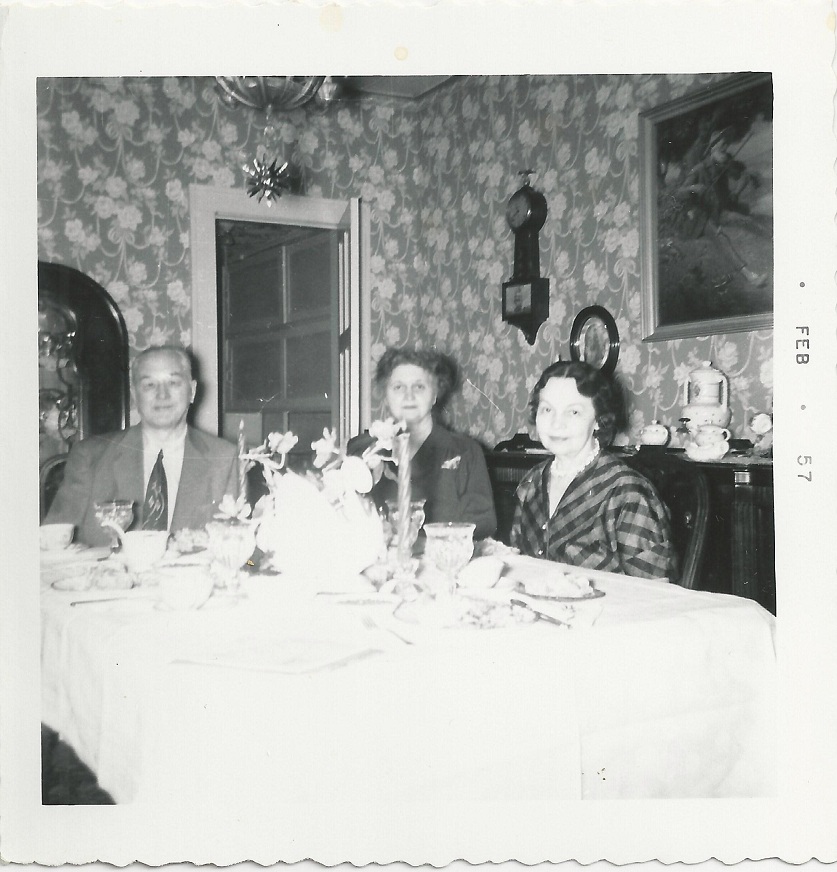
JOHNNY APPLESEED AND GRANT WOOD
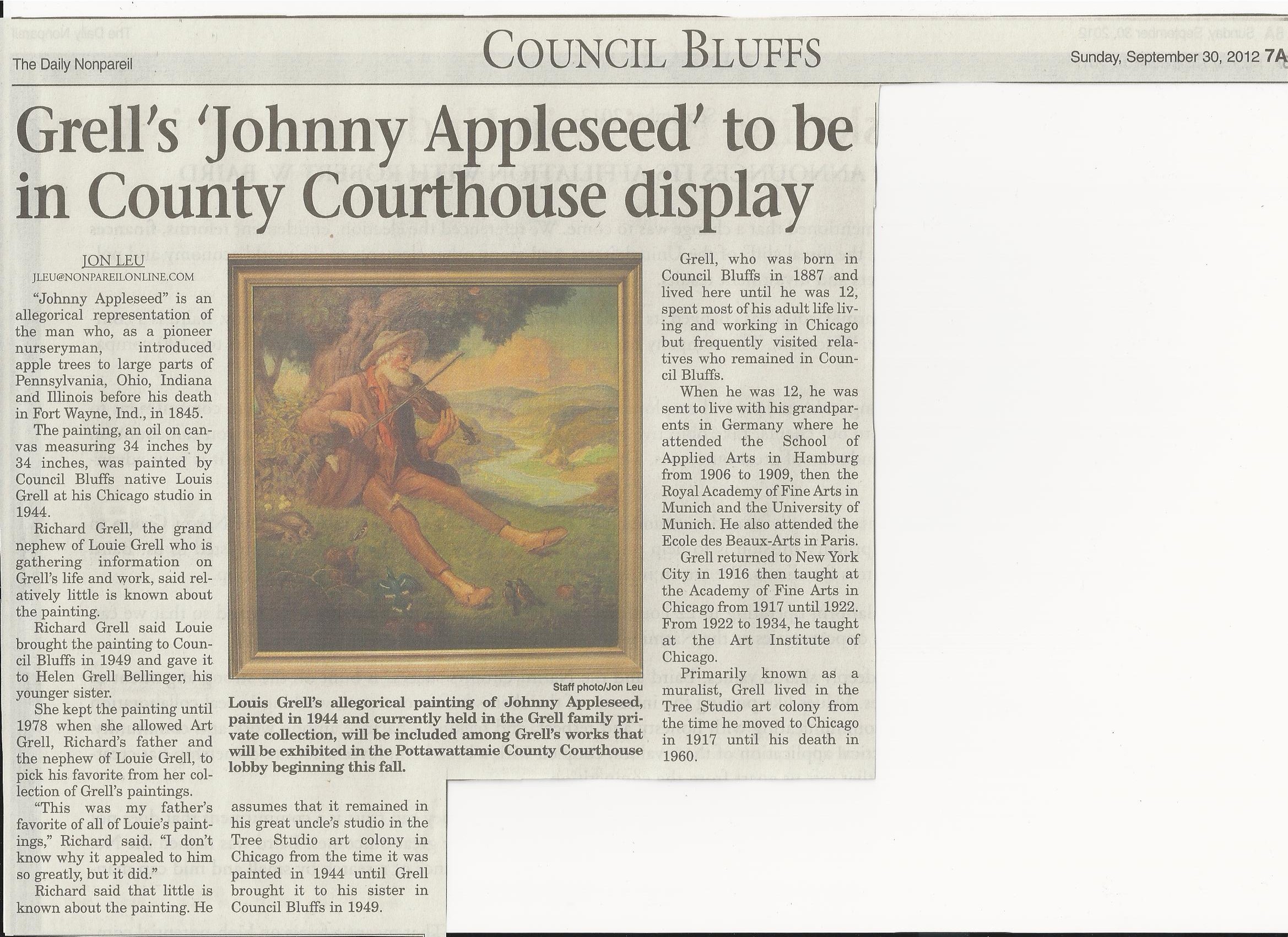
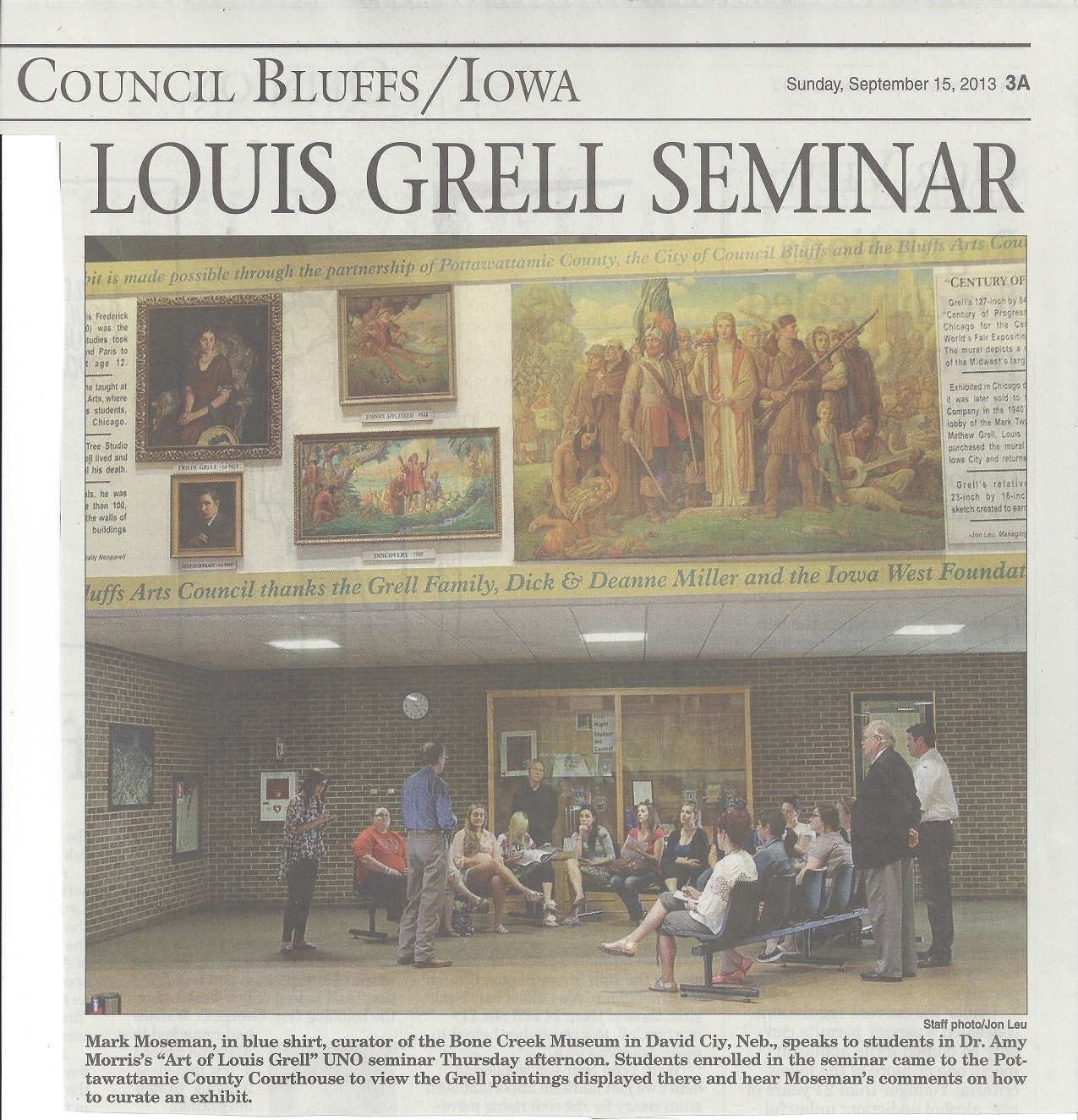
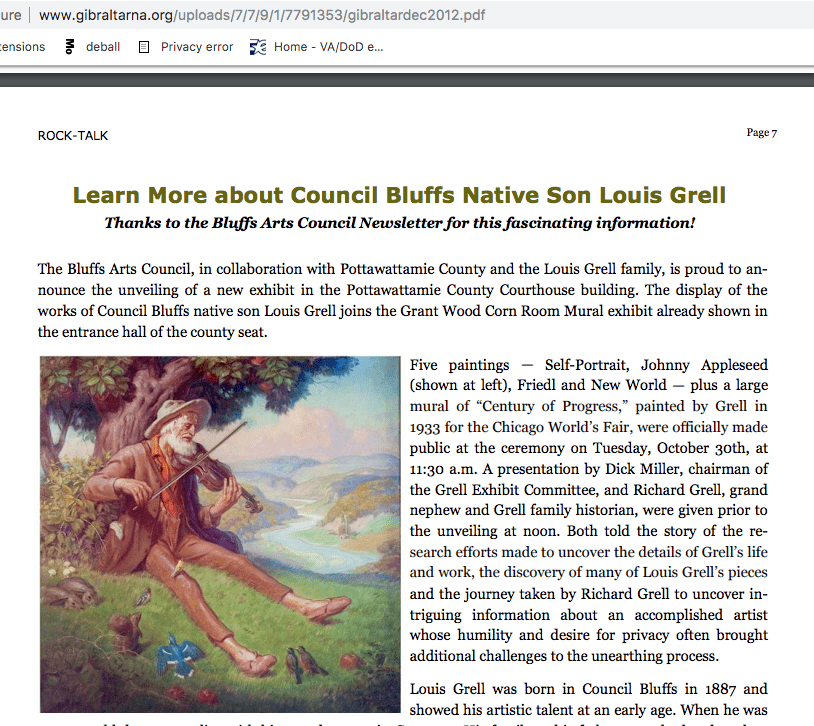
In 2012, Johnny Appleseed returned to public exhibition in Grell’s birthplace of Council Bluffs, Iowa.
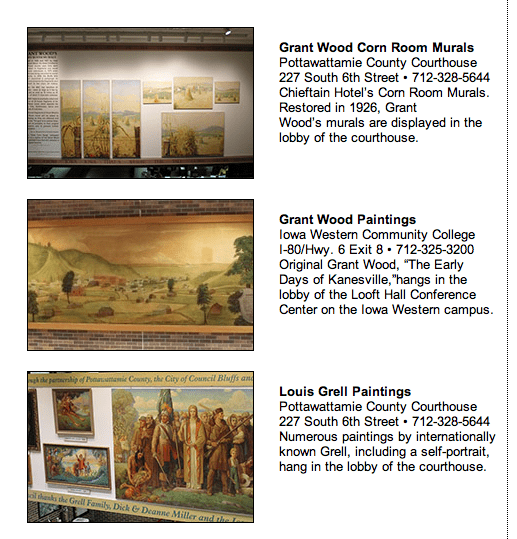
The painting was included in the Grant Wood–Louis Grell two-man exhibition at the Pottawattamie County Courthouse, where works by the two Iowa-born artists were presented together.
Johnny Appleseed remained on exhibition as part of this extended presentation from 2012 to 2017.
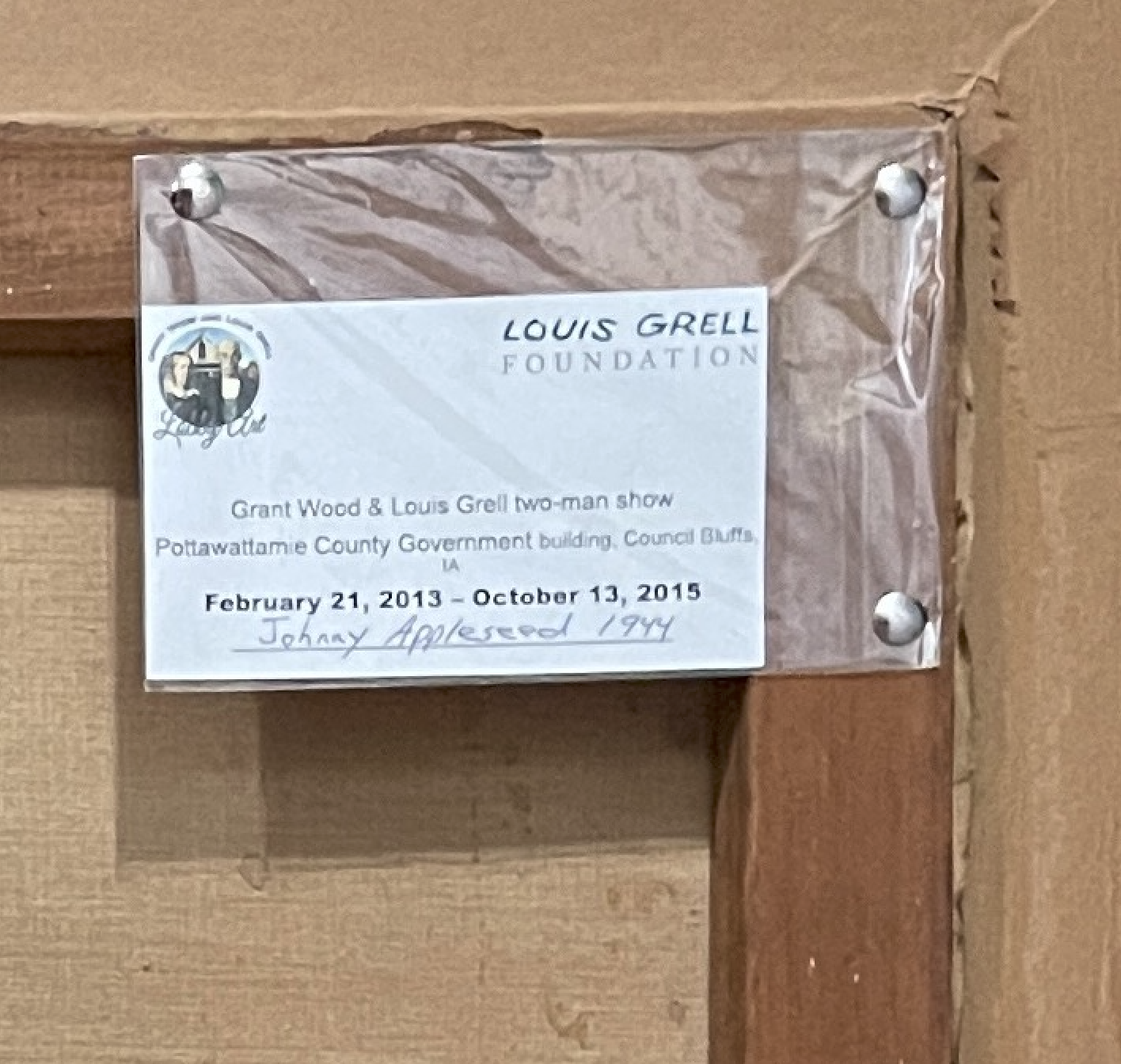
GRANT WOOD & LOUIS GRELL · TWO-MAN EXHIBITION
Pottawattamie County Government Building, Council Bluffs, Iowa, 2012–2017. Johnny Appleseed was among the Grell works exhibited alongside works by Grant Wood.
A PAINTING RETURNS TO NATIONAL VIEW
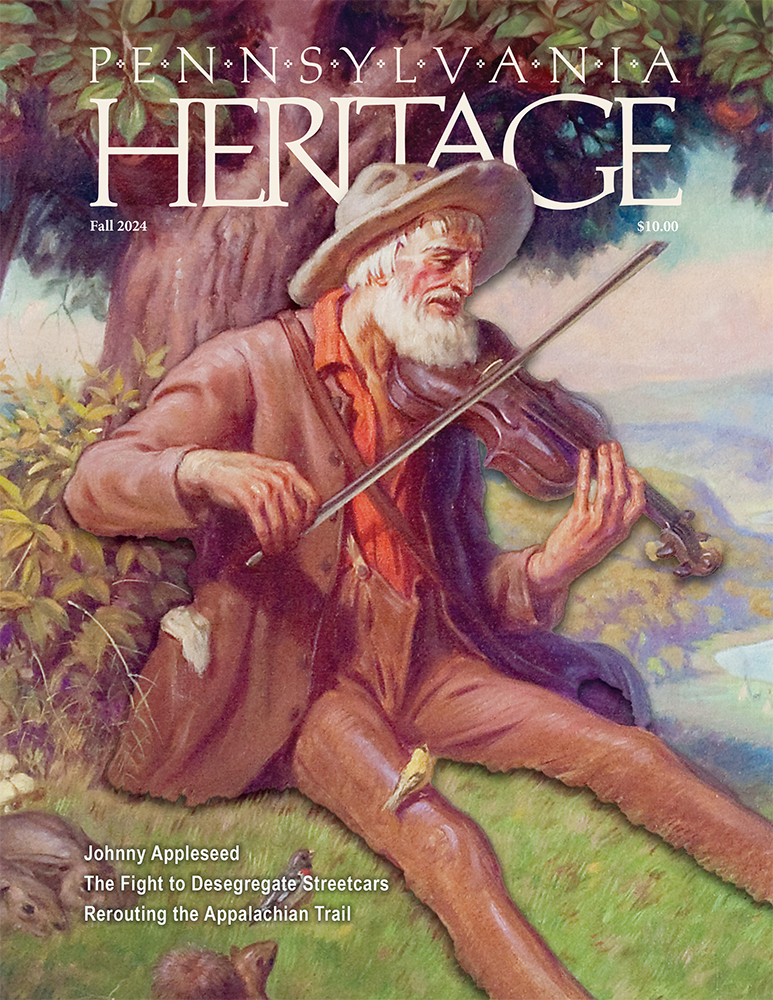
PENNSYLVANIA HERITAGE · FALL 2024
Eighty years after its creation and its Chicago exhibition, Grell’s Johnny Appleseed received an unexpected new public life.
The Pennsylvania Historical & Museum Commission’s Pennsylvania Heritage selected the painting for the cover of its Fall 2024 issue, accompanying Don Sarvey’s feature, “The Appleseed of a Nation.”
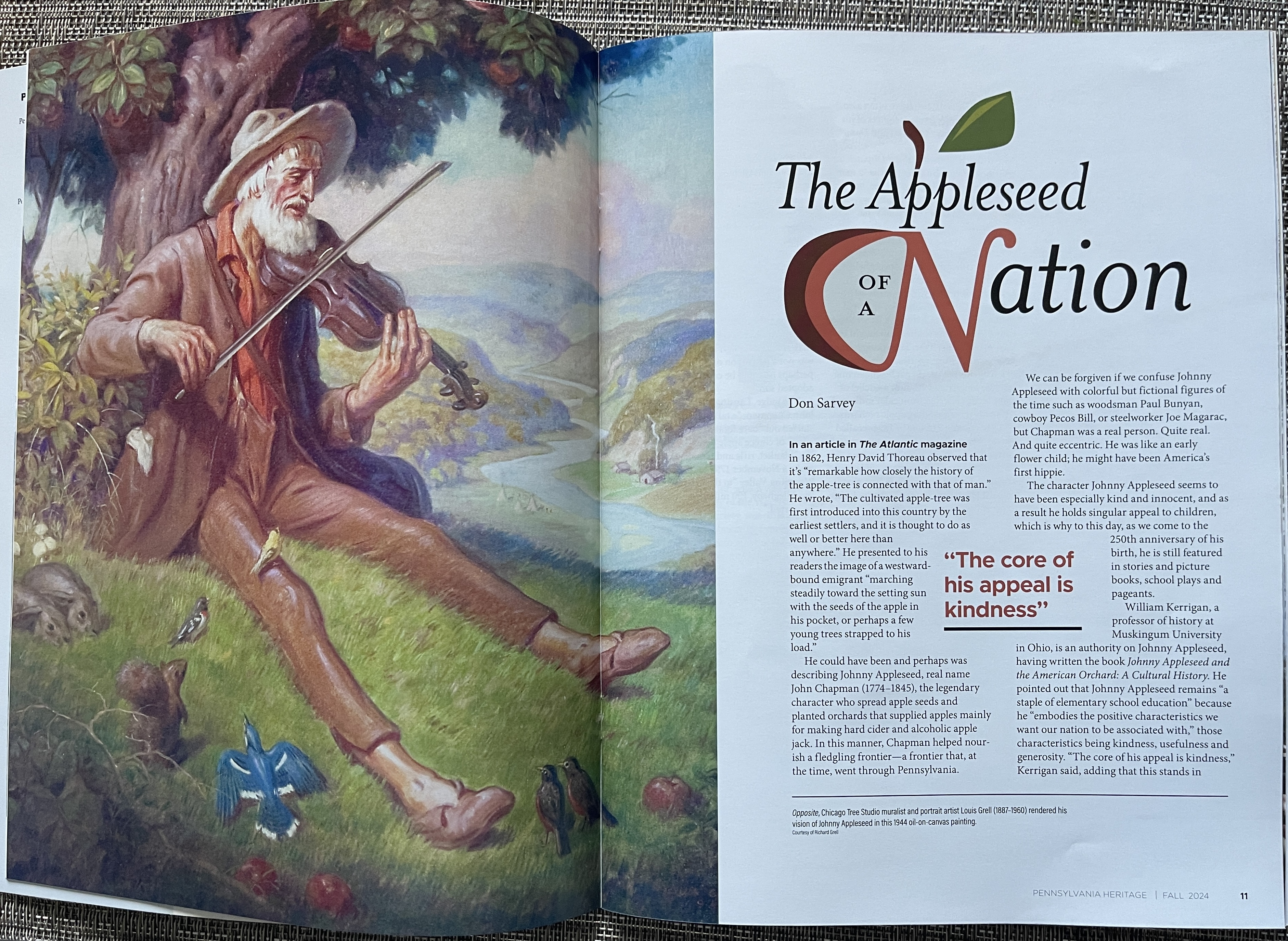
The painting was also reproduced prominently inside the magazine, where it introduces the article on Johnny Appleseed.
The publication brings Grell’s 1944 interpretation of the American folk figure back into precisely the historical context in which the painting originated: the continuing American story of John Chapman and the legend that grew around him.
1944: Chicago.
2024: Pennsylvania.
Eighty years apart, the same painting tells the same American story.
EIGHT DECADES OF DOCUMENTATION
1944 — Painted and signed by Louis Grell. Exhibited at the 24th Exhibition by Artist Associates, Chicago Galleries. Reviewed by Eleanor Jewett in the Chicago Tribune.
1949 — Grell brings Johnny Appleseed to Council Bluffs and presents it to his sister Helen Bellinger. Grell, Bellinger and the painting are photographed by The Daily Nonpareil.
1956 — The painting appears again in The Daily Nonpareil during Grell’s Christmas visit to Council Bluffs.
2012–2017 — Exhibited in the Grant Wood–Louis Grell two-man exhibition at the Pottawattamie County Courthouse.
2024 — Selected for the cover of Pennsylvania Heritage and reproduced inside the Fall 2024 issue accompanying “The Appleseed of a Nation.”
JOHNNY APPLESEED
Louis Grell (1887–1960)
1944
Oil on canvas
31 × 31 inches
Frame: 35½ × 35¾ inches
Signed lower right: LOUIS GRELL 1944
Grell Family Collection
EXHIBITION HISTORY
1944 — 24th Exhibition by Artist Associates, Chicago Galleries, 215 N. Michigan Avenue, Chicago, Illinois.
2012–2017 — Grant Wood–Louis Grell Two-Man Exhibition, Pottawattamie County Courthouse, Council Bluffs, Iowa.
SELECTED LITERATURE
Jewett, Eleanor. “Exciting Color and Vigor in Fall Art Show.” Chicago Sunday Tribune, September 17, 1944, Part 7, p. 4 [newspaper page 75].
“Visiting Sister Here…Grell Says Success in Art Is 90 Percent Hard Work.” The Daily Nonpareil, November 9, 1949, p. 14.
“Muralist Grell Predicts Great Art Future For U.S.” The Daily Nonpareil, December 27, 1956, p. 14.
Leu, Jon. “Grell’s ‘Johnny Appleseed’ to be in County Courthouse display.” The Daily Nonpareil, September 30, 2012, p. 7A.
Sarvey, Don. “The Appleseed of a Nation.” Pennsylvania Heritage, Fall 2024, pp. 10–17. Johnny Appleseed reproduced on the cover and p. 10.
