




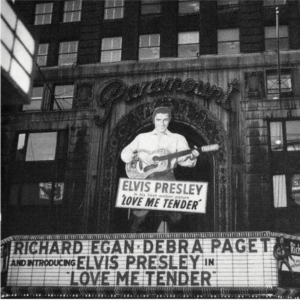
TIMES SQUARE PARAMOUNT THEATRE
LOUIS GRELL AT “THE WORLD’S FINEST THEATRE”
New York City · 1926
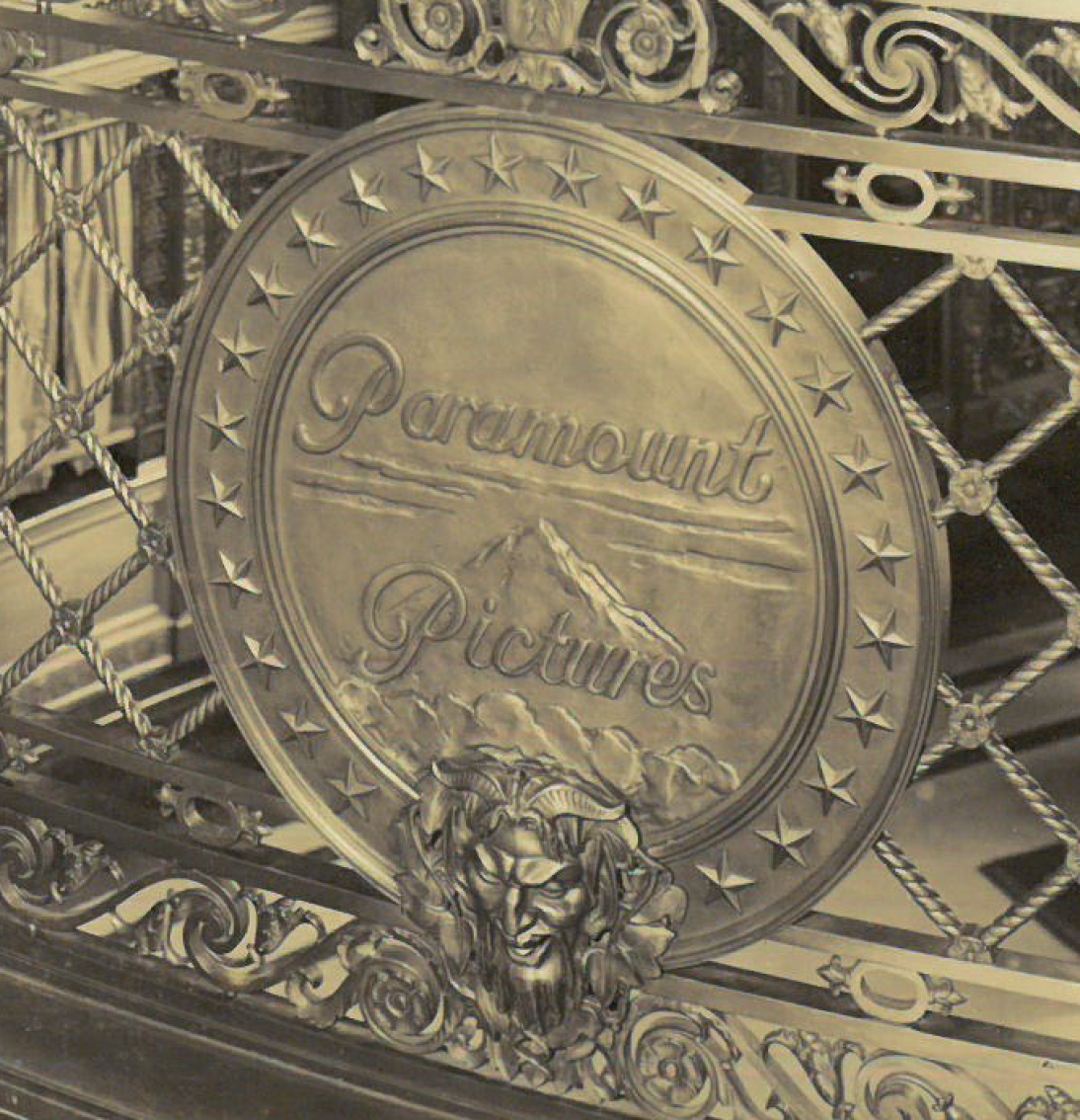
When the Times Square Paramount Theatre opened on November 19, 1926, it was not simply another movie palace.
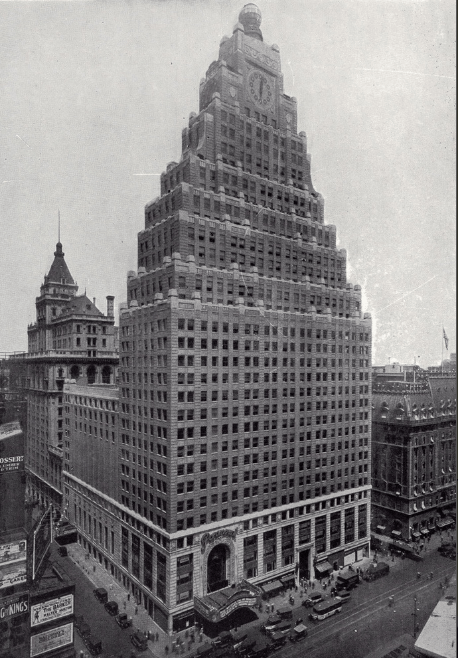
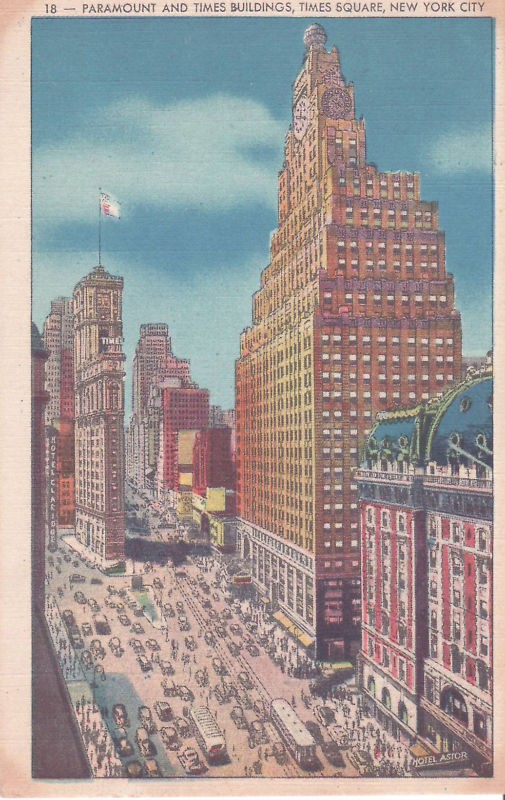
It was the flagship theatre of Paramount Pictures, incorporated into the company’s monumental new Times Square headquarters at 1501 Broadway and designed by the celebrated Chicago theatre architects Rapp & Rapp.
The building represented an extraordinary corporate statement by one of America’s dominant motion-picture companies. The theatre alone seated approximately 3,664 people, while the larger Paramount Building towered above Times Square beneath the company’s famous illuminated clock and globe.
For the decorative program of this extraordinary building, Paramount turned to artists from across the country.
Louis Grell was among them.
And his commission extended through multiple major spaces within the theatre.
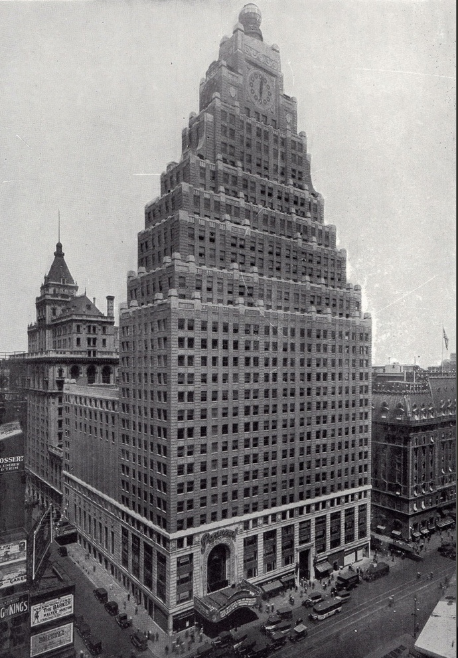
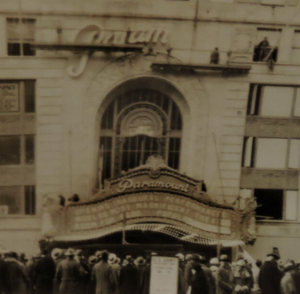
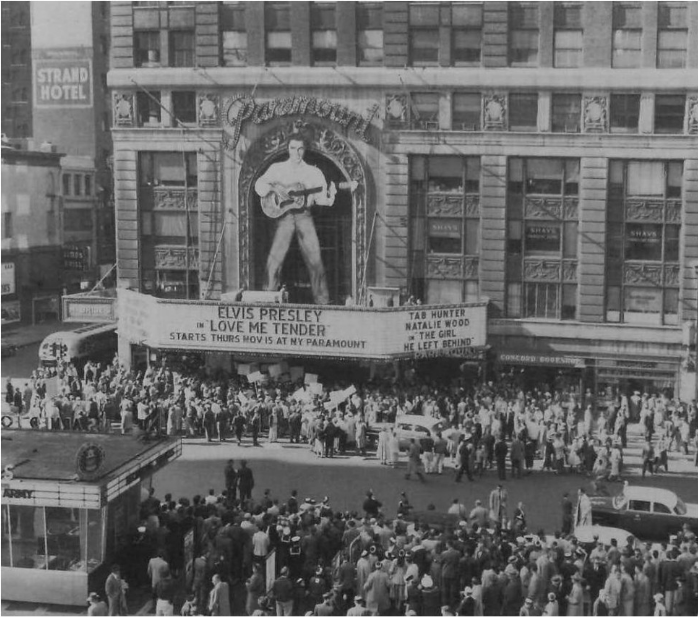
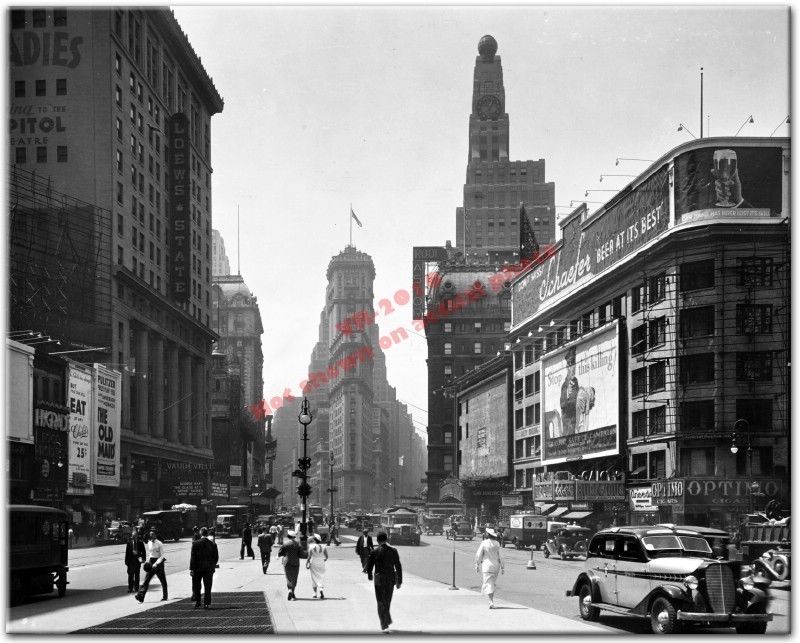
THE PARAMOUNT BUILDING & TIMES SQUARE PARAMOUNT THEATRE · 1926
Paramount Pictures’ monumental Times Square headquarters and flagship theatre at 1501 Broadway. Designed by Rapp & Rapp, the theatre opened November 19, 1926, and was promoted as “The World’s Finest Theatre.”
THE GRANDE HALL
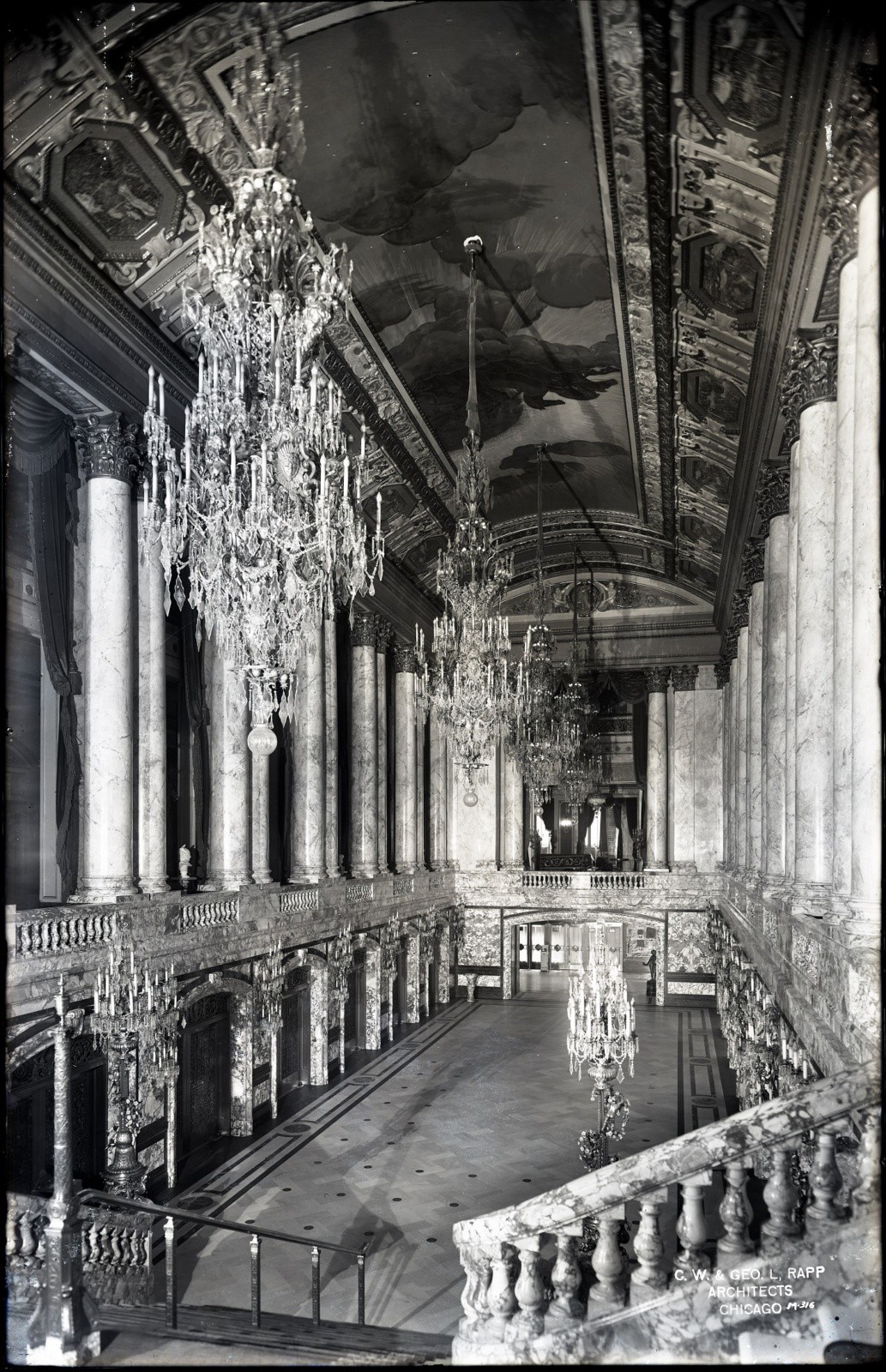
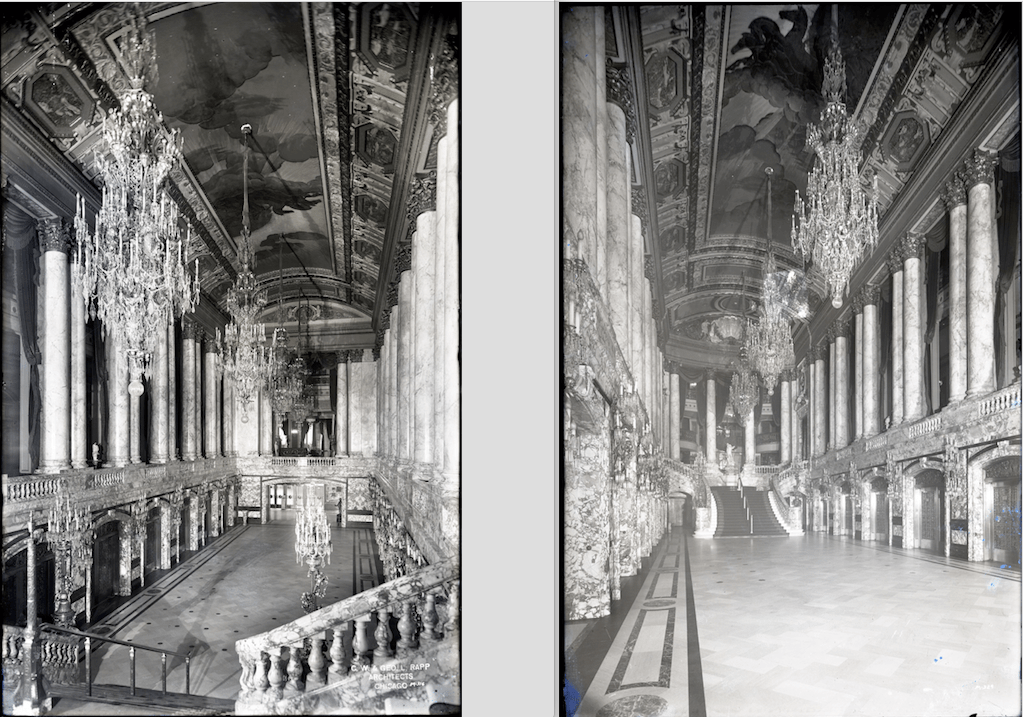
Visitors entering from Broadway passed through the theatre entrance and eventually emerged into one of the building’s most spectacular interior spaces.
The Grande Hall measured approximately:
150 FEET LONG
45 FEET WIDE
50 FEET HIGH
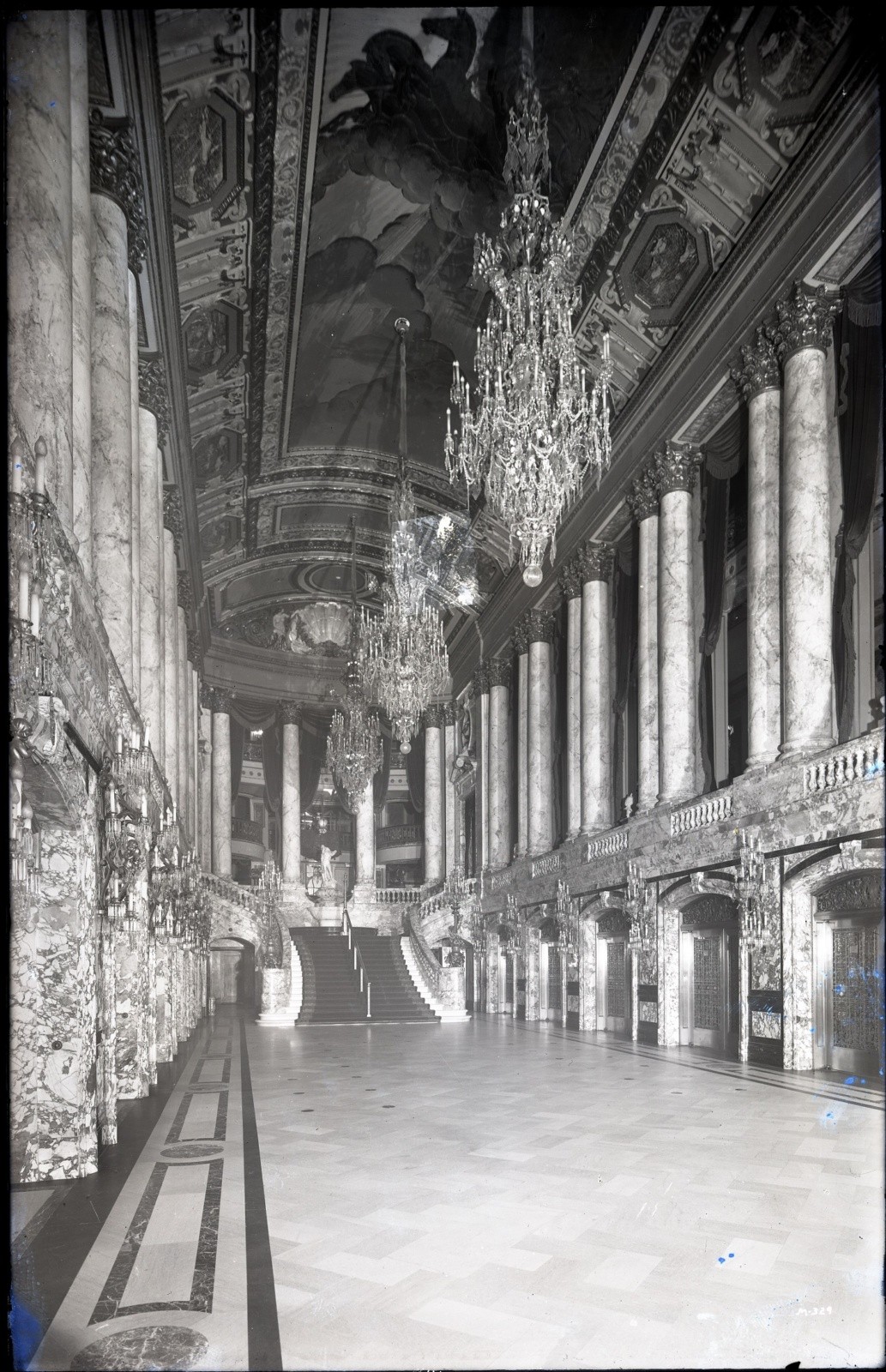
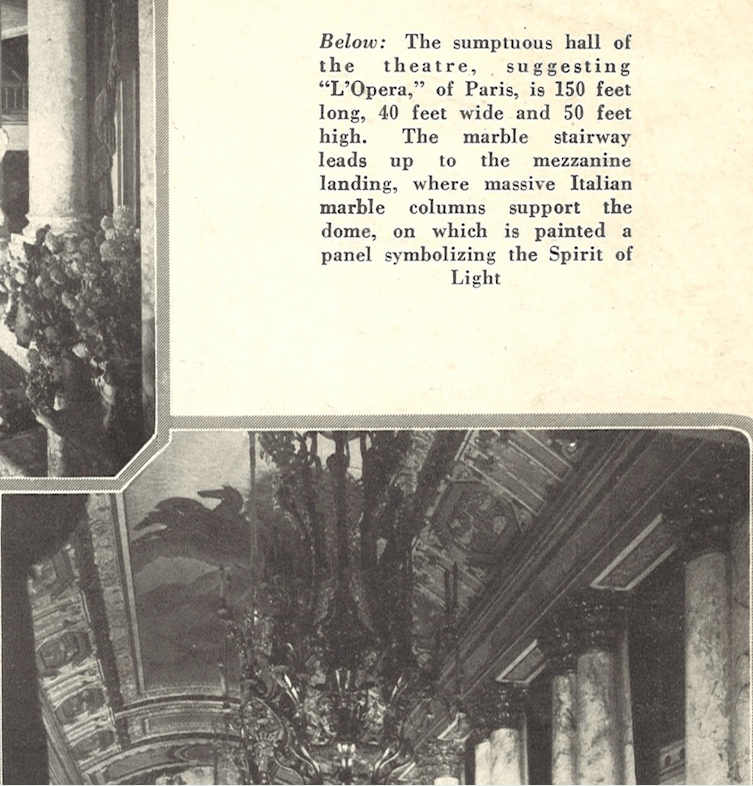
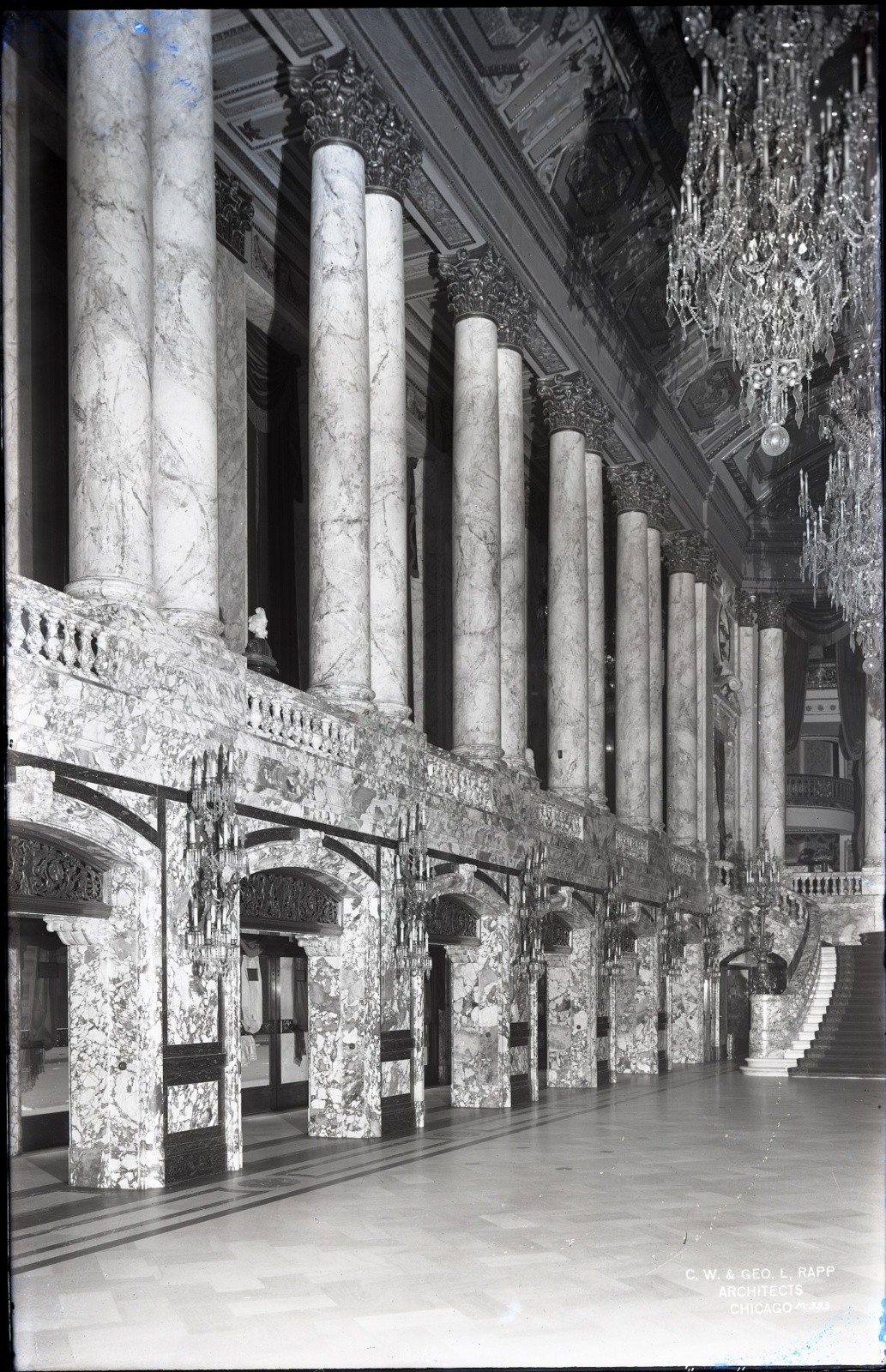
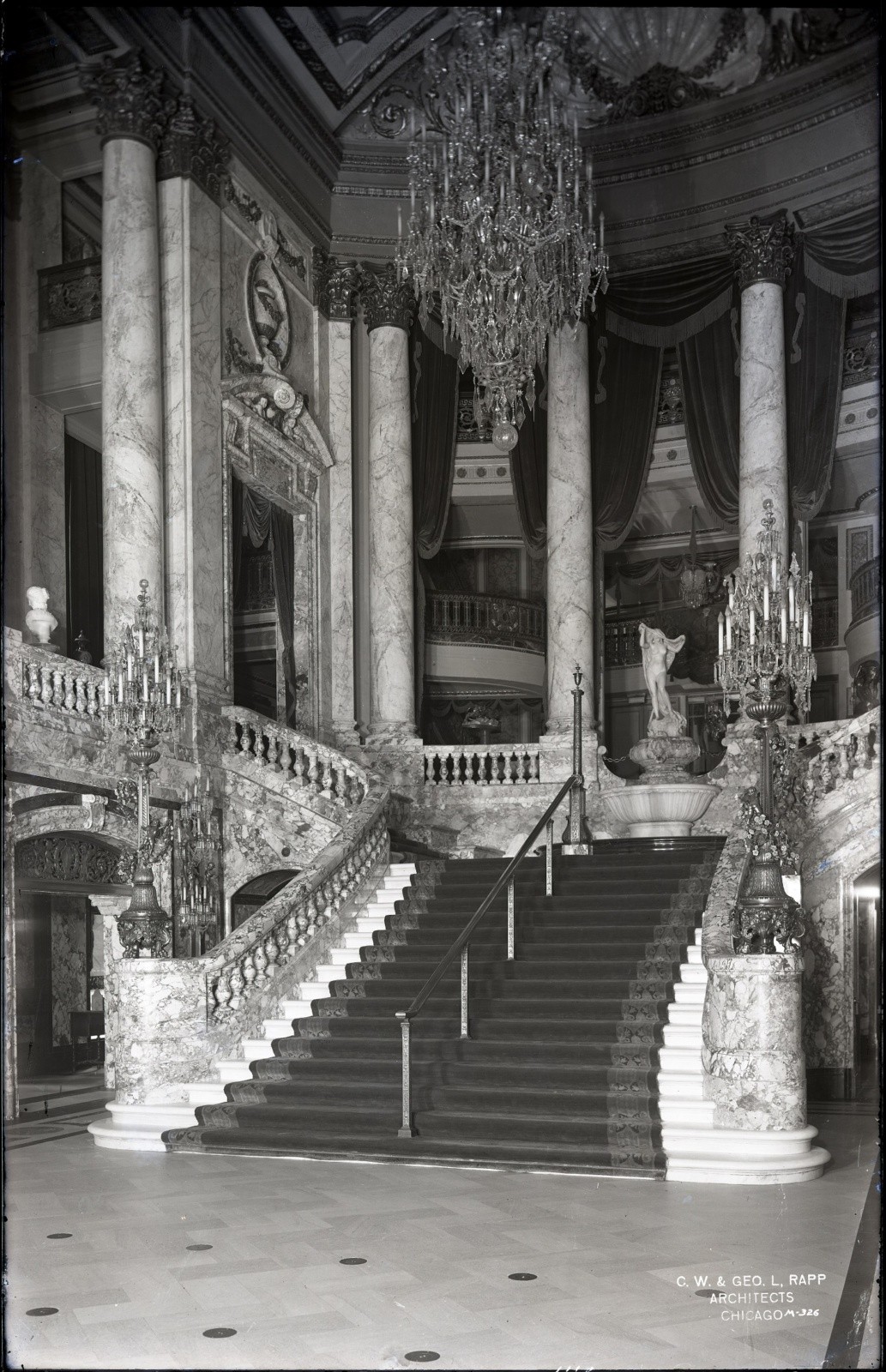
Its monumental white-marble columns, gilding, enormous chandelier and sweeping marble staircase evoked the great ceremonial interiors of Europe. Contemporary descriptions compared the space to the Paris Opera; other architectural accounts identify Versailles influences as well.
Above this extraordinary room was Louis Grell.
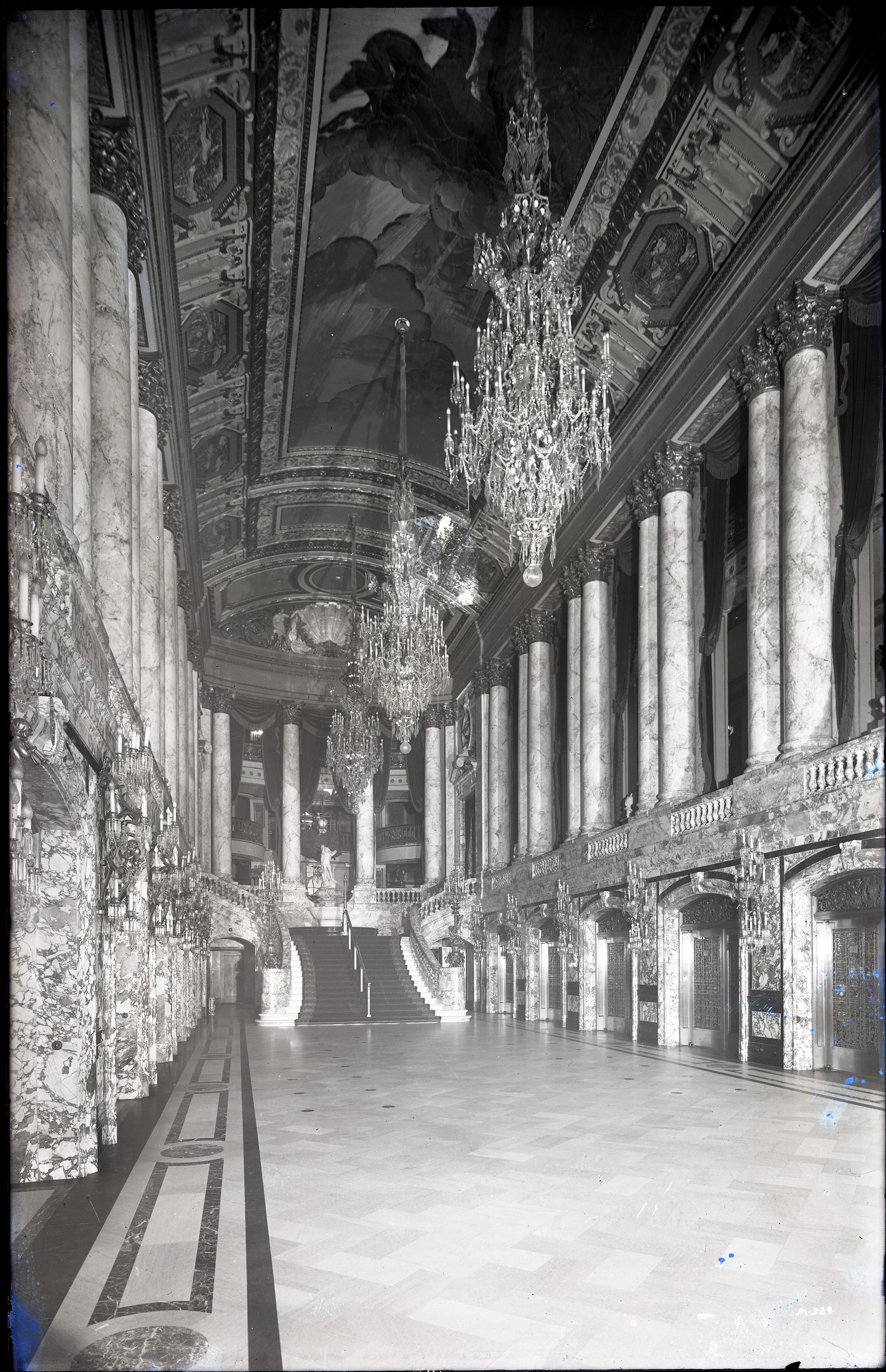
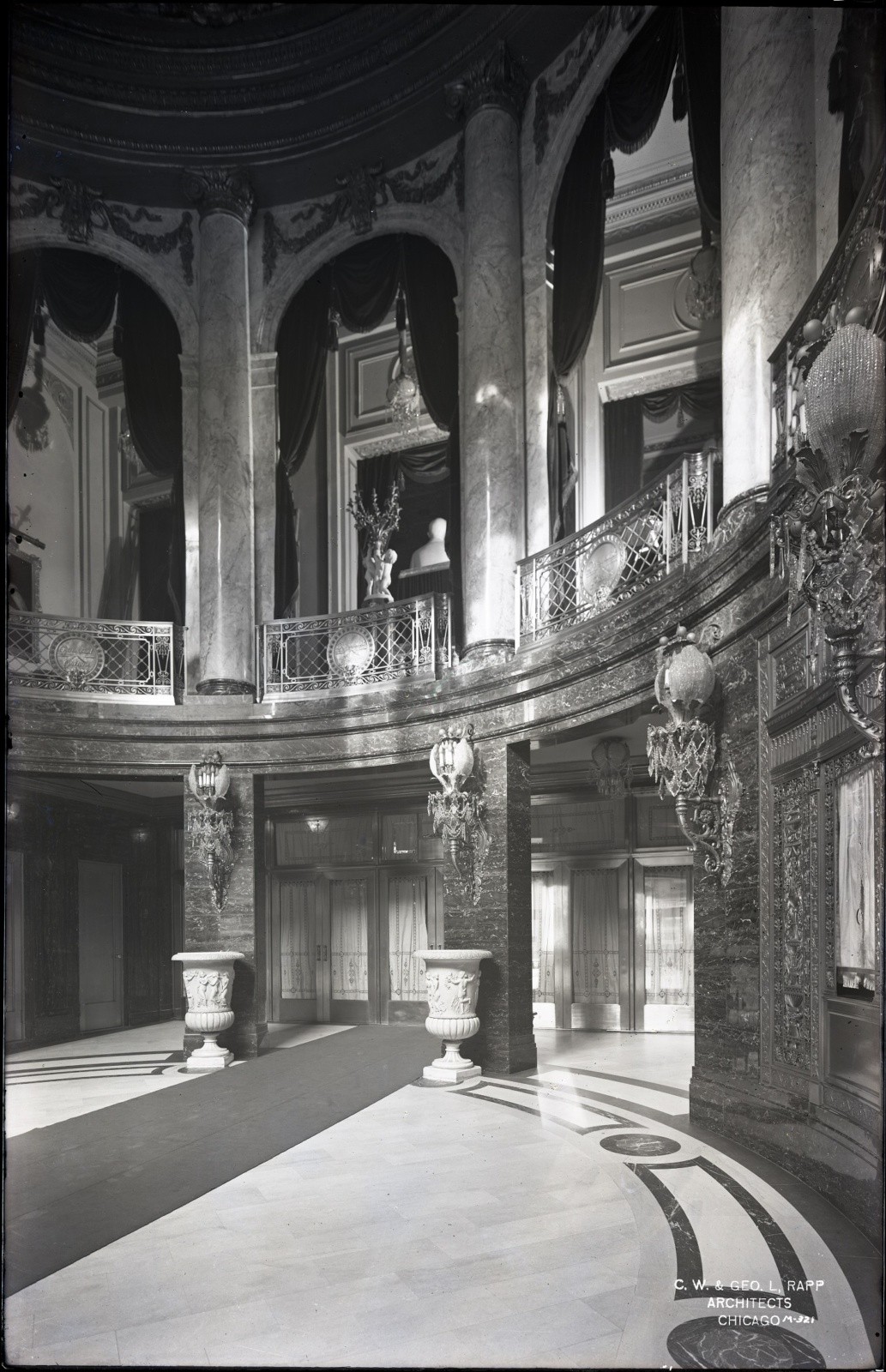
THE GRANDE HALL · TIMES SQUARE PARAMOUNT
The monumental Grande Hall of the Times Square Paramount Theatre. Grell’s Spirit of Light occupied the ceiling above a space approximately 150 feet long, 45 feet wide and 50 feet high. The marble-lined hall and grand staircase formed one of the principal ceremonial spaces through which patrons experienced Paramount’s new flagship theatre.
THE SPIRIT OF LIGHT
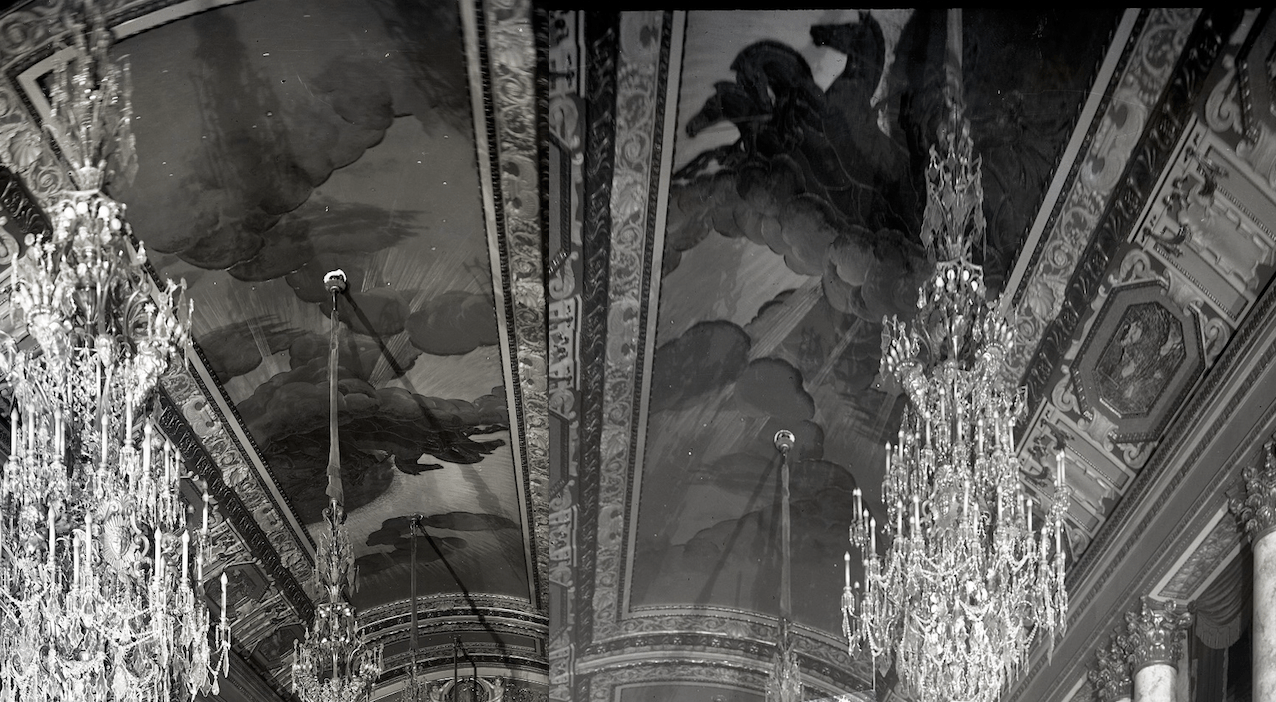
At the center of Grell’s Grande Hall commission was a monumental ceiling composition titled:
THE SPIRIT OF LIGHT
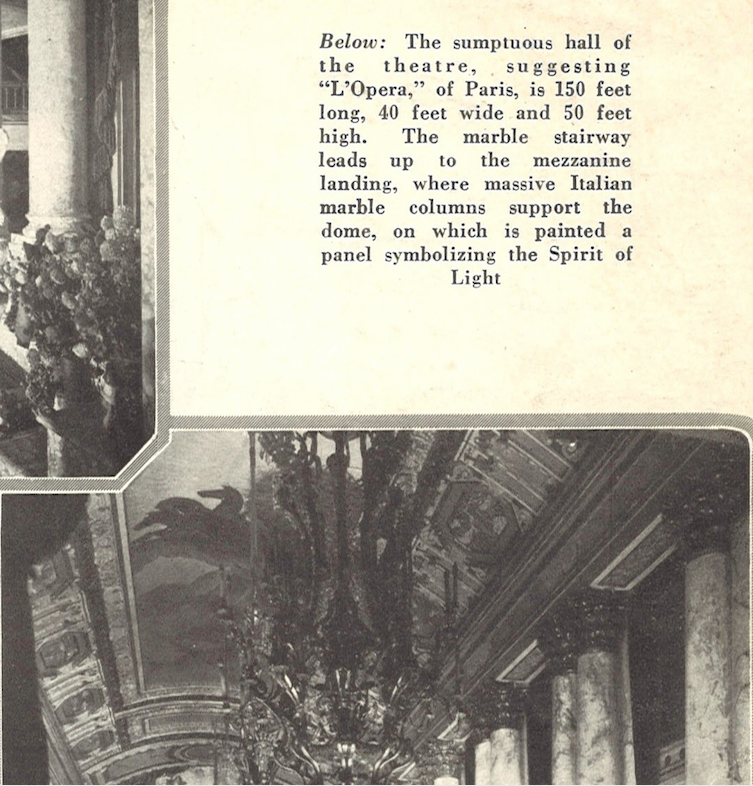
A NAME PRESERVED IN THE PERIOD RECORD
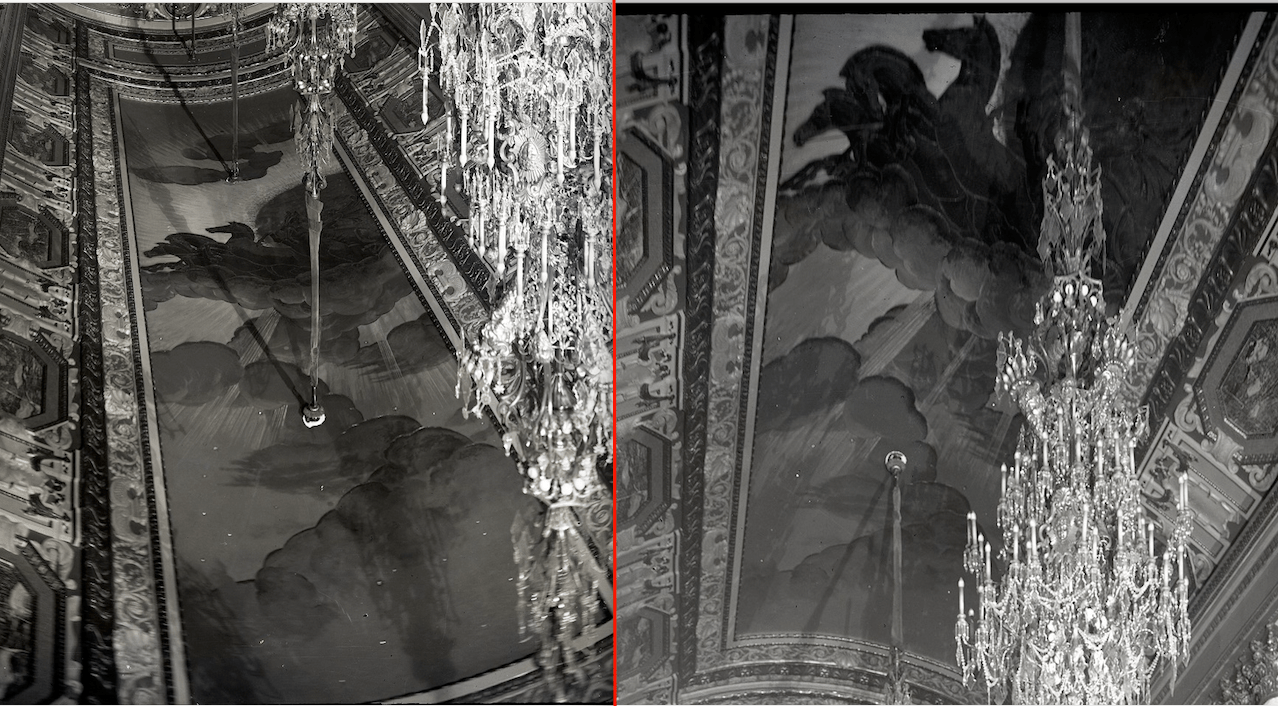
Contemporary photographic documentation identifies Louis Grell’s monumental Paramount Theatre ceiling composition as The Spirit of Light. The surviving record anchors the title directly to Grell’s 1926 Times Square commission.
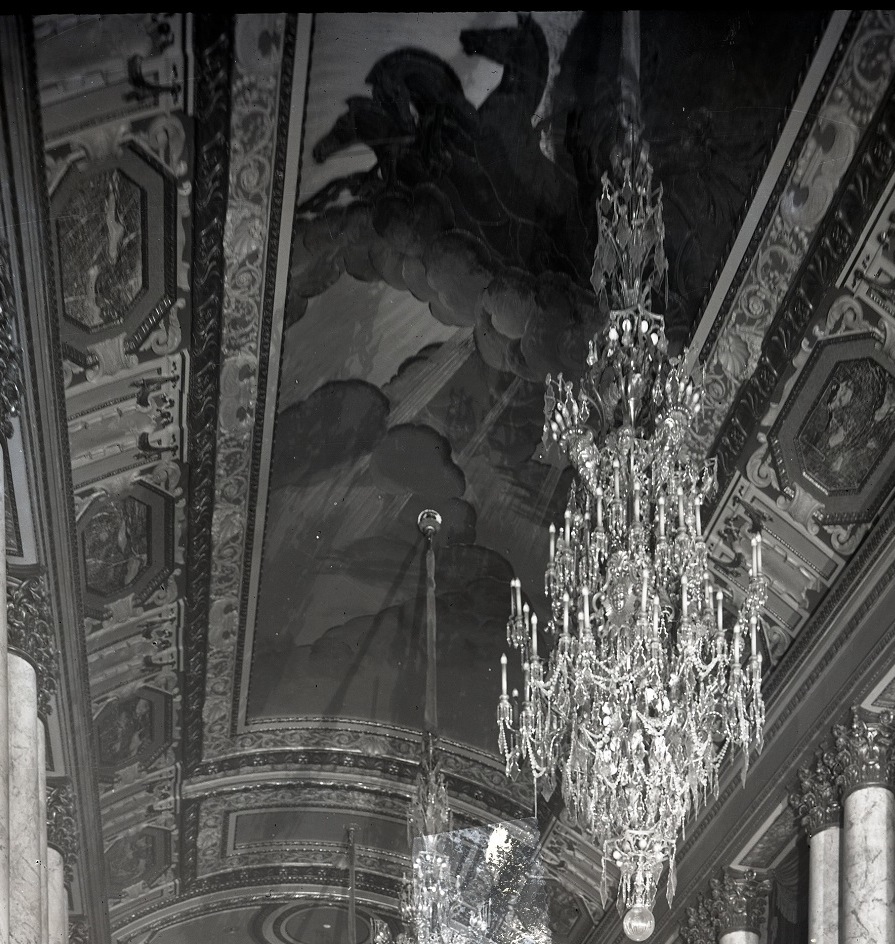
LOUIS GRELL · THE SPIRIT OF LIGHT · 1926
Monumental ceiling mural created for the Grande Hall of the Times Square Paramount Theatre. The central composition was accompanied by additional Grell mural panels at either end of the hall.
One modern historical source describes the Grell panel as over 100 feet long.
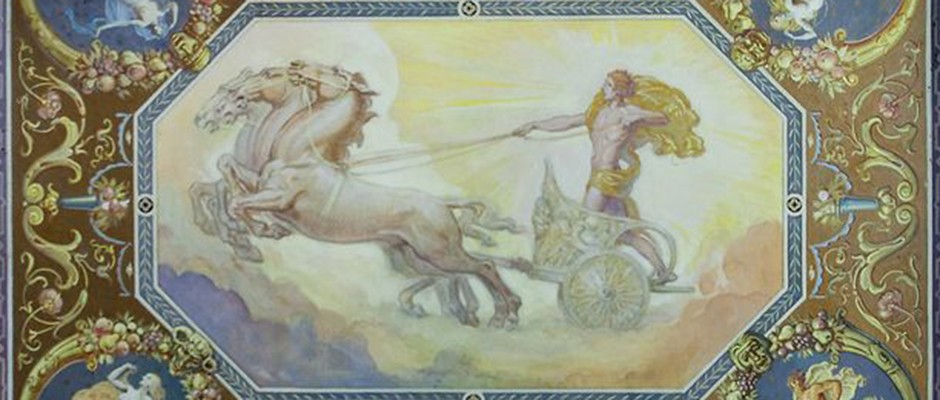
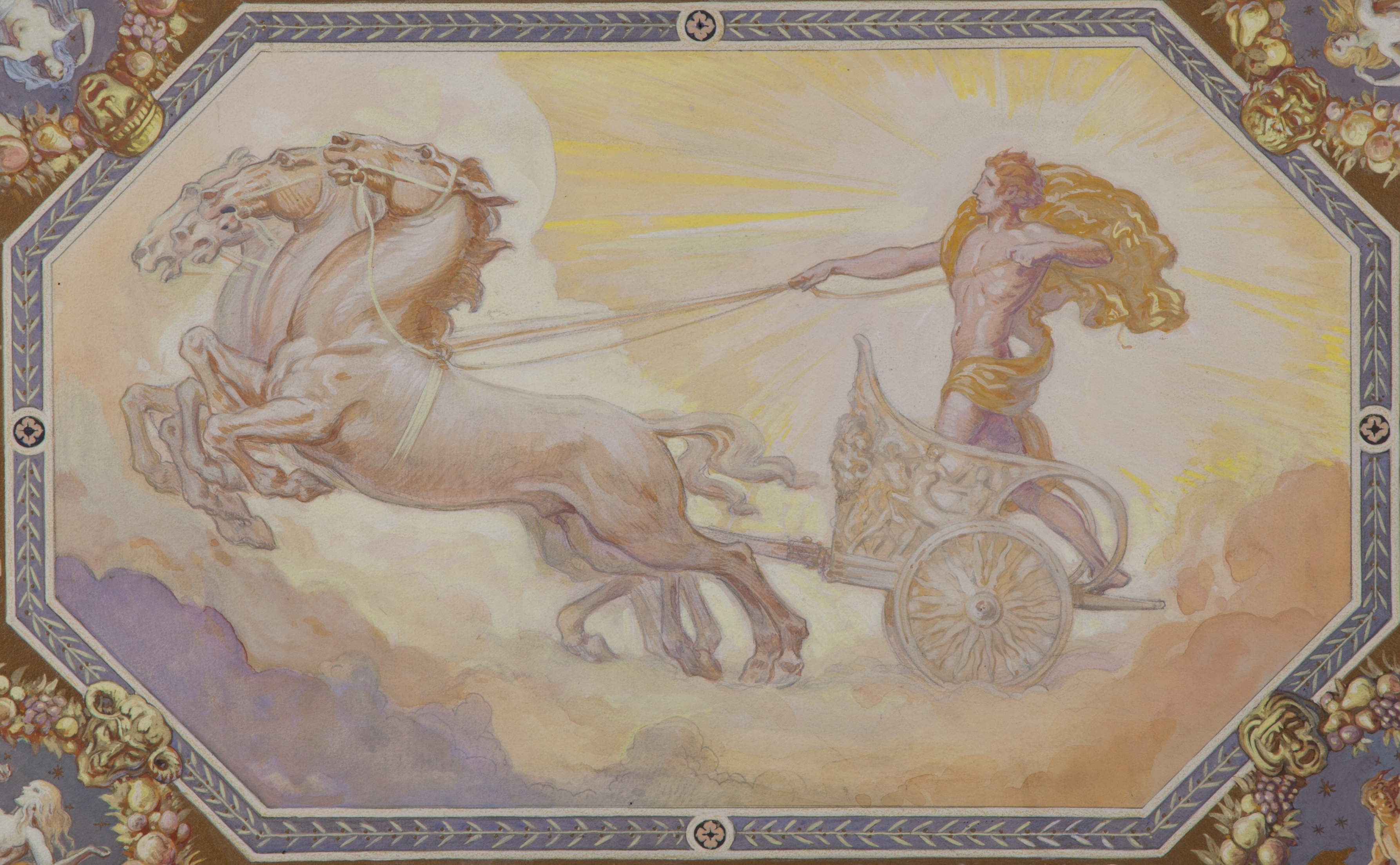
A SURVIVING SPIRIT OF LIGHT
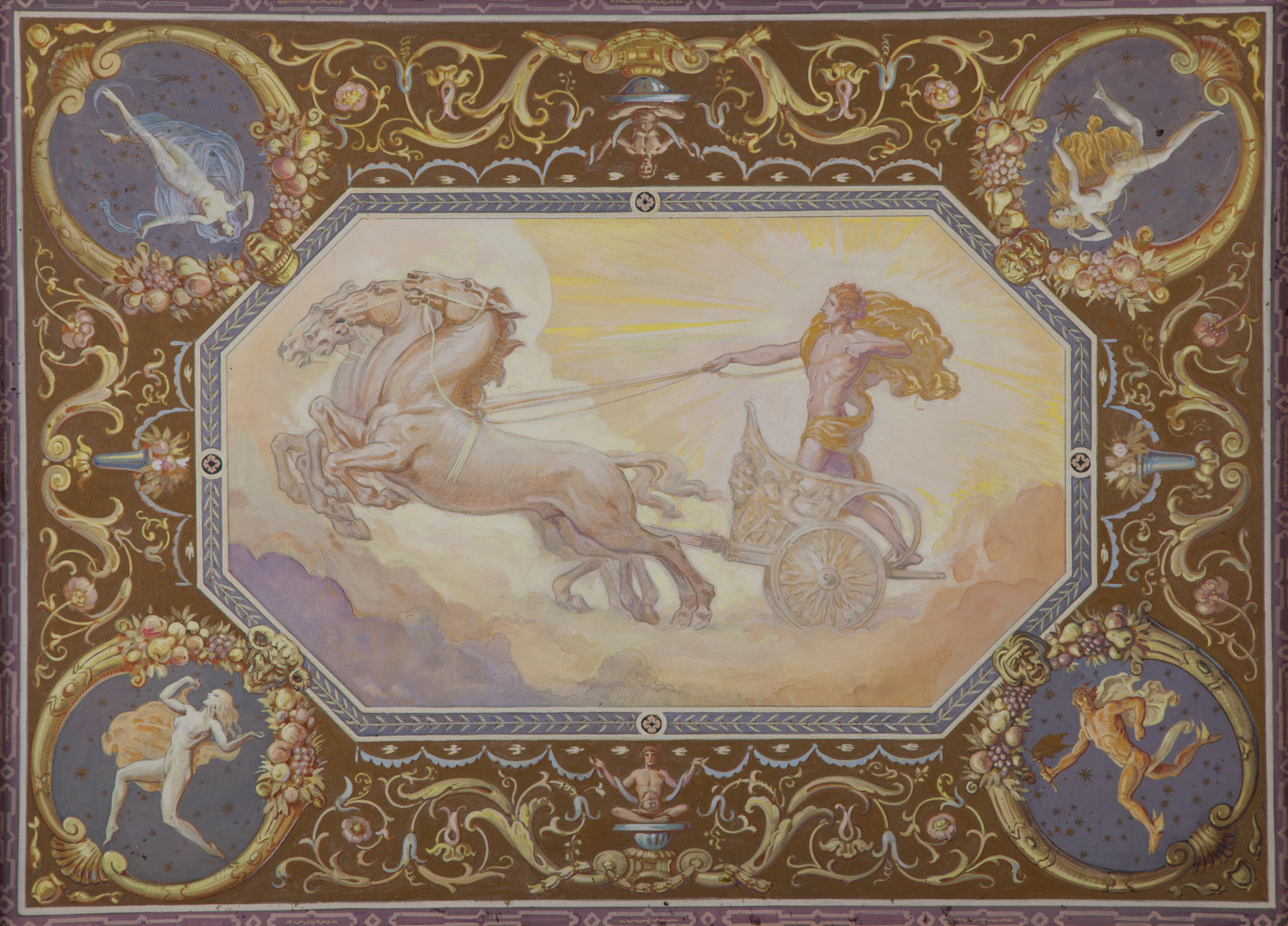
THE SPIRIT OF LIGHT
Louis Grell · watercolor
Grell Family Collection
Louis Grell, The Spirit of Light. Surviving watercolor from the Grell family collection depicting Apollo driving his radiant chariot. The work preserves Grell’s treatment of a subject that appears prominently within his monumental theatre commissions including the Chicago Theatre & Netherland Plaza Hotel in Cincinnati.
WATERCOLOR → MONUMENTAL ARCHITECTURE
GRELL’S COMMISSION EXTENDED BEYOND ONE CEILING
The surviving historical record indicates that Grell’s Paramount work was not confined to the Grande Hall.
Published theatre histories identify Grell murals in:
THE GRANDE HALL
THE AUDITORIUM DOME
THE ELIZABETHAN ROOM
The Times Square Paramount was conceived as an environment containing numerous lounges, galleries and specialized social spaces rather than simply an auditorium with a lobby.
A contemporary New Yorker account marveled at the extraordinary collection of specialized rooms, including the University, Fraternity, Marie Antoinette, Elizabethan and Della Robbia rooms.
Grell’s commission belonged to that larger philosophy of immersive interior design.
THE ELIZABETHAN ROOM
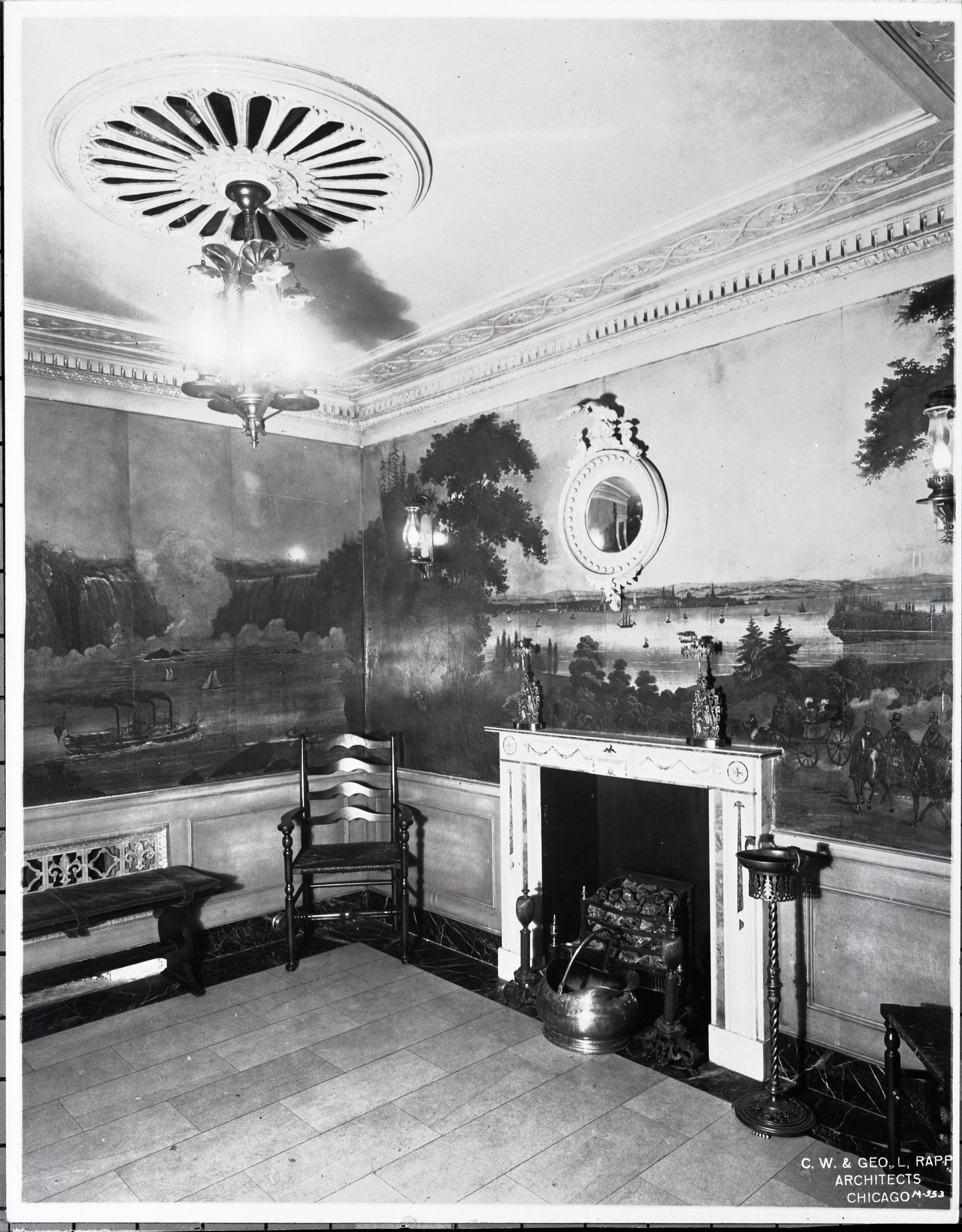
THE ELIZABETHAN ROOM · GRELL BELOW THE AUDITORIUM
Historical sources identify Louis Grell as the muralist responsible for decoration within the Paramount Theatre’s Elizabethan Room, one of the numerous specialized social and lounge spaces incorporated into Rapp & Rapp’s immense theatre complex.
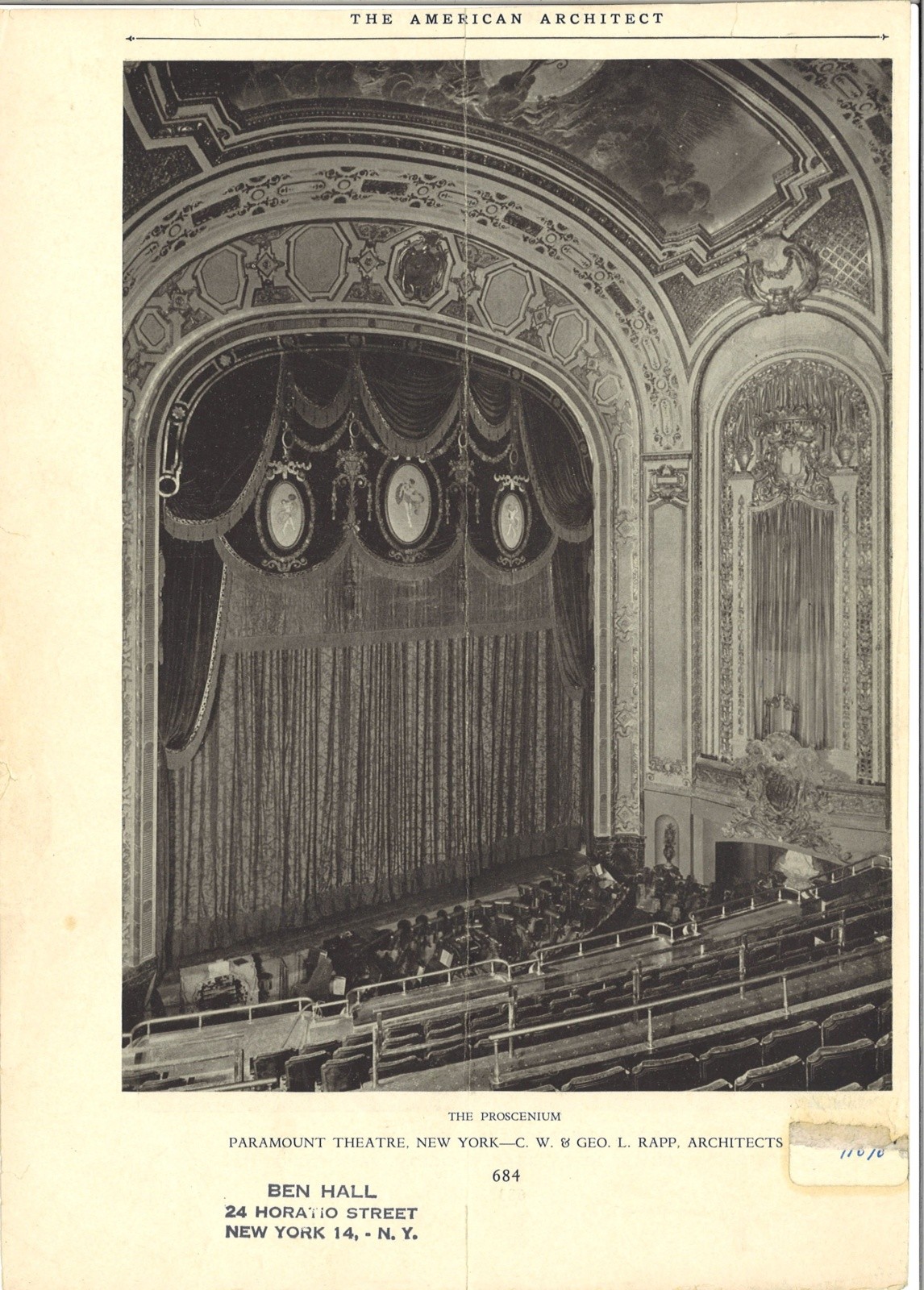
THE AUDITORIUM
Historical sources also credit Grell with mural work within the auditorium itself.
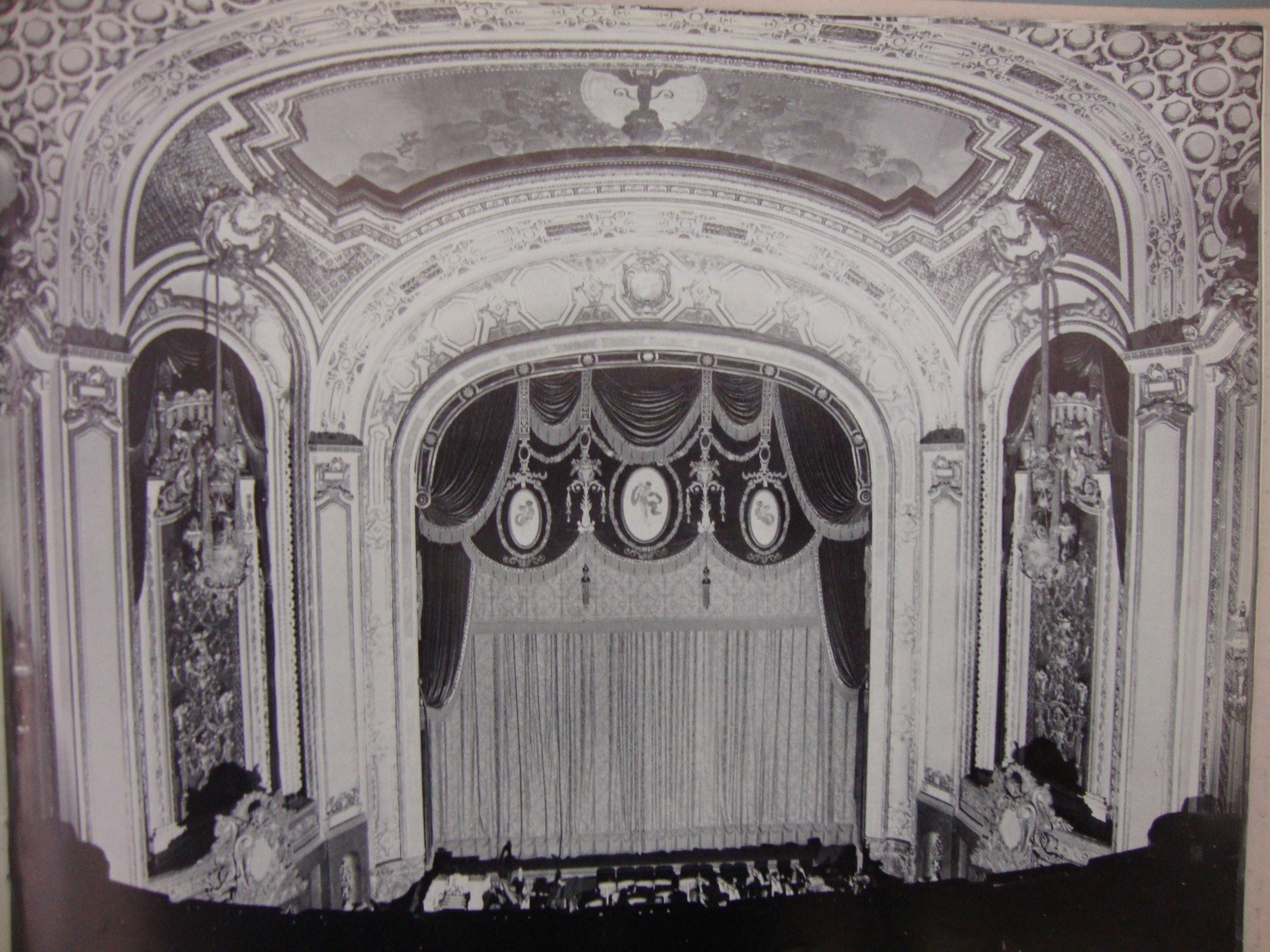
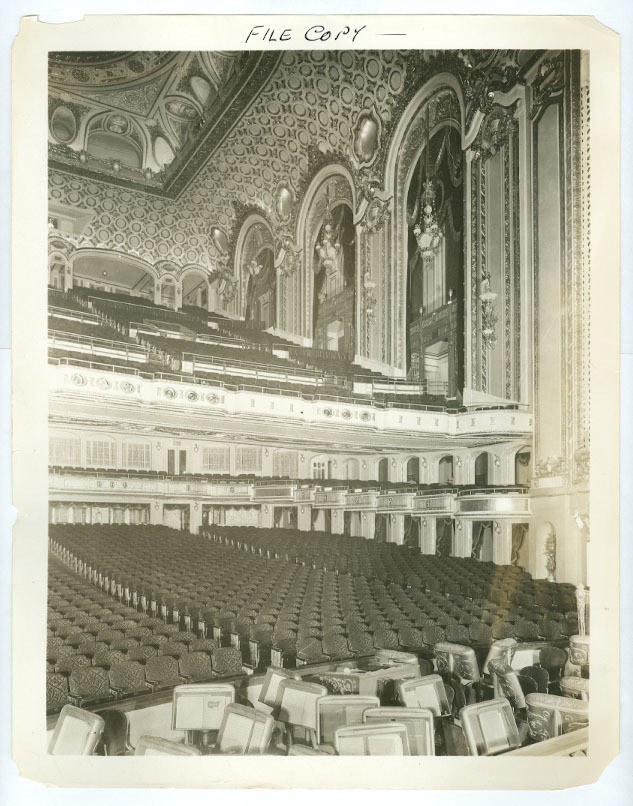
The enormous auditorium was decorated in a French Renaissance spirit, with ivory, rose and turquoise coloring, classical sculpture, elaborate organ screens and monumental painted decoration. Contemporary technical descriptions demonstrate the extraordinary attention given to every aspect of the room.
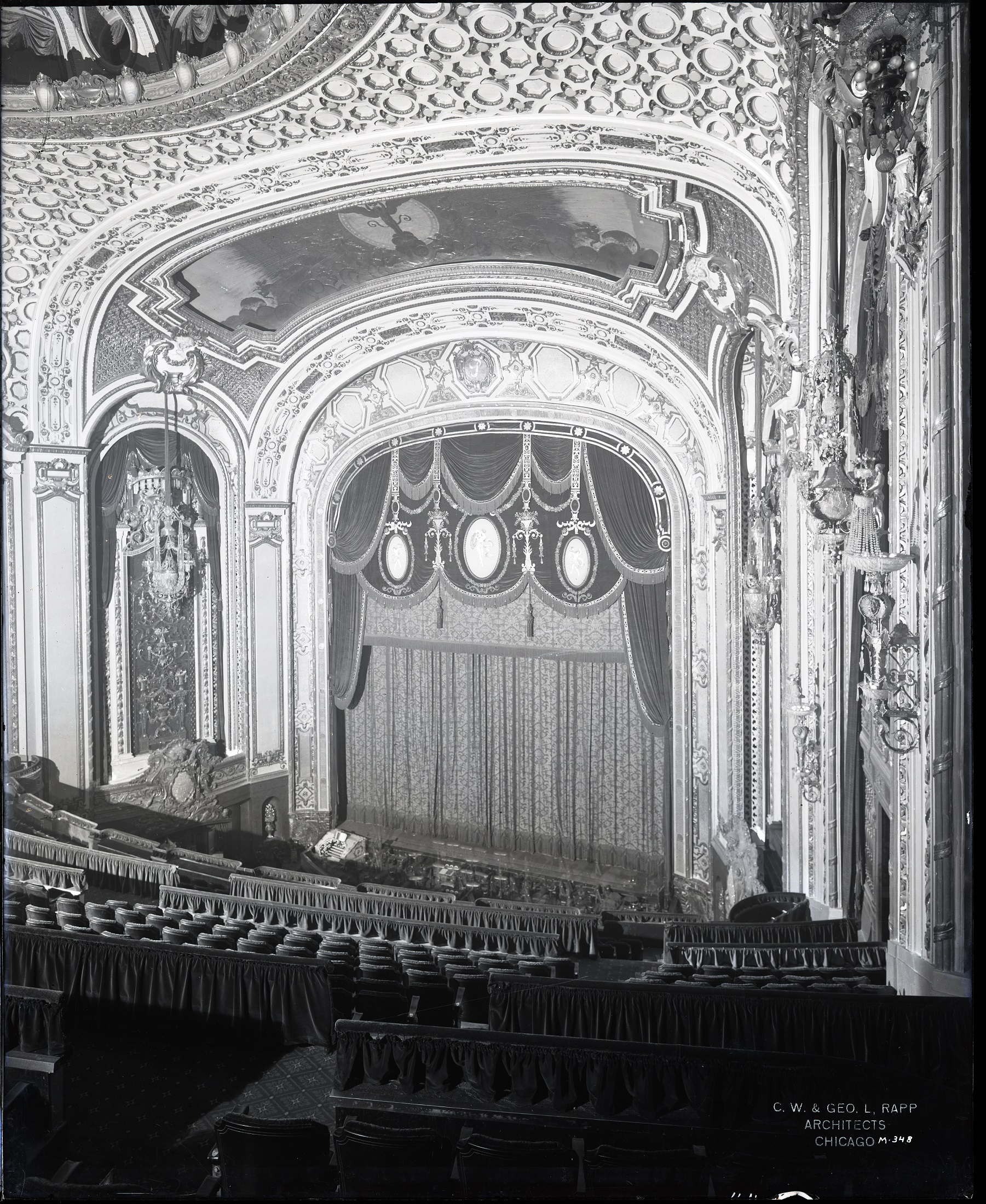
GRELL INSIDE THE AUDITORIUM
The Times Square Paramount auditorium. Historical theatre records identify Louis Grell with mural decoration in the auditorium dome in addition to his documented work in the Grande Hall and Elizabethan Room.
HALF THE WALL SPACE WAS GIVEN TO ART
Contemporary accounts describe the Paramount as an art environment on an extraordinary scale.
Approximately 56 oil paintings by important American artists were displayed throughout the theatre, while paintings and decorative art occupied a substantial portion of the promenades, lounges and public spaces.
Grell therefore wasn’t decorating an ordinary movie theatre.
He was participating in a building conceived partly as an enormous public art environment.
56 OIL PAINTINGS
MULTIPLE DECORATED ROOMS
MONUMENTAL MURALS
ONE FLAGSHIP MOVIE PALACE
And Grell was entrusted with some of its largest painted surfaces.
THE AMERICAN ROOM
The Grell research record identifies the Paramount’s American-themed lounge among the artist’s commissions within the theatre. Its presence further demonstrates that Grell’s role extended beyond a single monumental ceiling and into the building’s specialized decorative rooms.
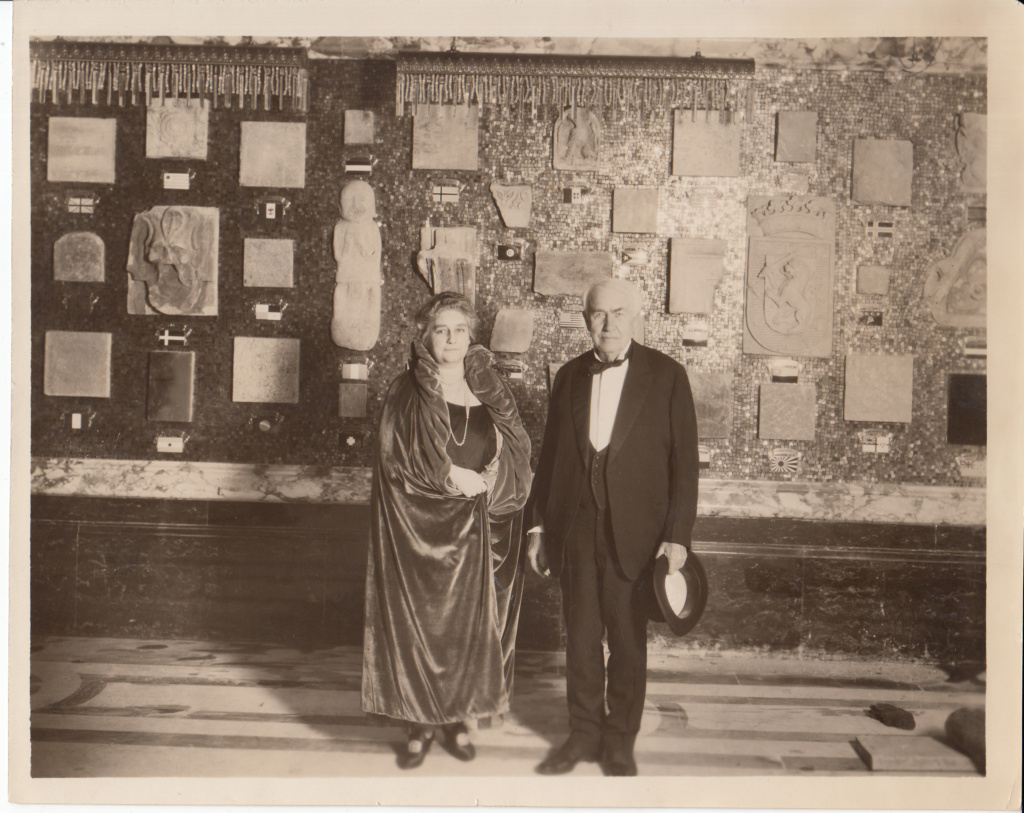
THE HALL OF NATIONS
Immediately beneath the Music Room was the extraordinary Hall of Nations.
Embedded into its wall were stones representing countries in which Famous Players-Lasky conducted business. Contemporary reporting states that many were presented by high government officials including Presidents from their respective nations.

THE HALL OF NATIONS
Stones representing nations throughout the international Paramount organization were embedded into a monumental wall within the theatre’s Hall of Nations. Contemporary technical reporting noted that many had been presented by high officials of the countries they represented. Shown here are Mina and Thomas Edison on opening night.
This was the architectural world in which Grell’s murals were meant to operate.
OPENING NIGHT · NOVEMBER 19, 1926
The opening of the Paramount became a major New York event.
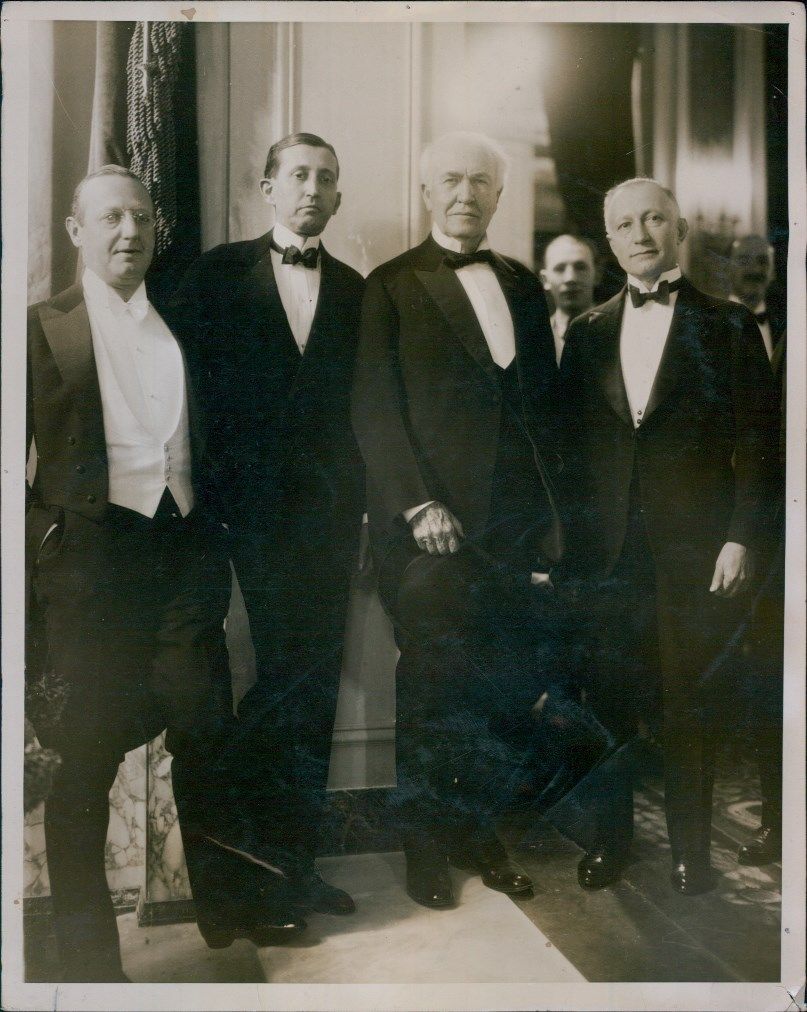
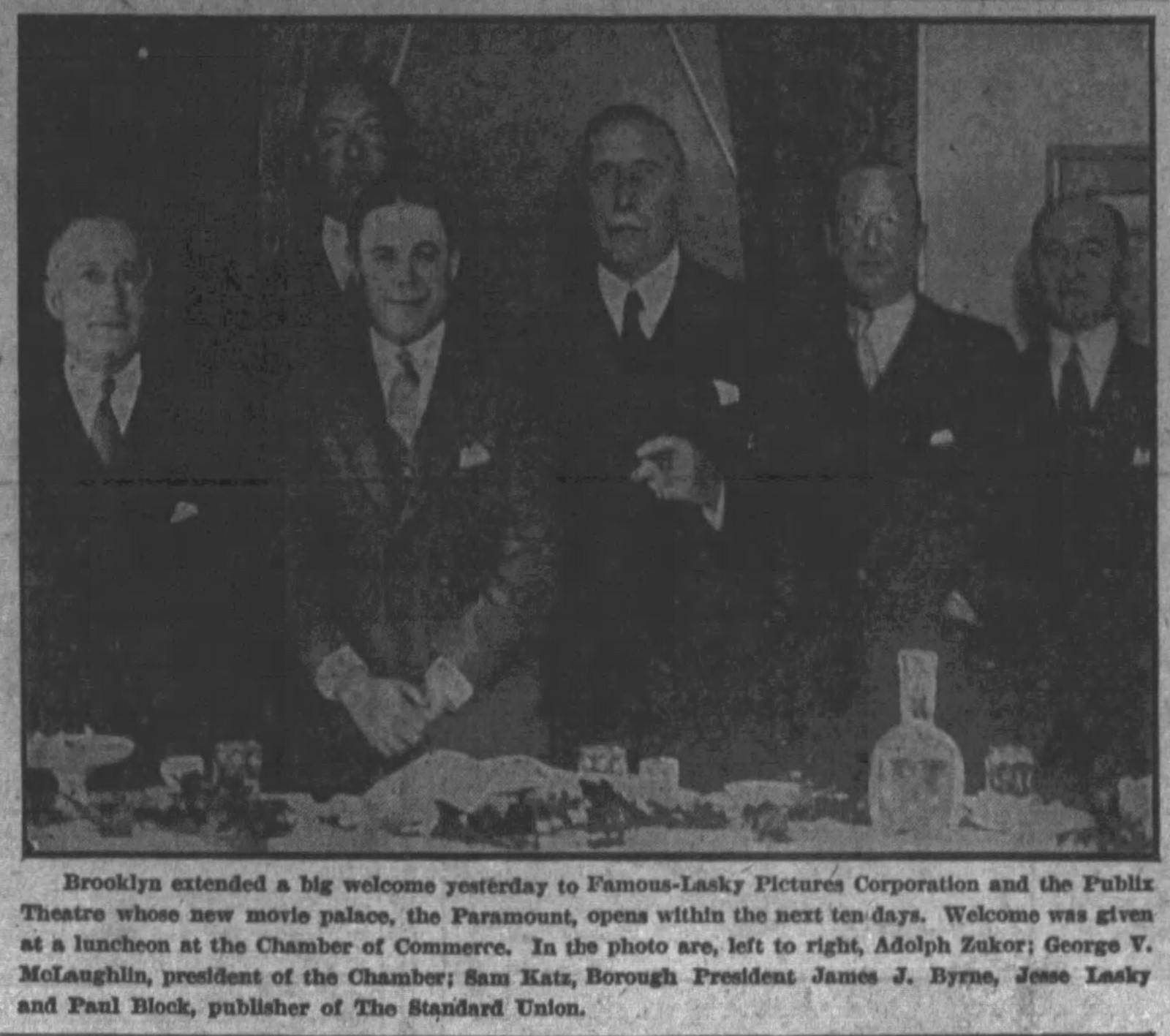
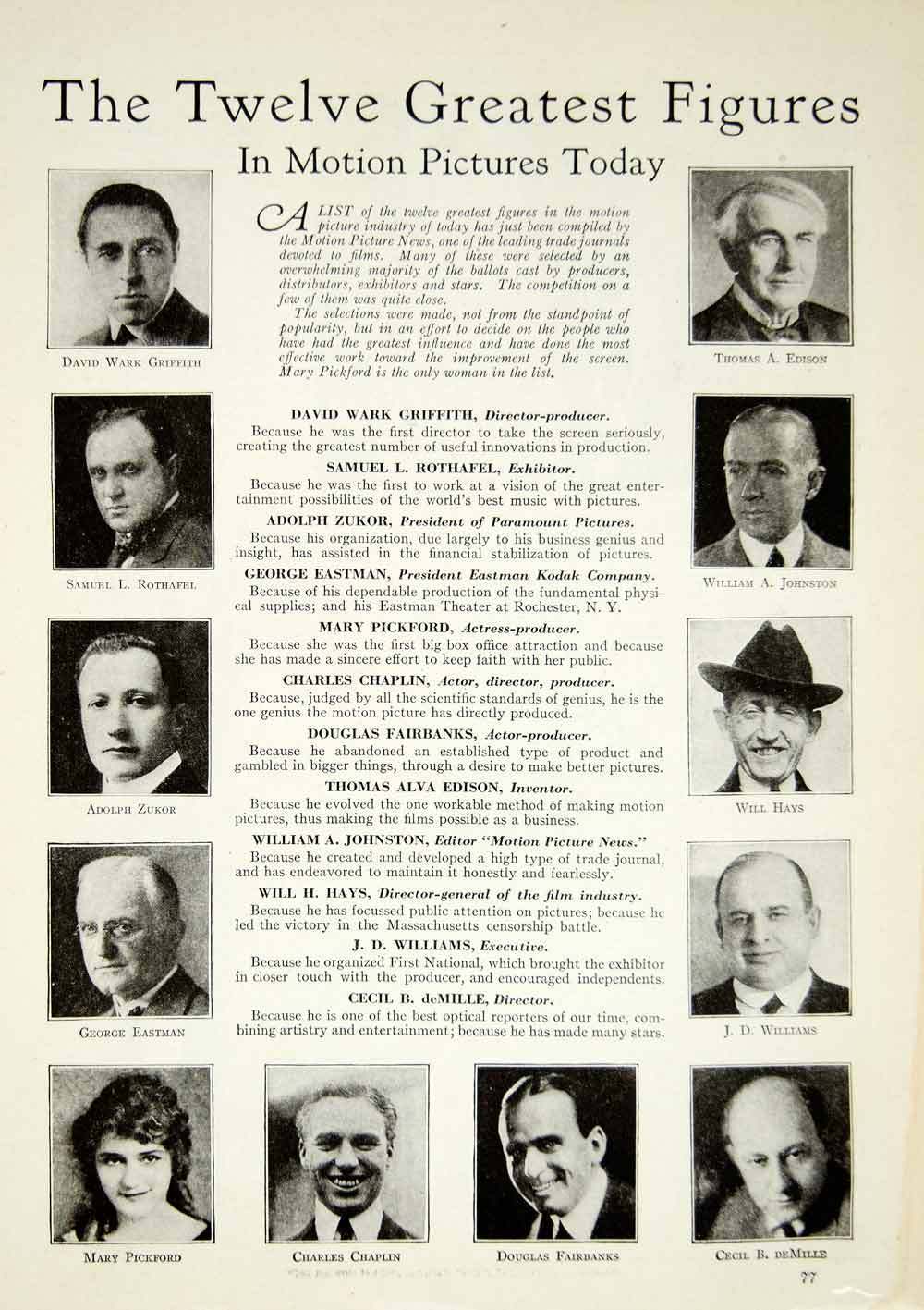
Among those associated with the festivities were Paramount founder Adolph Zukor, New York Mayor Jimmy Walker, inventor Thomas Edison, theatre organist Jesse Crawford, and other figures from entertainment, business and public life.
The featured Paramount film was God Gave Me Twenty Cents. Contemporary accounts describe enormous crowds, with more than 30,000 patrons passing through the theatre during its first two days.
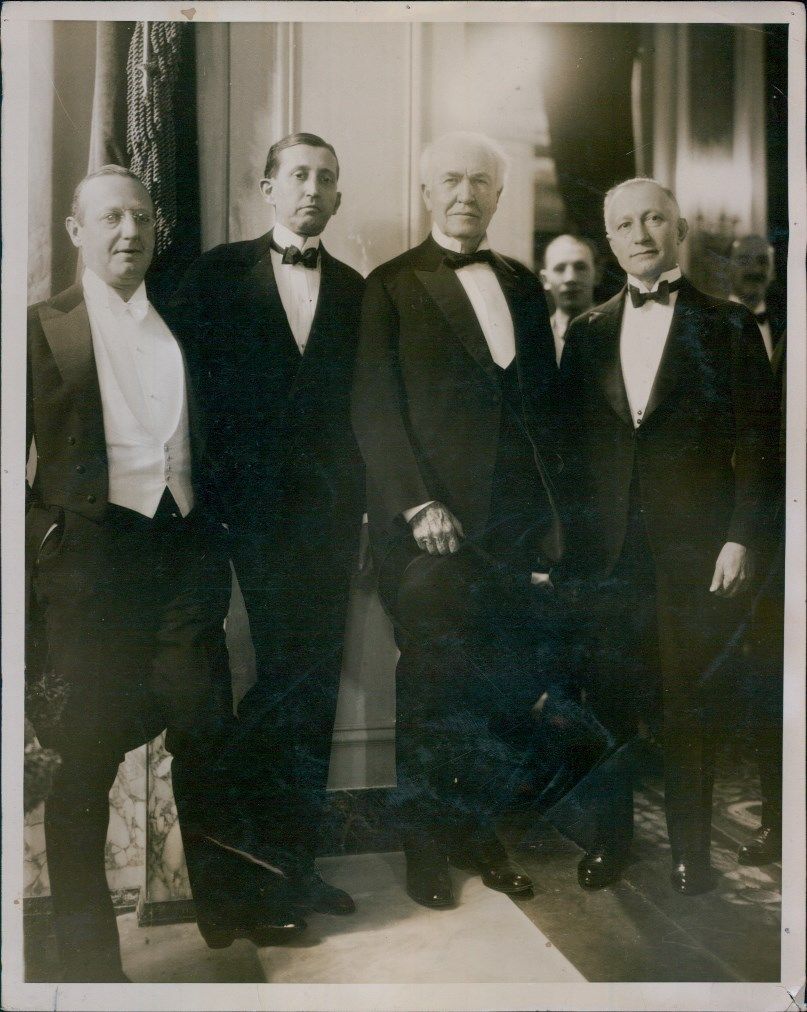
OPENING THE “WORLD’S FINEST THEATRE”
Opening festivities surrounding the Times Square Paramount Theatre, November 1926. The gala brought together figures from motion pictures, New York civic life, technology and entertainment, including Thomas Edison and Paramount leadership. (L to R) Jesse Lasky, Will Hayes, Thomas Edison & Adolph Zukor.
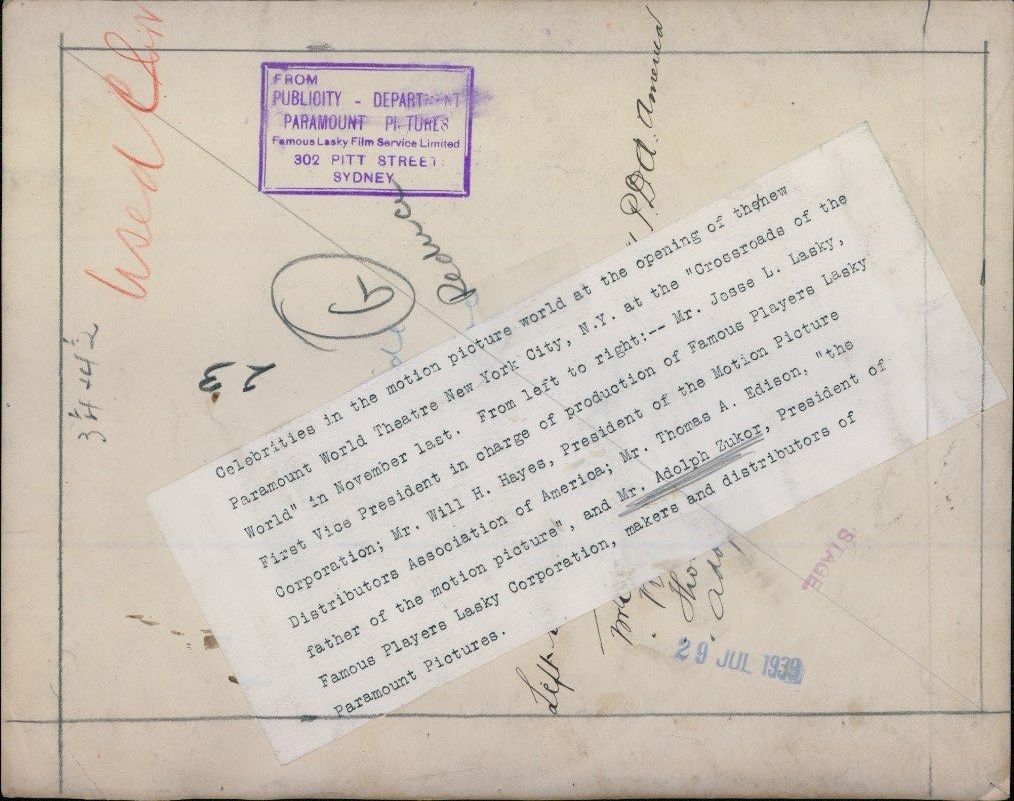
THE NEW YORK TIMES POINTED TO GRELL
Just days before opening, Paramount/Publix executive Harold B. Franklin conducted a tour of the nearly completed theatre for The New York Times.
Among the features he specifically called attention to was Louis Grell’s:
SPIRIT OF LIGHT
in the Grande Hall.
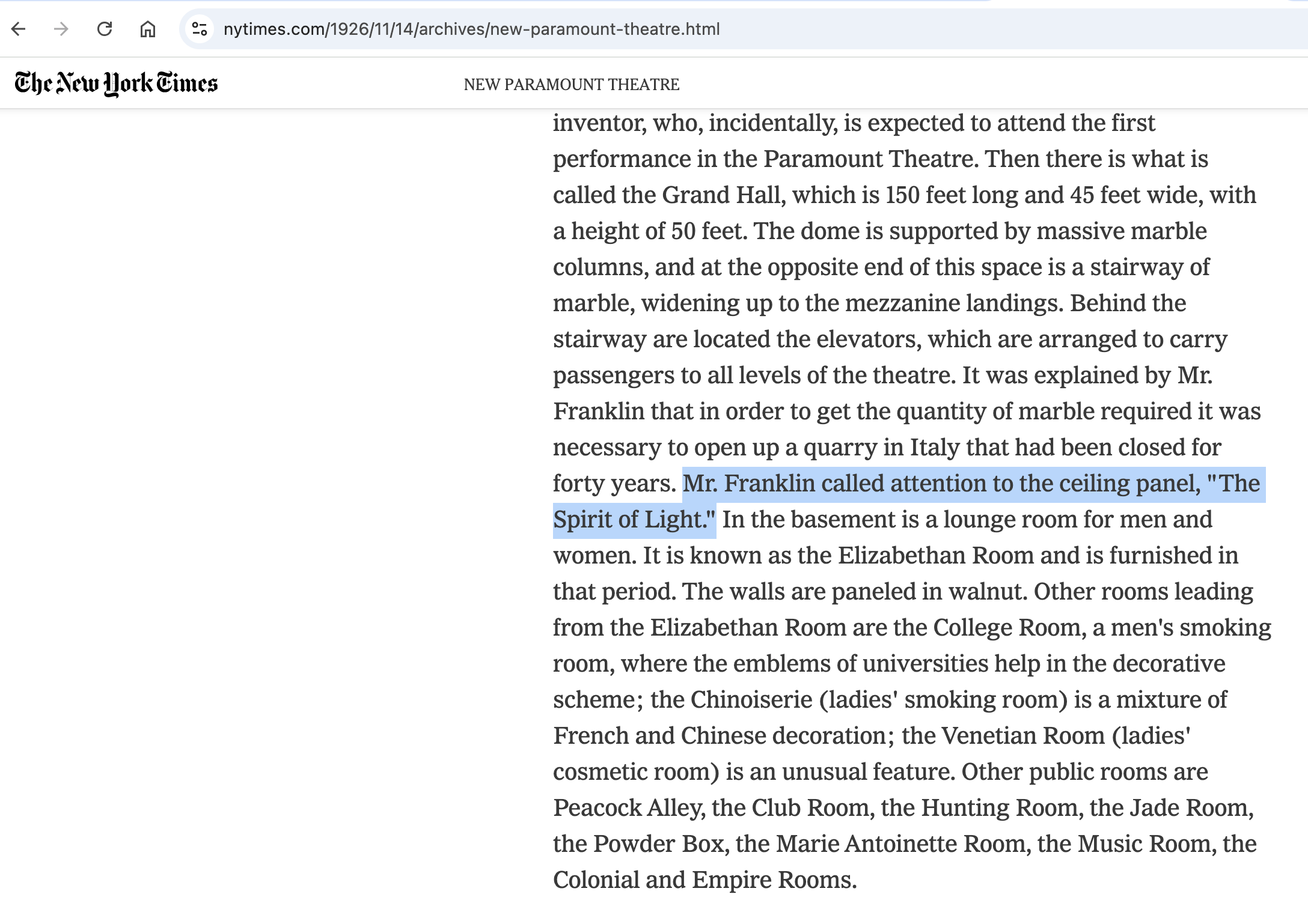
FIVE DAYS BEFORE OPENING
During a published pre-opening tour of the new Paramount Theatre, Publix executive Harold B. Franklin specifically identified Louis Grell’s Spirit of Light among the notable artistic features of the new flagship.
THE PARAMOUNT WAS DEMOLISHED. GRELL’S RECORD SURVIVED.
The Chicago Theatre survives with Grell’s murals still inside.
The Times Square Paramount theatre does not.
The original theatre closed in the 1960s and its interior was subsequently dismantled as the building was converted to other uses. The Paramount Building itself survives at 1501 Broadway, but the extraordinary movie-palace interior in which Grell’s murals existed is gone.
That makes the photographic and archival record particularly important.
Historical photographs.
Architectural documentation.
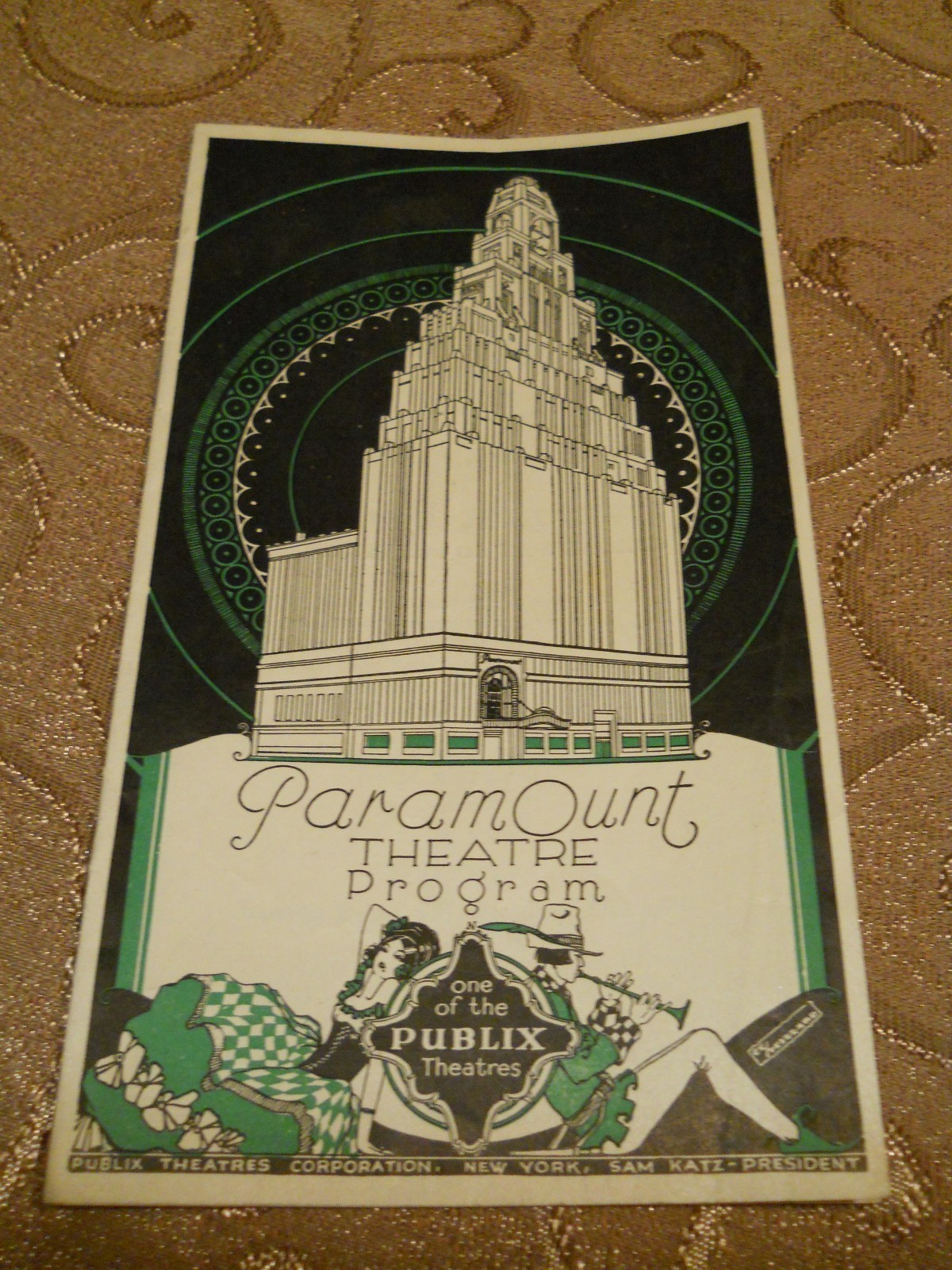
The theatre’s opening program.
Contemporary newspapers.
Photographic catalogues.
Surviving Grell works.
Together they allow portions of a lost monumental commission to be reconstructed.
THE SPIRIT OF LIGHT FROM BOTH VIEWS
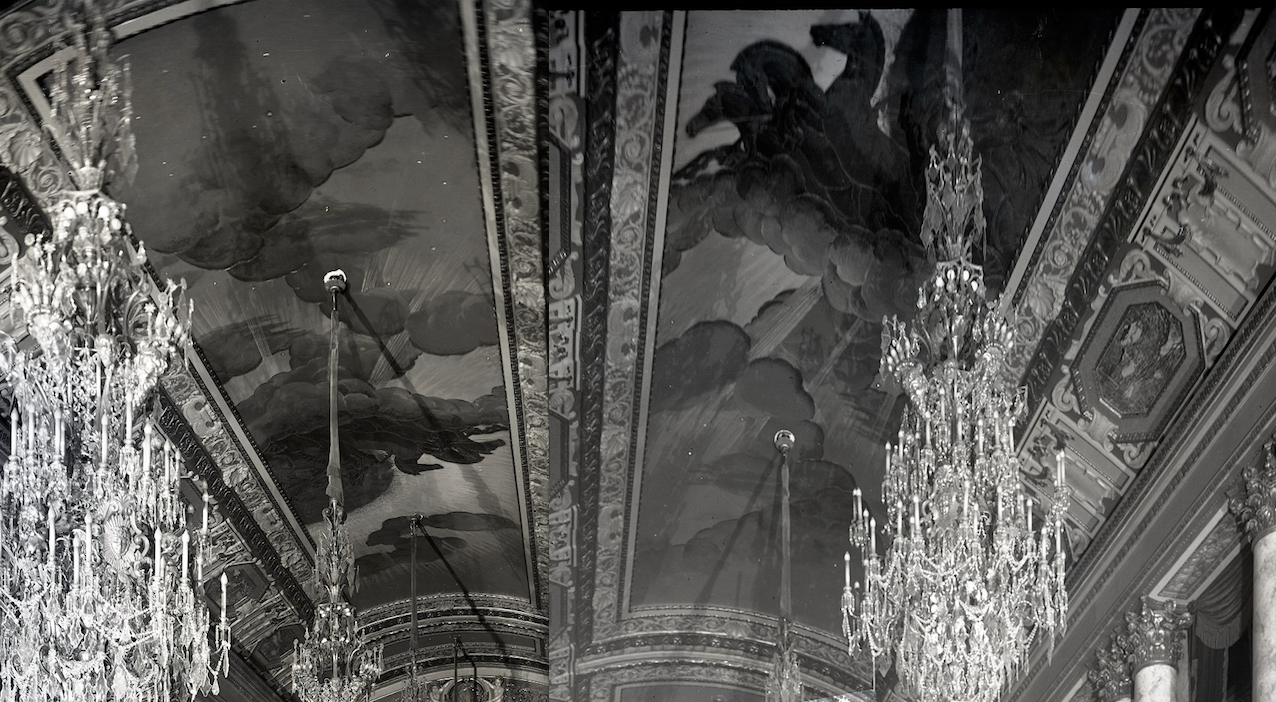
Grande Hall → Spirit of Light → catalogue identification → watercolor → Hall of Nations → opening photograph
A LOST THEATRE RECONSTRUCTED THROUGH ITS SURVIVING RECORD
Period photography and contemporary documentation preserve the environment in which Louis Grell worked at Paramount’s Times Square flagship, even though the original theatre interior itself has disappeared.
TWO RAPP & RAPP LANDMARKS. TWO DIFFERENT FATES.
In 1921, Grell painted for Rapp & Rapp’s Chicago Theatre.
Five years later, he was painting inside Rapp & Rapp’s extraordinary new Paramount flagship in Times Square.
At Chicago, much of his monumental work remains visible today.
At Times Square, the theatre itself disappeared.
Together, the two commissions demonstrate the scale at which Grell was operating during the great American movie-palace era.
CHICAGO · 1921
TIMES SQUARE · 1926
RAPP & RAPP
MONUMENTAL THEATRES
LOUIS GRELL
At the Times Square Paramount, Grell was not painting at the margins of American entertainment architecture. He was painting inside its flagship.
